
- $260 million: Annual savings for Ontario taxpayers if RCA use reaches 20% in municipal projects
- 50%: Potential reduction in carbon emissions by using recycled asphalt
- 1.5 billion tonnes: Projected aggregate demand for the GTA by 2041
Experts agree that Recycled Crushed Aggregates (RCA) are a proven, cost-effective, and sustainable solution for road construction, but outdated municipal policies are the primary barrier to widespread adoption.
GTA's Green Road to Savings: The Untapped Power of Recycled Pavement
TORONTO, ON – April 06, 2026 – As drivers across the Greater Toronto Area navigate a familiar landscape of construction and detours, a new television campaign is asking a pointed question: are we building our roads in the smartest, most sustainable way possible? The Toronto and Area Road Builders Association (TARBA) launched the campaign today, aiming to spotlight a proven but underutilized solution hiding in plain sight: the rubble from our old roads.
The campaign advocates for the widespread municipal adoption of Recycled Crushed Aggregates (RCA)—reclaimed concrete and asphalt from old infrastructure—in new road construction. While the concept seems like straightforward common sense, most municipalities across the GTA either prohibit or severely restrict its use. This policy gap exists despite the material's extensive and successful use on the province's own 400-series highways, creating a stark disconnect between provincial best practices and local regulations.
Industry leaders argue that embracing RCA is not just an environmental choice but a critical economic one, offering a path to slash carbon emissions, preserve natural resources, and deliver significant savings to taxpayers facing rising infrastructure costs.
A Proven Solution Facing a Policy Pothole
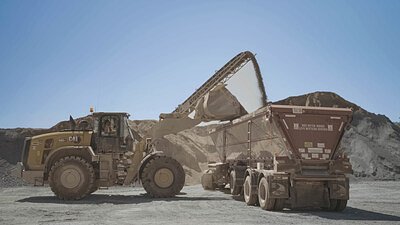
Recycled Crushed Aggregate is produced by reclaiming and processing materials from demolished roads, sidewalks, and buildings. This rubble is crushed, graded, and tested to meet rigorous engineering specifications, creating a high-quality material ready for a second life as the foundation for new transportation projects. Independent engineering studies and decades of real-world application have confirmed that RCA performs comparably to virgin quarried stone, sand, and gravel.
The most prominent advocate for RCA's reliability is, ironically, the Ontario government itself. The Ministry of Transportation (MTO) has been a pioneer in using recycled materials since the 1970s, annually incorporating over 10 million tonnes of RCA into the construction and maintenance of its busiest highways. Provincial standards, known as OPSS 1010, explicitly allow for up to 40% Reclaimed Asphalt Pavement (RAP) in the granular base of roads, providing a clear technical benchmark for quality and performance.
Despite this provincial endorsement, a 2018 study commissioned by TARBA revealed that most Ontario municipalities lag far behind, with many allowing little to no use of recycled aggregates. The reluctance often stems from outdated perceptions of quality and a lack of updated local procurement policies, creating a significant roadblock to progress.
"RCA is proven, available, and cost-effective—the gap isn't performance, it's policy," said Raly Chakarova, Executive Director of TARBA, in a statement. "Updating municipal rules is the fastest way to unlock RCA's full potential."
The Staggering Cost of Inaction
The price of this policy inertia is measured in millions of dollars and tonnes of carbon. According to a coalition of industry groups including TARBA and the Residential and Civil Construction Alliance of Ontario (RCCAO), increasing RCA use to just 20% in municipal projects across Ontario could save taxpayers over $260 million annually. This is a conservative estimate, considering the GTA alone is projected to require over 1.5 billion tonnes of aggregate by 2041.
The savings are threefold. First, RCA is often more affordable than virgin materials. Second, it dramatically cuts transportation costs—which can account for up to 60% of the total cost of aggregates—as recycling facilities are typically located much closer to urban job sites than distant quarries. Third, it helps contractors and municipalities avoid expensive landfill tipping fees, as construction and demolition debris, which can constitute 40% of landfill waste, is diverted and repurposed.
Beyond the financial benefits, the environmental case is overwhelming. Using recycled materials significantly reduces the need to extract non-renewable natural resources. The production process also boasts a much smaller carbon footprint. Studies show that using recycled asphalt can cut related carbon emissions by as much as 50% compared to producing new asphalt, largely due to reduced energy consumption and shorter truck-hauling distances. TARBA projects that a 20% adoption rate would yield an emissions reduction equivalent to removing 15 million gas-powered cars from the road.
An Industry United and Ready to Build
The push for policy change is not coming from a single association but from a broad consensus across the construction sector. Organizations like the Ontario Road Builders' Association (ORBA) and the RCCAO have joined the call, urging municipalities to align their standards with the province. Even the Ontario Stone, Sand and Gravel Association (OSSGA), which represents primary aggregate producers, acknowledges the crucial role recycled materials must play in meeting the province's immense and growing demand for construction materials.
The industry insists it is fully equipped to meet increased demand. Advanced processing technologies ensure that modern RCA meets stringent quality standards, dispelling the outdated concerns that fuel municipal hesitation.
"This isn't a future solution—it's already being used successfully in Ontario and across the world," stated Mario Pietrolungo, Vice President of Operations at Strada Aggregates, a key campaign partner. "The industry has the capacity to supply more RCA today. What's needed is broader municipal acceptance and leadership to make it a standard choice on transportation projects."
This readiness highlights a frustrating dynamic: the private sector has the technology and supply, the province has the successful track record, but municipal gatekeepers remain the final, unmoving hurdle.
Paving the Way Forward
While the GTA lags, other jurisdictions offer a clear roadmap. The City of Saskatoon's "Green Street" program has successfully incorporated recycled aggregates into road rehabilitation, achieving significant cost savings and environmental benefits without sacrificing quality. Across Europe, adoption rates are even higher, with some nations mandating up to 20% recycled content in public works.
These examples demonstrate that the barriers to RCA adoption are political, not technical. As the MTO has shown for decades on the province's own economic lifelines, building with recycled materials is not a compromise but an upgrade in efficiency and sustainability. The launch of TARBA's ad campaign puts the decision squarely before municipal leaders: continue down a path of higher costs and environmental impact, or follow the proven, green road already paved by leaders at home and abroad.