
- 121 million tons: Global textile waste discarded annually, with only 1% recycled into new garments.
- 50% lower carbon footprint: Reju PET compared to virgin polyester from fossil fuels.
- 80+ jobs: Direct and indirect employment expected from the Lacq facility.
Experts view Reju's Lacq Hub as a pivotal step toward a circular textile economy, leveraging advanced recycling technology to significantly reduce waste and carbon emissions in the fashion industry.
Reju's Lacq Hub Signals New Era for Europe's Circular Textiles
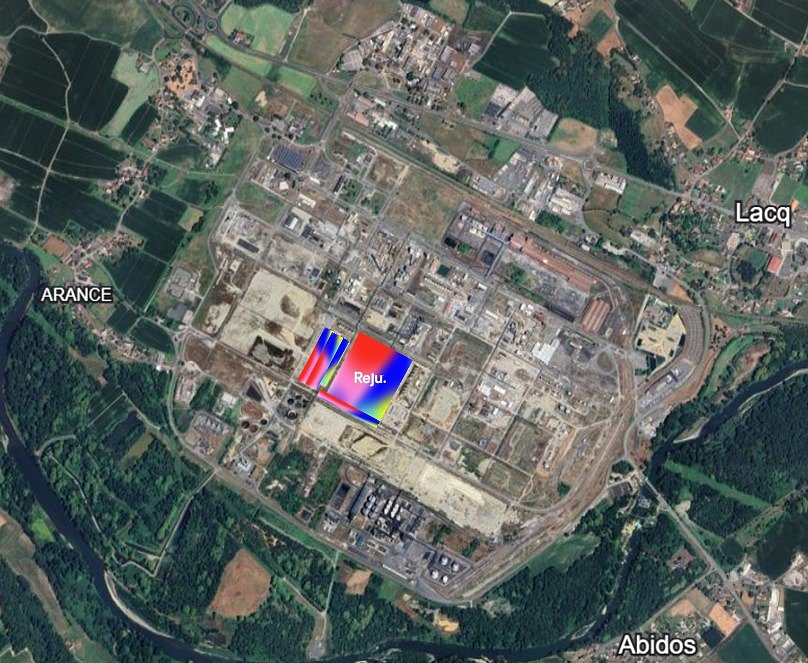
LACQ, France – February 13, 2026 – In a significant move to combat the global textile waste crisis, French regeneration company Reju has announced the selection of Lacq in the Pyrénées-Atlantiques as the site for its first industrial-scale Regeneration Hub in France. The facility, to be located on the Induslacq industrial platform, represents a major step in building a circular economy for textiles in Europe, promising to transform mountains of used clothing and fabrics into high-quality, infinitely recyclable polyester.
The project, spearheaded by Reju, a subsidiary of the global engineering giant Technip Energies, aims to address the staggering fact that of the 121 million tons of textiles discarded annually worldwide, a mere 1% is recycled back into new garments. This new hub is poised to strengthen France's position as a leader in low-carbon industrial innovation, though the project remains subject to a final investment decision by the Technip Energies board.
The Technology to Close the Loop
At the heart of the Lacq project is Reju's proprietary depolymerization technology, a cutting-edge process co-developed with IBM Research. Unlike traditional mechanical recycling, which often degrades fiber quality over time, this advanced chemical recycling method breaks down post-consumer polyester waste to its fundamental molecular level.
The process can effectively handle complex, mixed-material textiles—a long-standing barrier to effective recycling—by separating polyester from other materials like cotton. The salvaged polyester is converted into a regenerated raw material known as rBHET, which is then repolymerized into Reju PET, a recycled polyester chip with a quality comparable to its virgin counterpart.
A key advantage of this technology is its environmental promise. According to a Life Cycle Assessment (LCA) conducted by Deloitte, Reju PET is expected to have a carbon footprint that is 50% lower than that of virgin polyester produced from fossil fuels. Furthermore, the company asserts that the resulting material can be recycled an infinite number of times without loss of quality, creating a truly closed-loop system for textiles and moving away from the linear 'take-make-waste' model that has dominated the fashion and textile industries for decades.
A Catalyst for France's Green Economy
The selection of Lacq is a strategic move that anchors this high-tech project within a robust industrial ecosystem. The facility's placement on the Induslacq platform, owned by TotalEnergies, signals deep industrial integration. The project is expected to be a significant economic driver for the Nouvelle-Aquitaine region, creating an estimated 80 direct and over 300 indirect jobs.
Local and regional bodies have championed the project, viewing it as a cornerstone for future development. Audrey Le-Bars, Chief Executive Officer of the development agency Chemparc, highlighted the project's strategic importance. "This decision underscores the attractiveness of our industrial basin," she stated. "In line with our industrial strategy, this decision marks a new step in the development of a low-carbon circular economy. CHEMPARC is committed to continuing its support with diligence and energy for the success of this industrial project in the Lacq Basin."
By planning to use post-consumer textiles from national waste streams as its primary feedstock, the hub will help structure a new, localized supply chain in France. This not only contributes to national decarbonization goals but also fosters a tangible circular ecosystem, turning what was once considered waste into a valuable domestic resource.
Riding a Wave of Favorable Regulation
Reju's investment comes at an opportune moment, aligning perfectly with a supportive and increasingly stringent regulatory landscape in both France and the broader European Union. France has been a trailblazer with its comprehensive Anti-Waste for a Circular Economy (AGEC) law, which strengthened the country's long-standing Extended Producer Responsibility (EPR) scheme for textiles. This framework makes producers financially responsible for the end-of-life management of their products, bans the destruction of unsold textiles, and uses an 'eco-modulation' system to reward brands that design more durable and recyclable products.
At the continental level, the EU's Strategy for Sustainable and Circular Textiles, a key part of the European Green Deal, is setting an ambitious course. The strategy aims to ensure that by 2030, all textile products sold in the EU are long-lasting, repairable, and largely made from recycled fibers. This policy push is creating powerful market demand for high-quality recycled materials like Reju PET, as fashion and apparel brands race to meet both regulatory mandates and growing consumer demand for sustainable goods. Market projections reflect this shift, with demand for recycled PET in the textile sector expected to surge in the coming decade.
A Global Strategy with Local Roots
The planned facility in Lacq is a critical piece of Reju's broader global strategy to industrialize textile-to-textile recycling. It follows the establishment of Regeneration Hub Zero in Frankfurt, Germany—a demonstration plant—and announced plans for large-scale hubs in the Netherlands and the United States, located in Rochester, New York. This network of facilities underscores a clear ambition to build a scalable, global infrastructure for textile circularity.
Patrik Frisk, CEO of Reju, emphasized how the French project fits into this vision. "This French Regeneration Hub builds on our strategy to industrialize a circular post-consumer textile-to-textile model," he said. "By leveraging France's ambitious circular-economy agenda and advancing our technology to new markets, we are reinforcing our mission to transform textile waste into valuable, circular resources."
By building a network of hubs that draw from local waste streams to supply a global market, Reju aims to create a system that is both locally integrated and internationally impactful. The success of the Lacq facility could serve as a powerful blueprint for how technology, public policy, and industrial strategy can converge to solve one of the most pressing environmental challenges of our time.
Topics & Related
Circular Economy
Net Zero
Digital Transformation
Regulation & Compliance
AI & Machine Learning
Financial Services
Expansion
Related Company Pulse