
- $10,000 donation of battery-powered tools to Urban Farming Education (UFE)
- Battery-powered equipment eliminates on-site emissions, reducing carbon footprint
- Electric motors have fewer moving parts, reducing maintenance costs by up to 50% compared to gas equipment
Experts agree that battery-powered landscaping equipment offers significant environmental and economic benefits, though widespread adoption faces challenges such as high upfront costs and logistical hurdles.
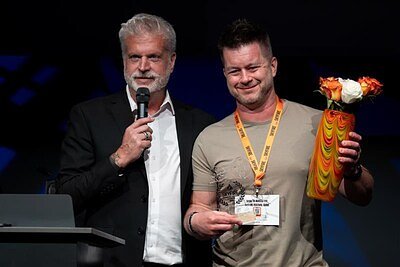
Greenworks' Film Award Sparks Real-World Change in Landscaping
PHOENIX, April 10, 2026 – A film celebrating the transition away from gas-powered landscaping has earned Greenworks® Commercial a prestigious award, but the real story lies in how the company is turning cinematic inspiration into tangible community action. The battery-power equipment pioneer won the Spark Movement Award at the recent Skyfire Environmental Film Festival for its documentary, "Battery-Powered Landscaping – Ditching Gas for Good."
In a move that embodies the award's spirit of inspiring actionable change, Greenworks immediately followed the win by announcing a significant partnership with Urban Farming Education (UFE), the festival's host. The collaboration is launching with a $10,000 donation of battery-powered tools to support sustainability education and community cleanup initiatives, grounding the film's message in the very soil of the Phoenix community.
A Movement, Not Just a Movie
The Skyfire Environmental Film Festival, a citywide celebration of environmental storytelling, created the Spark Movement Award to honor films that do more than just raise awareness. The award seeks out projects that present practical, actionable solutions to pressing environmental issues. Greenworks' film, produced by Video Director Todd Midgett, evidently hit the mark.
"Chosen from three finalists by the SkyFire committee and sponsors, 'Battery-Powered Landscaping – Ditching Gas for Good' stood out for presenting a practical, solutions-driven approach to a real-world sustainability challenge, embodying the spirit and purpose of the award," said Joe Roselle, Chief Operating Officer of UFE.
The film features testimonials from commercial landscaping leaders like Phoenix Landscaping, Northwest Landscaping, and Enhanced Landscape Management. These companies share firsthand accounts of how adopting battery-powered ecosystems, such as the Greenworks® Commercial OPTIMUS Crew platform, has revolutionized their operations. They report not only environmental benefits but also improved efficiency, reduced operational costs, and a higher return on investment, making a compelling case for what they call "ditching gas for good."
Sowing Seeds of Sustainability
The partnership with Urban Farming Education translates the film's message into a hands-on educational endeavor. UFE is a non-profit dedicated to establishing gardens and delivering programs focused on education, sustenance, and social impact, particularly for vulnerable populations. The organization works to combat food insecurity and empower communities by teaching people to grow their own food, even in small urban spaces.
Greenworks' $10,000 equipment donation will directly fuel this mission. The contribution includes the AiMowbot C20, a quiet, zero-emission robotic mower, and a suite of POWERALL 24V Power Tools. These tools are not destined for a warehouse; they will be integrated into UFE's network and used for community cleanup activations at Grand Canyon University and Arizona State University, as well as in classrooms for hands-on learning about sustainable technology.
"As campuses and communities explore new ways to reduce emissions and improve operational efficiency, battery-powered landscaping equipment is becoming an important part of that transition," said Yin Chen, CEO of Greenworks® Commercial. "We're excited to partner with Urban Farming Education to bring these technologies into real-world environments where students, educators and community leaders can experience the benefits firsthand."
By placing advanced tools directly into the hands of students and community volunteers, the partnership aims to demystify the technology and build a foundation for a new generation of environmentally conscious professionals and citizens.
The Business Case for Going Green
The shift championed by Greenworks is part of a larger, albeit challenging, transformation within the commercial landscaping industry. The benefits extend far beyond corporate responsibility reports. Environmentally, the impact is stark. A single commercial gas mower can emit pollutants equivalent to a car driven for hundreds of miles. Battery-powered equipment eliminates these on-site emissions, drastically improving air quality and reducing the carbon footprint of landscape maintenance.
Noise pollution is another critical factor. Gas-powered leaf blowers and mowers often operate at levels that can cause hearing damage and violate local noise ordinances. The significantly quieter operation of battery-powered tools allows for extended working hours in noise-sensitive areas like schools, hospitals, and residential communities, providing a distinct competitive advantage.
Economically, the argument is becoming increasingly persuasive. While the initial investment in commercial-grade battery equipment can be more than double that of its gas-powered counterparts, the long-term savings are substantial. Eliminating fuel costs, which are volatile and consistently rising, is the most obvious benefit. Furthermore, electric motors have fewer moving parts, leading to drastically reduced maintenance needs and costs—no oil changes, no filter replacements, and no engine tune-ups. This translates to less downtime and greater operational efficiency. Some industry analyses suggest the cost of maintaining gas equipment is twice that of electric, with electric models often boasting a significantly longer operational lifespan.
Overcoming Hurdles in a Changing Industry
Despite the clear advantages, widespread adoption faces significant hurdles. The high upfront cost remains the primary barrier for many small and medium-sized landscaping businesses. Concerns about battery runtime and the logistical challenges of intra-day charging for large crews also persist, alongside a cultural resistance from crews accustomed to the power and feel of gas engines.
However, a confluence of factors is accelerating the transition. Regulatory pressure is mounting, with states like California mandating a full transition to zero-emission small off-road engines by 2024 and municipalities like Washington D.C. banning gas-powered leaf blowers altogether. Over 500 cities have noise regulations that inherently favor quieter electric equipment.
To soften the financial blow of switching, a growing number of state and national programs offer rebates and tax incentives that can cover a significant portion of the initial purchase price. These incentives, combined with the increasing demand from clients for quieter, greener services, are tipping the scales. The partnership between Greenworks Commercial and Urban Farming Education represents another key piece of the puzzle: education. By familiarizing the next generation with the technology and its benefits, such initiatives help dismantle cultural barriers and build a skilled workforce ready for a battery-powered future.