
- Cost of network downtime: £250,000 to over £1.5 million per significant outage for major ISPs
- SLA penalties: 5% to 20% of monthly contract value for breaches
- Fiber density: Single cables now contain nearly 7,000 individual fibers
Experts view Go!Foton's EKO solution as a critical advancement in network monitoring, enabling proactive maintenance and reducing costly blind spots in fiber optic infrastructure.
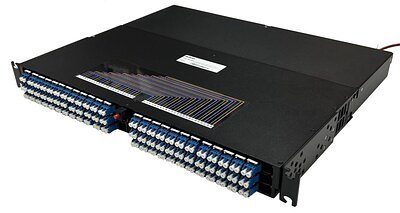
Go!Foton's EKO Solution Aims to End Costly Network Blind Spots
By Sam Lidman
SOMERSET, N.J. – March 10, 2026 – As the digital world accelerates, the invisible fiber optic threads underpinning it are being pushed to their limits. In this high-stakes environment, Go!Foton, a global leader in optical connectivity, has stepped forward with an enhanced solution designed to illuminate the darkest corners of these critical networks. At the OFC 2026 conference in Los Angeles this week, the company is showcasing its EKO® Optical Sensing Solution, a system promising to transform fiber management by providing unprecedented, non-intrusive visibility into the network's physical layer.
For data centers, service providers, and engineering firms grappling with ever-increasing complexity, the announcement marks a potential shift from a reactive to a proactive operational model. EKO is designed to monitor the fundamental health of the Optical Distribution Network (ODN), tracking not just signal strength but also the physical integrity of connections in real-time.
The High Cost of Physical Layer Blind Spots
In modern fiber optic networks, the adage "out of sight, out of mind" can be a recipe for disaster. As networks expand with complex redundant pathways to ensure uptime, they inadvertently create 'physical layer blind spots.' A fiber break or a poorly seated connector in a backup line can go completely undetected until the primary path fails, at which point a supposedly resilient system collapses. The consequences are immediate and severe.
Industry analyses reveal the staggering financial impact of network downtime. A significant outage can cost a major Internet Service Provider anywhere from £250,000 to over £1.5 million. Beyond the immediate revenue loss, there are the stringent penalties associated with failing to meet Service Level Agreements (SLAs), which can demand rebates of 5% to 20% of a monthly contract value for even minor breaches. Compounding this is the damage to a company's reputation and the subsequent customer churn, which can be as high as 30% following service failures.
These risks are amplified by the sheer density of modern fiber deployments. Driven by the demands of 5G and hyperscale data centers, single cables can now contain nearly 7,000 individual fibers, making manual inspection and management an almost impossible task. In such environments, a microscopic piece of dust or a connector that isn't perfectly seated can degrade performance or bring down critical services.
A New Layer of Visibility
Go!Foton's EKO solution directly confronts this challenge by providing a comprehensive, data-driven view of the network's physical state. Unlike conventional monitoring systems that rely on periodic, traffic-interrupting tests, EKO is built into the optical patch panel itself, offering continuous, non-intrusive oversight.
The system's innovation lies in its dual-pronged sensing approach. It provides real-time optical power monitoring, immediately flagging any degradation or loss of signal. Crucially, it pairs this with a patented on-axial ferrule engagement-sensing mechanism. This allows the system to verify the mechanical status of a connection, confirming that a fiber port is physically and correctly engaged. This eliminates a common source of error that is invisible to traditional power-monitoring tools.
"As networks grow in scale and complexity, physical layer blind spots create risk, particularly in redundant pathways where outages may go undetected until they escalate and where active components' performance degrades," said David Chen, chief technology officer at Go!Foton. "EKO provides continuous monitoring of fiber connectivity and signal power levels and can act as an early warning system for fiber optic network operators."
By integrating this technology into its award-winning PEACOC® spreadable adapter platform, Go!Foton ensures that this advanced monitoring can be deployed even in the highest-density environments without sacrificing accessibility for technicians.
From Crisis Response to Predictive Maintenance
The ultimate goal of the EKO platform is to revolutionize network operations. By feeding real-time physical layer data into the management layer, it enables a fundamental shift from expensive, emergency-driven repairs to intelligent, predictive maintenance.
For network managers, this translates into tangible benefits. The system's graphical user interface (GUI) provides a clear map of the network, showing port mapping, insertion loss, and live traffic indicators. This allows technicians to troubleshoot problems faster and more accurately. It also helps organizations maximize asset utilization by clearly identifying available, healthy circuits, thus avoiding unnecessary capital expenditure on new capacity.
Recent enhancements showcased at OFC 2026 further solidify EKO's role in the modern network ecosystem. The implementation of SNMPv3 allows for secure integration with existing network management systems, while configurable alarm thresholds give operators granular control over alerts. Support for both IPv4 and IPv6 ensures future-proofing as networks continue to evolve.
"The return on investment is compelling. Even a modest number of installation errors, provisioning delays, or outage incidents can cost upwards of ten times the investment in EKO," noted Ken Takeuchi, director of engineering. "By providing the health status of network equipment, EKO reduces the failure risks, delivering measurable financial and operational value."
A Foundational Technology for the AI and 5G Era
The launch of EKO's new features at OFC 2026 is particularly timely. The conference is abuzz with discussions on AI-driven network automation, the insatiable bandwidth demands of 5G, and the evolution of data center architecture. These next-generation applications all depend on an underlying network infrastructure that is not only fast but also exceptionally reliable and transparent.
EKO provides the foundational data layer necessary for these advancements. An AI-powered network optimization engine is only as good as the data it receives; EKO delivers the clean, real-time, ground-truth data about the physical layer that has historically been missing. By monitoring the health of the fiber backbone that connects 5G small cells and interconnects massive data centers, the solution helps ensure the performance and reliability that these new technologies promise.
By transforming passive fiber cabling into an intelligent, data-generating asset, Go!Foton's EKO platform is positioning itself as a critical enabling technology. It addresses a fundamental, and often overlooked, point of failure in optical networks, paving the way for a future of more resilient, efficient, and self-aware digital infrastructure.