
- Integration: Gloat's Agentic HR platform is now available in Microsoft 365 Copilot and Microsoft Teams, embedding intelligent AI agents into daily workflows.
- Data Foundation: Powered by Loomra Workforce Context Engine, which includes millions of data points from global enterprises like Mastercard and MetLife.
- Strategic Reach: Access to Microsoft’s vast enterprise user base, placing Gloat’s technology directly into the hands of millions of potential users.
Experts would likely conclude that this integration represents a significant advancement in HR technology, enabling proactive, in-the-moment talent management by embedding AI agents into existing productivity tools, thereby enhancing organizational agility and employee engagement.
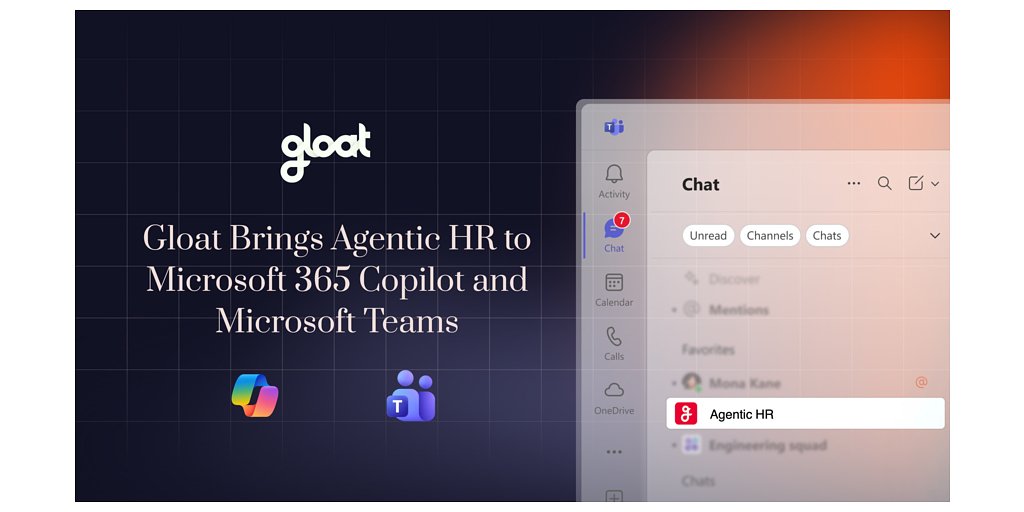
Gloat's Agentic HR Arrives on Microsoft 365, Reshaping Talent Management
NEW YORK, NY – April 27, 2026 – The line between human resources technology and daily productivity tools has officially blurred. Gloat, a company that pioneered the internal talent marketplace, today announced the integration of its Agentic HR platform directly into Microsoft 365 Copilot and Microsoft Teams. The move embeds intelligent AI agents into the digital environments where millions of employees conduct their work, signaling a significant shift from reactive HR portals to proactive, in-the-moment talent strategy.
The Gloat Copilot Agent, now available in the Microsoft Agent Store and Marketplace, allows employees, managers, and HR leaders to access sophisticated workforce intelligence and execute talent-related actions without leaving their chat windows or productivity dashboards. This integration aims to dissolve the friction that has long defined enterprise HR systems, which traditionally required users to log into separate, often cumbersome, platforms.
“HR technology has always required employees to come to it. We built Agentic HR on a different premise: the capability comes to them,” said Ben Reuveni, CEO and Co-Founder of Gloat, in the company's announcement. “By bringing our intelligent agents into those environments, we ensure that the full context of an employee’s career, skills, and organization reaches people exactly where and when they need it.”
The Dawn of 'Agentic HR' in the Flow of Work
Gloat is positioning 'Agentic HR' as a new category of enterprise software designed to help organizations adapt their workforce at the speed of business. Unlike traditional Human Capital Management (HCM) systems that primarily store records and manage processes, Agentic HR deploys intelligent agents that continuously analyze workforce context and act on it. The goal is to make talent management a fluid, ongoing activity rather than a periodic, administrative one.
In practice, this means an employee curious about their next career move can ask Copilot and receive a personalized path based not just on their current role, but on their inferred skills, adjacent opportunities within the company, and strategic business needs. A manager facing a departmental restructure can use an agent within a Teams conversation to identify employees with transferable skills for open roles elsewhere in the organization, immediately surfacing redeployment options and next steps.
This approach fundamentally alters the user experience. Instead of an employee needing to remember to check a career portal or a manager having to manually cross-reference spreadsheets, the AI agent proactively surfaces insights and facilitates action. This 'in-flow' methodology is central to the platform's value proposition, aiming to drive higher engagement and unlock organizational agility by making the right talent decision the easiest one to make.
A Strategic Win for the Microsoft Ecosystem
The partnership is a significant strategic maneuver for both companies. For Gloat, it provides unparalleled access to Microsoft’s colossal enterprise user base, placing its technology directly into the hands of millions of potential users. This deep integration offers a powerful competitive advantage over other talent intelligence platforms that may exist as standalone applications or have less-native integrations. Being featured in the official Microsoft Agent Store also provides a stamp of validation, signaling that the technology meets Microsoft's rigorous standards for security and performance.
For Microsoft, the collaboration deepens the value of its Copilot and Teams platforms, transforming them from general productivity tools into a central nervous system for critical business functions. By incorporating specialized, context-aware HR capabilities, Microsoft makes its ecosystem even more indispensable to enterprise clients. It demonstrates a strategy of expanding Copilot's utility beyond summarizing documents and drafting emails into facilitating complex, domain-specific business processes like strategic workforce planning.
“Gloat’s intelligent agents extend that environment to include talent and workforce capabilities, helping employees and managers act on workforce decisions in the moment, without leaving the tools they rely on every day,” noted Srini Raghavan, Corporate Vice President of Copilot & Agents Ecosystem at Microsoft. This integration helps Microsoft fortify its platform against competitors by creating a 'stickier' environment where essential business functions are seamlessly woven into the core user experience.
Under the Hood: The Loomra Workforce Context Engine
Powering these intelligent agents is Gloat's proprietary technology, the Loomra Workforce Context Engine. Built on what the company describes as nearly a decade of enterprise-scale workforce data, Loomra is the AI foundation that enables the system's reasoning capabilities. This extensive dataset, gathered since Gloat's founding in 2015 from its work with global enterprises like Mastercard and MetLife, includes millions of data points on skill adjacencies, career trajectories, and organizational patterns.
This deep context allows the AI agents to move beyond simple keyword searches. Instead of merely answering “show me employees who know Python,” Loomra enables the agent to reason through more complex queries, such as identifying which employees possess the foundational skills to be retrained for AI engineering roles within the next year, or which teams are most exposed to future skill gaps based on shifting business priorities.
The engine synthesizes data from connected HR systems and interprets it to build a dynamic, holistic model of the workforce. This allows it to understand the subtle nuances of skills, roles, and relationships within an organization, enabling the proactive and personalized recommendations that define the Agentic HR experience. It transforms HR data from a static record into a strategic asset for predictive talent management.
Navigating Adoption: The Enterprise Perspective
While the promise of embedded, intelligent HR is compelling, enterprises adopting this technology will face important considerations. Data privacy and security are paramount, as the system handles sensitive employee information. Both Gloat and Microsoft emphasize their commitment to security, noting that customer data remains within the organization's Microsoft 365 compliance boundary and is not used to train public AI models. However, companies will still need to conduct thorough due diligence to ensure the integration aligns with their internal governance and global privacy regulations.
Beyond technical safeguards, successful adoption will hinge on effective change management. Employees may be wary of AI influencing their careers, making transparency and clear communication essential. Managers will require training to leverage the AI agents effectively, while HR professionals will see their roles evolve from managing transactions to overseeing talent strategy and the governance of the AI system itself.
The system's effectiveness is also directly tied to the quality of the underlying data. Organizations with fragmented or outdated HR information will need to address their data hygiene to unlock the platform's full potential. The platform's ability to sit on top of existing HR systems without requiring a full replacement offers flexibility, but ensuring a smooth and reliable data flow from sources like Workday or SAP SuccessFactors will be a critical implementation step for any enterprise looking to harness this new capability.