
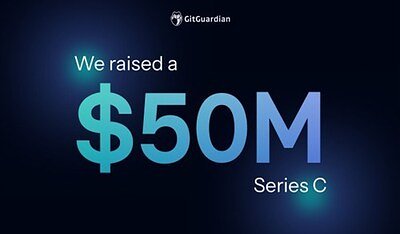
- $50M Series C funding round led by Insight Partners
- Non-human identities outnumber human employees by a ratio of up to 144:1 in enterprises
- GitGuardian detected and remediated over 350,000 exposed secrets in 2025
Experts agree that the rapid growth of non-human identities and AI agents presents an urgent security challenge, requiring immediate governance and lifecycle management solutions.
GitGuardian Lands $50M to Secure AI Agents & Machine Identities
NEW YORK, NY – February 11, 2026 – Cybersecurity firm GitGuardian today announced a $50 million Series C funding round to confront what its leadership calls a critical inflection point in enterprise security: the exponential growth of non-human identities (NHIs) and the security risks posed by autonomous AI agents. The round was led by global software investor Insight Partners, with significant participation from Quadrille Capital and existing investors including Balderton, BPI, Eurazeo, Fly Ventures, and Sapphire Ventures.
The investment validates a growing concern in C-suites and security operation centers worldwide. As organizations increasingly rely on automation, APIs, and AI, the number of machine-based identities—from service accounts to AI coding assistants—has skyrocketed, creating a vast and poorly managed attack surface. GitGuardian, already the most installed security application on the GitHub Marketplace, will use the capital to expand beyond its core secrets detection capabilities into full lifecycle governance for these digital entities.
“Organizations that once managed hundreds of service accounts will now face thousands of autonomous AI agents, each requiring secure credentials,” said Eric Fourrier, CEO and Co-Founder of GitGuardian. “While identity solutions matured for human users, non-human identities remain largely unmanaged and recent breaches prove the cost. We're moving beyond secrets detection into full NHI lifecycle governance.”
The Exploding Frontline of Non-Human Identities
The challenge GitGuardian aims to solve is not a future problem; it's a present and escalating crisis. Non-human identities, which include everything from application API keys and cloud service accounts to IoT devices and robotic process automation bots, now vastly outnumber human employees in most modern enterprises. Some industry estimates suggest this ratio can be as high as 144 to 1. Unlike human identities, which are governed by mature Identity and Access Management (IAM) systems, NHIs are often created on an ad-hoc basis by development teams, granted excessive permissions, and then forgotten, creating a minefield of “zombie identities” and latent vulnerabilities.
This is the gap investors are betting on. Insight Partners, a firm with over $90 billion in assets and a formidable cybersecurity portfolio including Wiz, SentinelOne, and Darktrace, sees a pivotal market shift.
“Software development and enterprise complexity continue to grow,” noted Josh Zelman, Managing Director at Insight Partners. “We believe this is the moment to capitalize on GitGuardian's approach, which starts from where secrets live in the development workflow and expands into full NHI lifecycle management. This is critical as AI agents rapidly approach parity with developers, with each agent needing credentials, permissions, and governance - further fueling GitGuardian's growth.”
AI Agents: The Next Wave of Security Risk
Beyond existing machine identities, the funding specifically targets the nascent but rapidly emerging threat posed by autonomous AI agents. As these agents become more capable of independent action—from writing and deploying code to interacting with customers and internal systems—they introduce novel security risks that traditional frameworks cannot address.
Threats like “prompt injection,” where an attacker tricks an AI into overriding its instructions, or the compromise of an agent’s credentials, could grant bad actors unprecedented access and agency within a corporate network. An AI agent with broad permissions could be manipulated to exfiltrate sensitive data, disrupt operations, or chain together actions across multiple platforms to escalate its own privileges.
The new funding will enable GitGuardian to innovate in this area, expanding its platform to detect, monitor, and govern the credentials used by AI systems. The goal is to provide organizations with the visibility and control needed to safely deploy AI agents without creating an indefensible new attack vector.
A Transatlantic Strategy Fueled by Compliance
GitGuardian's funding strategy is intentionally transatlantic, pairing Insight Partners' deep US market and technology expertise with Quadrille Capital's strong European enterprise network. This dual approach reflects the global nature of the problem, particularly the powerful influence of European regulations in driving market demand.
While North America accounted for over 80% of GitGuardian's new annual recurring revenue in 2025, its foothold in Europe is solidified by a stringent regulatory environment. Directives like GDPR, NIS2, and the Digital Operational Resilience Act (DORA) are forcing organizations, especially in the financial and critical infrastructure sectors, to demonstrate robust cybersecurity and risk management. DORA, which comes into full effect in 2025, explicitly requires financial entities to ensure the availability, authenticity, and confidentiality of data, making secure secrets management a non-negotiable aspect of compliance.
“Not only do these enterprises need to secure code, they then have to demonstrate continuous monitoring and audit trails that satisfy regulators,” explained Romain Stokes, a Partner at Quadrille Capital. “As compliance deadlines approach over the next 18 months, GitGuardian solutions become critical. That's the market timing we invest behind.” This regulatory pressure has helped GitGuardian win the trust of security-conscious European giants like Deutsche Telekom, ING, and BASF.
Validated Growth and Future Expansion
The investor confidence is backed by a year of record performance for GitGuardian. In 2025 alone, the company detected and remediated over 350,000 exposed secrets—a fivefold increase year-over-year. Its platform now protects over 115,000 developers and continuously monitors more than 610,000 code repositories.
With the fresh capital, GitGuardian plans to execute a three-pronged strategy. First, it will double down on AI agent security innovation. Second, it will enhance its platform to deliver enterprise-scale NHI governance, including automated discovery, usage analytics, and rotation policies. Finally, the company will accelerate its geographic expansion, reinforcing its presence in the US and Europe while opening new markets in the Asia-Pacific region, South America, and the Middle East.
This expansion includes significant hiring across its engineering, sales, and customer success teams in both US and European offices, as the company scales to meet the demands of a world increasingly run by code and the non-human identities that secure it.