
- $300 million annual cost: Line clearance failures cost top pharmaceutical companies up to $300 million yearly in quality investigations and corrective actions. - 70% of organizations affected: 70% of life sciences firms experienced at least one clearance failure in the past year, with nearly a third reporting six or more failures. - 85% faster inspections: Automated systems like Catalyx's can reduce inspection times by up to 85% and shorten overall line changeover times by 20%.
Experts agree that Catalyx's AI-driven solution represents a significant advancement in quality control for life sciences manufacturing, offering substantial efficiency gains and compliance benefits while addressing critical regulatory requirements.
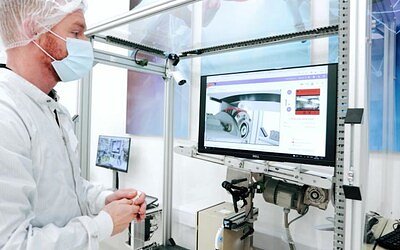
Catalyx AI Aims to Overhaul Quality Control in Life Sciences
NEWTOWN, Pa. – January 14, 2026 – Catalyx, a specialist in optimizing operations for regulated industries, today unveiled a new artificial intelligence platform designed to eliminate one of the most persistent and costly bottlenecks in life sciences manufacturing. The solution, OpenLine LineClearance Assistant™ 3.0, transforms a manual, error-prone quality assurance step into a fully automated digital process, promising to accelerate production and enhance compliance for pharmaceutical and biotech companies.
The process, known as line clearance, is a critical quality control measure that ensures a production line is completely free of materials from a previous batch before a new one begins. This step is essential to prevent cross-contamination and mislabeling, but its manual nature has long been a source of significant operational friction, costing manufacturers millions in lost productivity.
A Cure for the $300 Million Bottleneck
For decades, line clearance has been a time-consuming, paper-based ritual. Technicians manually inspect equipment, a process that can take anywhere from an hour to over three hours, even for simple changeovers. This downtime represents a major drag on efficiency, particularly as the industry shifts towards smaller, more frequent production batches for personalized medicines.
The reliance on human inspection also introduces significant risk. A 2025 benchmark report from Catalyx revealed that 70% of life sciences organizations experienced at least one clearance failure in the past year, with nearly a third reporting six or more failures. Industry research further indicates that these failures are overwhelmingly due to undetected "rogue components"—a stray vial, a leftover label, or residual material that a manual check missed. With 63% of manufacturers still relying on paper checklists, the room for error is substantial.
The financial consequences are severe. One executive at a top-ten pharmaceutical company described line clearance failures as a "$300 million a year problem" for their global operations, factoring in the costs of quality investigations, corrective actions, and the ever-present risk of product recalls. By digitizing and automating this critical step, solutions like Catalyx's aim to provide a direct and substantial return on investment. Industry estimates suggest automated systems can reduce inspection times by up to 85% and shorten overall line changeover times by as much as 20%.
"With our new solution, Catalyx removes line clearance as a manufacturing obstacle, providing faster line turnover, improved accuracy, and a compliance-enabled solution for modern life sciences environments," said Mario L. Rocci, Jr., CEO, Catalyx, in the company's announcement. "We designed the system with intelligence that learns, adapts, and improves every day through guided operator feedback and review."
The Technology Behind the Transformation
At the heart of OpenLine LineClearance Assistant™ 3.0 is a combination of advanced AI-powered machine vision and a unique feature Catalyx calls "self-healing inspection intelligence." High-resolution cameras scan the production line, and the AI model analyzes the images in milliseconds, far faster and more consistently than the human eye. The system is trained to identify any residual materials or foreign objects, providing a definitive pass/fail result with a complete digital record for auditing purposes.
What sets the system apart is its adaptive learning capability. The "self-healing" AI doesn't just perform inspections; it learns from them. When the system flags a potential issue that an operator verifies is not a problem (a false positive), this feedback is used to refine the AI model. The system can then automatically propose performance adjustments, which are reviewed and approved by qualified personnel. This creates a continuous improvement loop, making the inspections more accurate and reliable over time while reducing the burden of false alerts on operators.
This approach addresses a common challenge with machine vision systems, which can sometimes be tripped up by variables like shadows or changing light conditions. By incorporating structured human oversight into the learning process, the system builds a more robust and context-aware intelligence tailored to its specific environment. This positions it at the forefront of a market where competitors are also developing AI-driven solutions, but Catalyx emphasizes its unique combination of automated learning, ease of integration via OpenAPI, and a perpetual license model designed for long-term cost-effectiveness.
Navigating a Complex Regulatory Future
Introducing advanced AI into one of the world's most regulated industries is no simple task. Pharmaceutical manufacturing operates under strict Good Manufacturing Practices (GMP) that demand process validation, data integrity, and absolute traceability. Furthermore, new regulations like the EU's Artificial Intelligence Act are setting a high bar for AI systems used in critical applications.
The EU AI Act, which began phasing in during 2024, classifies AI used for quality control in pharmaceutical production as "high-risk." This designation mandates stringent requirements for data governance, transparency, risk management, and, crucially, human oversight. The system must be "explainable," meaning its decisions can be understood and audited by regulators.
Catalyx has designed OpenLine LineClearance Assistant™ 3.0 to meet these challenges head-on. The system automatically documents every inspection and system update, creating an immutable audit trail that supports GMP, 21 CFR Part 11, and the emerging EU AI Act requirements. The emphasis on "structured human oversight" is key, ensuring that a qualified person remains in control, guiding the AI's learning and holding final approval authority. This human-in-the-loop design is not just a compliance checkbox; it is fundamental to building trust in automation for high-stakes environments. It ensures the technology serves as a powerful tool that enhances human capability rather than a "black box" operating without accountability.
With over 30 years of experience and more than 3,000 projects delivered in the life sciences sector, the company is leveraging its deep domain expertise to bridge the gap between cutting-edge technology and stringent regulatory demands. The new solution is available for immediate global deployment and will be demonstrated live at Pharmapack Europe in Paris from January 21-22 and at INTERPHEX New York from April 21-23, 2026, offering the industry a firsthand look at the future of manufacturing quality control.