
- 50+ former landfills to be transformed into clean power sources
- First phase of projects expected to reach commercial completion by late 2027
- Community solar models to provide energy savings for local residents, non-profits, and small businesses
Experts view this initiative as a groundbreaking approach to simultaneously address renewable energy needs and repurpose environmentally impacted land, aligning with broader decarbonization goals and circular economy principles.
From Trash to Treasure: Landfills Power America's Green Future
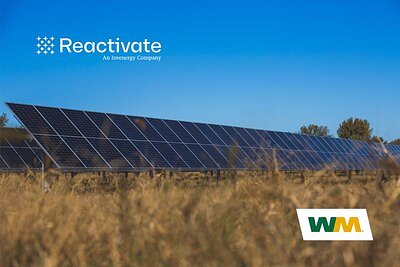
CHICAGO, IL – January 07, 2026 – In a landmark move set to redefine the landscape of renewable energy, Reactivate, an Invenergy-backed energy company, and WM, North America's largest environmental solutions provider, have announced a nationwide agreement to transform more than 50 former landfills into sources of clean power. The collaboration will see these dormant sites, once the final resting place for municipal waste, repurposed into community solar projects, small utility-scale solar farms, and energy storage facilities.
This ambitious initiative aims to tackle two of the nation's most pressing challenges simultaneously: the urgent need for more renewable energy capacity and the productive reuse of environmentally impacted land, often known as brownfields. Reactivate will develop, construct, own, and operate the new solar installations, breathing new life into properties that are otherwise unsuitable for most forms of development.
A New Chapter for America's Landfills
The partnership represents a significant step forward in the circular economy, turning vast, underutilized land assets into hubs for green energy generation. Landfills, once capped and closed, present a long-term management challenge. This collaboration reimagines them as a solution.
"WM is committed to strengthening the communities where we live and work," said Tara Hemmer, chief sustainability officer at WM, in a statement announcing the deal. "We are proud to work with Reactivate, a company WM selected for this project, to help revolutionize these landfill sites to provide needed solar energy."
The strategy directly addresses the scarcity of suitable land for large-scale solar development, particularly near the urban and suburban centers that need the power most. By focusing on former landfills, the partnership avoids land-use conflicts that can arise with developing on farmland or natural habitats.
"Repurposing sites that would otherwise be vacant former landfills and cannot support traditional development helps us meet America's growing energy demand," stated Utopia Hill, CEO of Reactivate. Her comments underscore the innovative thinking required to expand the country’s energy portfolio sustainably.
The Engineering Challenge: Building on Unstable Ground
Converting a former landfill into a power plant is far more complex than building on a flat, empty field. These sites present a unique set of engineering and environmental hurdles that require specialized solutions. The ground itself is unstable, prone to gradual and uneven settling as the waste beneath decomposes over decades. Furthermore, the decomposition process generates landfill gas, primarily methane, which must be safely managed.
To overcome these challenges, developers must avoid any construction that could compromise the landfill's protective cap—a crucial barrier designed to contain waste, control gas emissions, and prevent water from seeping in and creating contaminated liquid known as leachate. Standard solar foundations, which are often driven deep into the ground, are not an option.
Instead, projects on landfills typically utilize ballasted racking systems. These systems use heavy concrete blocks to hold the solar panel arrays in place without penetrating the surface cap. The designs must also be flexible enough to accommodate the inevitable ground settlement over the project's multi-decade lifespan. Engineers must carefully map and integrate their designs with existing gas collection and leachate management systems to ensure the site remains environmentally secure.
This type of development is actively encouraged by government bodies like the Environmental Protection Agency (EPA) through its RE-Powering America's Land Initiative, which provides resources and guidance for siting renewables on contaminated lands and landfills.
Powering Communities and Local Economies
A core component of the Reactivate-WM initiative is its focus on delivering tangible benefits to the communities hosting these projects. Reactivate, founded as a mission-driven organization, has embedded social and economic equity into its development model. The partnership aims to do more than just generate electrons; it intends to create lasting local value.
Key benefits outlined in the plan include:
- Energy Savings: Through community solar models, local residents, non-profits, and small businesses can subscribe to the solar project and receive credits on their electricity bills, lowering their energy costs without needing to install their own panels.
- Workforce Development: The plan includes commitments to create job training and skills-building programs, preparing local workers for careers in the growing clean energy sector.
- Local Economic Growth: By prioritizing local contractors and suppliers for construction and maintenance, the projects are designed to keep investment dollars within the community.
- Increased Tax Revenue: Once operational, the solar farms will become a new source of local tax revenue, providing funds for essential public services like schools, infrastructure improvements, and first responders.
This approach directly targets the creation of economic opportunities in working-class and underserved areas, transforming an environmental liability into a community asset that fosters both energy and economic resilience.
A Growing Trend in Green Infrastructure
The Reactivate-WM collaboration is the largest of its kind but is also part of a broader, accelerating trend across the United States. As the nation pushes toward its decarbonization goals, developers and policymakers are increasingly looking to brownfields as prime locations for renewable energy. This trend is heavily supported by federal policies like the 2022 Inflation Reduction Act (IRA), which offers significant financial incentives.
The IRA provides a bonus tax credit for renewable energy projects built in designated "energy communities," a category that includes brownfield sites. This financial boost helps offset the higher costs and complexities associated with developing on former industrial sites and landfills, making them economically competitive with traditional land.
While other utilities and developers are pursuing similar projects, the Reactivate-WM partnership is distinguished by its national scale and the direct integration of the landowner, WM, into the process. This eliminates a major hurdle—land acquisition—and creates a replicable model that can be deployed across WM's extensive portfolio of closed sites.
Looking ahead, the partners are moving swiftly to bring the vision to reality. "As we advance this portfolio, Reactivate remains deeply committed to safe, responsible operations that prioritize community wellbeing and expects the first phase of projects to reach commercial completion by late 2027," said Myles Burnsed, VP of Development at Reactivate.