
- AI Data Center Power Demand: Global electricity consumption from data centers is projected to nearly double by 2030, with AI driving much of this growth. - HTS Wire Efficiency: A single high-temperature superconducting (HTS) wire can carry hundreds of times more current than a copper wire of the same size with zero electrical resistance. - MetOx Investment: The company secured an $80 million grant from the U.S. Department of Energy for Project Arch, a large-scale HTS wire production facility, with a total investment of nearly $200 million.
Experts agree that MetOx's strategic appointment of Dr. Richard Gottscho and its focus on industrializing HTS technology are critical steps in addressing the growing energy demands of AI and other high-power sectors, potentially transforming the electrical grid infrastructure.
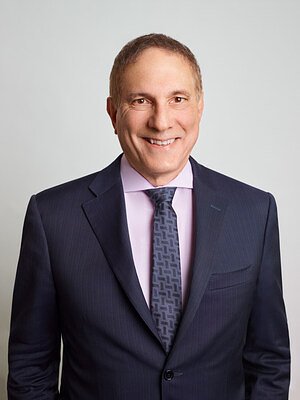
From Silicon to Superconductors: MetOx Taps Chip Vet for AI Power Race
HOUSTON, TX – April 22, 2026 – In a move that bridges two of the world's most advanced industries, high-temperature superconducting (HTS) wire manufacturer MetOx International has appointed Dr. Richard Gottscho, a celebrated veteran of the semiconductor sector, to its Board of Directors. The appointment signals a strategic pivot, not just for MetOx, but for the entire energy sector, as the insatiable power demands of artificial intelligence threaten to create a new bottleneck for technological progress.
Gottscho, formerly the Chief Technology Officer at semiconductor equipment giant Lam Research, brings decades of experience in scaling complex, high-volume manufacturing—a skill set now deemed critical to solving one of the biggest challenges posed by the AI revolution: how to power it.
The AI Energy Bottleneck
The explosion of artificial intelligence is creating an unprecedented energy crisis. The massive data centers that train and run AI models are consuming electricity at a staggering and accelerating rate. According to industry projections, global electricity consumption from data centers is on track to nearly double by 2030, with AI being the single largest driver of this growth. Some forecasts predict that AI-related power demand alone could quadruple in that same timeframe.
To put this in perspective, a single modern AI data center can consume as much electricity as 100,000 homes, and the largest hyperscale facilities can require over a gigawatt of power—equivalent to a large nuclear power plant. This surge is already straining local and national power grids. In some regions, the rapid growth in data center demand is outpacing the available electrical capacity, leading to project delays and forcing tech companies to search for new ways to secure power.
This is the critical problem MetOx aims to solve. Traditional copper wires, the backbone of our electrical grid for over a century, are reaching their physical limits. Transmitting the immense power required by data centers using copper would require massive, impractical, and inefficient cables. High-temperature superconducting wires offer a transformative alternative. A single HTS wire, no thicker than a thumb, can carry hundreds of times more current than a copper wire of the same size with zero electrical resistance, drastically reducing energy loss and enabling far more compact and powerful infrastructure.
A Bridge from Semiconductors to Superconductors
MetOx's appointment of Dr. Gottscho is a clear statement of intent: the company is focused on industrializing HTS technology for mass adoption. While superconductors and semiconductors may seem worlds apart, the underlying challenge is the same: scaling the production of a highly advanced material with extreme precision and reliability.
During his tenure at Lam Research, Dr. Gottscho was instrumental in driving innovations in plasma etch and deposition technologies. These processes, which involve depositing and carving microscopic layers of material to create integrated circuits, are conceptually similar to the advanced manufacturing techniques used to produce modern 2G HTS wire. MetOx utilizes proprietary technology, including methods like Metal Organic Chemical Vapor Deposition (MOCVD), to deposit a microscopically thin layer of superconducting ceramic onto a flexible metal tape. Dr. Gottscho’s deep expertise in perfecting and scaling such deposition processes for the hyper-competitive semiconductor market is directly transferable.
"On behalf of the Board, I am pleased to welcome Rick to MetOx," said Keyvan Esfarjani, Executive Chairman of the Board. "Having worked with Rick for many years during his time at Lam Research, I highly respect his unique ability to bridge the gap between advanced technology, advanced equipment development, and large-scale manufacturing. His deep expertise will be invaluable as we accelerate MetOx through its next phase of growth."
Gottscho, a member of the National Academy of Engineering, is renowned for his ability to guide technologies from the research lab to high-volume production, a journey that MetOx is currently navigating.
Industrializing a Breakthrough Technology
For years, HTS wire was a niche product, limited by high costs and complex manufacturing. MetOx is at the forefront of changing that reality. The company is aggressively expanding its U.S. manufacturing capabilities, fueled by significant private and public investment.
Recently, MetOx completed a $40 million Series B funding round to build out additional high-capacity manufacturing facilities. This was followed by a major vote of confidence from the U.S. government: an $80 million grant from the Department of Energy to establish "Project Arch," a state-of-the-art HTS wire production facility in North Carolina. Scheduled to begin construction in 2025, Project Arch will be the first large-scale facility of its kind in the country, representing a total investment of nearly $200 million and aiming to cement a domestic supply chain for this critical technology.
These efforts are designed to drive down the cost of HTS wire and increase production to meet the surging demand from not only AI data centers but also other high-growth sectors like fusion energy, grid modernization, and industrial electrification. The goal is to make HTS a mainstream solution, not a laboratory curiosity.
"MetOx is addressing one of the most urgent constraints in the global technology ecosystem: how to deliver exponentially more power, efficiently and at scale," said Gottscho in the company's press release. "The company's leadership in HTS wire manufacturing positions it at the center of this transformation. I'm excited to help advance a platform that can redefine how energy is generated, transmitted, and utilized."
By bringing in a leader who has successfully navigated the scaling challenges of the semiconductor industry, MetOx is betting that the discipline, precision, and manufacturing prowess that enabled Moore's Law for computing can now be applied to power the infrastructure that supports it. This strategic convergence of expertise could be the key to unlocking the full potential of both AI and the next generation of the electrical grid.