
- 84 U-Haul facilities across four states offering 30 days of free storage to flood victims.
- 200+ homes flooded in Louisiana's Avoyelles Parish alone.
- 24,000+ U-Haul rental locations and 1M+ storage units across North America, enabling rapid disaster response.
Experts would likely conclude that U-Haul's disaster response model demonstrates how private sector infrastructure can be strategically repurposed to enhance community resilience during climate-driven emergencies.
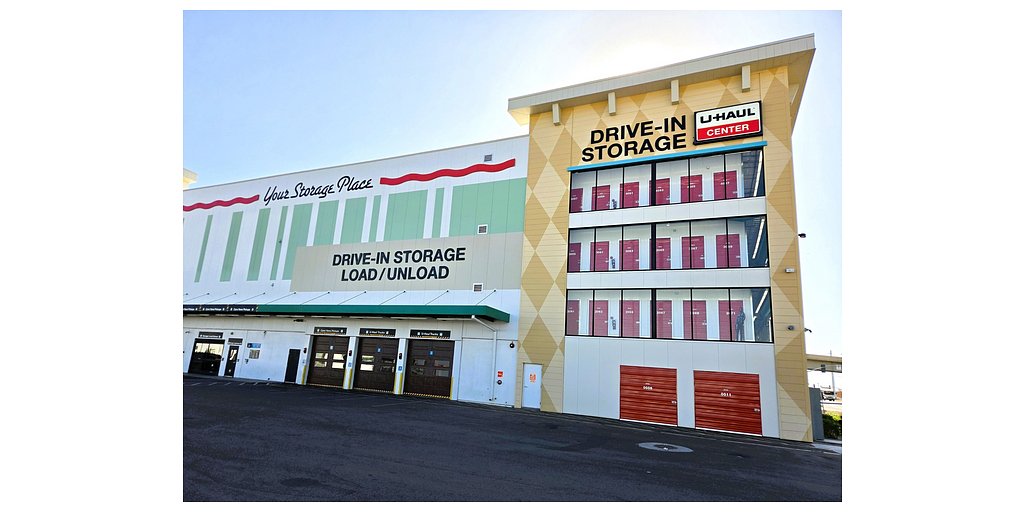
From Moving Vans to Mobile Sanctuaries: U-Haul's Disaster Response Model
NEW ORLEANS, LA – June 19, 2026 – While the remnants of Tropical Storm Arthur have moved on, they left behind a landscape of devastation across the Gulf Coast. In communities from New Orleans to Mobile, record-breaking rainfall—exceeding two feet in some Louisiana parishes—has inundated homes, displaced families, and tragically claimed lives. Amid the chaos of water rescues and widespread power outages, a different kind of first responder has emerged, not in an ambulance, but in an unmistakable orange-and-white truck.
U-Haul, a brand synonymous with weekend moves and cross-country relocations, has activated a massive disaster relief program, offering 30 days of free self-storage to flood victims at 84 of its facilities across four states. This is not a minor act of charity; it is a large-scale, systematic deployment of corporate assets to address a humanitarian crisis. The move offers a powerful case study in how private sector infrastructure can be repurposed as a crucial element of community resilience in an age of escalating climate emergencies.
A Lifeline in the Deluge
The immediate need on the ground is overwhelming. With more than 200 homes flooded in Louisiana's Avoyelles Parish alone and countless others damaged across Mississippi, Alabama, and Florida, residents face the heartbreaking task of salvaging what they can from waterlogged properties. In these first critical hours and days, a dry, secure space is not a luxury—it is an essential tool for recovery. It allows families to protect irreplaceable belongings from ruin and clear their homes to assess damage and begin the arduous process of rebuilding.
U-Haul’s response is tailored to this specific need. Six of its regional companies have coordinated to make both traditional self-storage units and portable U-Box containers available at no cost for a month. The sheer scale is significant, spanning 84 corporate-owned centers from the suburbs of Birmingham to the coastal towns of the Florida Panhandle. For those affected, this offer provides more than just space; it provides a crucial buffer against further loss and a small measure of control in a situation that feels utterly uncontrollable.
"When your home is under water, every possession you manage to save feels like a victory," explained a local volunteer coordinator assisting families in a hard-hit Mississippi community. "Having a safe place to put those items is the first step toward reclaiming your life. It stops the bleeding." This initiative directly addresses that foundational need, transforming a network of commercial storage facilities into a distributed network of temporary sanctuaries for personal property.
The Logistics of Corporate Aid
What enables a company like U-Haul to respond with such speed and scale? The answer lies in a business model where disaster preparedness is not an afterthought but is woven into the operational fabric. With over 24,000 rental locations and more than a million storage units across North America, the company's core infrastructure is, by its very nature, a pre-positioned network of logistical assets. Its fleet and facilities are already embedded in the very communities that need help.
This capability is formalized through a long-standing partnership with the American Red Cross, where U-Haul serves as an official Disaster Responder. This isn't a passive relationship involving a simple financial donation; it's a strategic alliance that grants the Red Cross access to the company’s vast resources during emergencies. This model of “dual-use infrastructure”—where commercial assets are designed or prepared for rapid pivot to public service—is a powerful force multiplier in disaster response.
When a storm like Arthur hits, the company doesn't have to build a response from scratch. It activates a well-rehearsed protocol. Regional offices, like the ones in Southern Louisiana and South Alabama listed in the announcement, become command centers, assessing local facility availability and communicating the offer to the public. This operational readiness stands in stark contrast to more traditional corporate social responsibility (CSR) efforts, which can be slower and less integrated into the company's core competencies. U-Haul isn't just donating money; it's donating what it does best: providing space and logistics, exactly when and where they are needed most.
A New Paradigm for Disaster Response
The flooding across the Southeast is not an anomaly but part of a frightening trend of increasingly frequent and intense weather events. As climate change continues to strain the resources of government agencies and non-profits, the role of the private sector is evolving from peripheral donor to active participant. U-Haul's initiative is a prime example of this paradigm shift.
The self-storage industry itself, often seen as a passive real estate investment, finds its utility thrown into sharp relief during crises. The industry's stable growth, driven by life transitions, has created a resilient and widespread infrastructure that is uniquely suited to absorb the shocks of displacement. When thousands are forced from their homes, the demand for storage skyrockets. By formalizing a free-of-charge relief policy, U-Haul is acknowledging this reality and integrating it into its brand identity.
This strategy fills a critical gap. While FEMA and other agencies provide long-term recovery support, immediate needs like protecting personal belongings can fall through the cracks. Private sector initiatives can be more agile, bridging the gap between the moment disaster strikes and the point when federal aid becomes fully accessible. It represents a decentralized, grassroots-level response that complements the top-down efforts of government.
Beyond the Bottom Line: The ROI of Responsibility
While the 30-day offer is a direct cost to the company in terms of lost rental revenue, the long-term strategic value is immense. In a competitive market with rivals like Penske and Budget, such actions build profound brand loyalty and community goodwill that traditional advertising cannot buy. It positions the company not merely as a service provider, but as a reliable community partner. A family that used a free U-Haul unit to save their possessions during a flood is likely to remember that gesture for years to come.
Furthermore, the company cleverly links this emergency aid to its standard value proposition. The press release highlights its "1-Year Price Lock" and policy of no admin fees or deposits. For a family facing immense financial uncertainty, this promise of stability is incredibly valuable. It transforms a potential short-term user into a long-term customer by demonstrating an understanding of their precarious situation. This is the return on investment of responsibility: by providing stability in a crisis, the company builds a resilient customer base.
This integrated approach, where humanitarian aid and smart business strategy converge, may well be the future of corporate citizenship. As public infrastructure faces unprecedented stress from climate events, companies with vast physical networks have an opportunity—and arguably a responsibility—to become part of the solution. U-Haul's response to the devastation left by Tropical Storm Arthur demonstrates that a company's greatest contribution may not be a check, but the mobilization of its entire operational might for the public good.