
- 73% demand-supply gap for roles like machine learning engineer and data scientist in India
- 51% national employability average for young graduates in India
- INR 33 LPA highest placement package at DYPIU for 2025 drive
Experts agree that continuous learning, adaptability, and a blend of technical and soft skills are essential for engineering graduates to thrive in a rapidly evolving job market driven by technology.
From Degree to Dynamic: How One University is Redefining Engineer Readiness
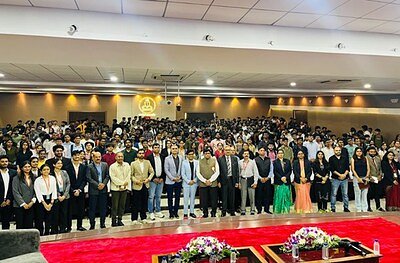
PUNE, India – April 13, 2026 – As over 560 engineering students gathered at D Y Patil International University (DYPIU) on April 10, a powerful message echoed through the hall, setting the tone for their future careers: being degree-ready is no longer enough. The HR Symposium 2026, themed “Future-Ready Engineers: Skills, Attitude, and Industry Expectations,” served as both a stark reality check and a strategic roadmap for navigating a professional landscape being fundamentally reshaped by technology.
The event underscored a critical shift in higher education, moving beyond traditional academic milestones to aggressively tackle the gap between campus learning and corporate demands. As one speaker noted, “The future belongs to those who continuously learn, adapt, and evolve,” a sentiment that has become a survival mantra for the modern professional.
The New Talent Equation in a Tech-Driven World
The urgency behind the symposium is rooted in profound global and national labor market shifts. While speakers at the event cited forward-looking reports, the latest available data paints a clear picture of disruption. The World Economic Forum's 2023 Future of Jobs Report projects that nearly a quarter of all jobs will be disrupted within the next five years, with technology like AI and big data adoption being a primary driver. This churn is expected to create 69 million new roles globally by 2027 but eliminate 83 million others, making adaptability paramount.
For India, the challenge is also an opportunity. The 2024 India Skills Report highlights the nation's growing prowess in AI talent but also points to a significant demand-supply gap—as high as 73%—for roles like machine learning engineer and data scientist. In this context, the employability of graduates has become a key metric. While the national average for young employability hovers around 51%, cities like Pune are emerging as frontrunners, boasting a high concentration of employable talent. This places institutions like DYPIU at the epicenter of the effort to cultivate the next generation of industry-ready professionals.
During the symposium, Prof. Dr. Arun Sacher, Associate Dean-Corporate Relations & Placement, translated these macro trends into a direct message for students. He stressed that roles in AI, big data, and software development are among the fastest-growing, making technological and analytical skills non-negotiable. The underlying message was clear: the jobs of tomorrow will not be filled by those with outdated skills, but by those committed to continuous reskilling.
A Blueprint for the Future-Ready Engineer
The symposium’s agenda moved swiftly from diagnosing the problem to prescribing the solution. University and industry leaders converged on a unified definition of the “future-ready” professional, one who blends technical expertise with a robust set of soft skills.
In his inaugural address, Vice Chancellor Prof. (Dr.) Manish Bhalla emphasized the need for a “global outlook, continuous skilling, and the right mindset.” This was echoed by Dean of Placement, Ms. Jasmita Kaur, who urged students to evolve into “adaptable problem solvers.” She highlighted that in an era of rapid technological disruption, industry seeks professionals who are agile, collaborative, and committed to lifelong learning—a stark departure from the days when a technical degree was a guaranteed ticket to success.
The symposium's highlight was a panel discussion featuring six eminent industry experts, moderated by Mr. Chetan Khairnar. The insights provided a rare, unfiltered look into the mind of the modern recruiter:
- Innovation and Problem-Solving: Mr. Girish Khilari encouraged students to think beyond conventional learning, stressing the importance of an innovative mindset in the digital era.
- Adaptability and Communication: Mr. Umesh Ganjale offered guidance on fresher hiring, stating that adaptability and communication skills are now considered as critical as technical knowledge.
- Strategic Positioning: Mr. Vaibhav Abdeo gave practical advice on what recruiters truly look for, emphasizing the need for students to position themselves effectively in a crowded job market.
- Continuous Learning: Mr. Hardik Patel shared his own career journey, underscoring that innovation and a commitment to continuous learning are the cornerstones of an impactful career.
- Vision and Leadership: Mr. Pritesh Shah spoke on the importance of developing a long-term professional vision, leadership qualities, and seeking global exposure.
- Evolving Talent Trends: Mr. Abhijit Puri provided insights into the latest talent acquisition trends, preparing students for what to expect in the hiring process.
Together, their advice formed a comprehensive guide for students, focusing not just on landing the first job, but on building a resilient and sustainable career.
Beyond the Symposium: Building an Industry-Integrated Ecosystem
For D Y Patil International University, the HR Symposium is not an isolated event but a visible component of a much broader institutional strategy. The university is actively working to embed industry relevance into its very fabric, a commitment reflected in its curriculum, partnerships, and student outcomes.
The institution offers specialized pathways in high-demand fields such as Artificial Intelligence, Data Science, Digital Business, and UX/UI Design. This academic focus is backed by a robust Corporate Relations & Placement cell that facilitates internships, industry projects, and skill-development workshops. This systemic approach appears to be yielding results, with the university reporting a highest placement package of INR 33 LPA for its 2025 drive and placing graduates in top firms like Infosys, TCS, and Siemens.
By fostering a curriculum that emphasizes experiential learning and forging direct collaborations with corporations, the university aims to ensure its graduates are not just theoretically knowledgeable but practically competent. The enthusiastic participation of 560 students in the symposium indicates a clear recognition on their part that the responsibility for career readiness is a shared one. The event provided them with direct access to industry leaders and a clear-eyed view of what is expected, empowering them to take ownership of their professional growth long before they graduate.