
- 7200W Continuous AC Output: The FOSSiBOT F7200 delivers 7200W of continuous power, a significant leap in single-unit capacity. - 5.22kWh Base Battery Capacity: Expandable to 15.67kWh with additional batteries, enough to power an average household for days. - $2,999 Retail Price: Competitively priced compared to similar multi-unit setups from competitors.
Experts view the FOSSiBOT F7200 as a disruptive force in the portable power market, offering unmatched single-unit capacity and smart energy management features that could redefine energy resilience and cost savings for consumers.
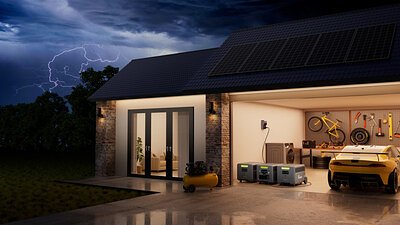
FOSSiBOT's Power Play: A 7200W Challenger Enters the U.S. Market
SHENZHEN, China – November 28, 2025 – The American appetite for energy resilience is growing insatiable. Fueled by increasingly severe weather, a burgeoning off-grid lifestyle movement, and the demands of modern remote work, consumers and businesses are no longer just looking for a simple battery to charge their phones. They are seeking whole-home backup, worksite-ready power, and a tangible path toward energy independence. Into this high-stakes arena steps FOSSiBOT, a Shenzhen-based manufacturer launching its F7200, an industrial-grade portable power station that aims to redefine the market's upper echelon.
With a staggering 7200 watts of continuous AC output, the FOSSiBOT F7200 is not just another incremental upgrade; it represents a significant leap in single-unit power capacity. The company claims it is only the second device of its kind to hit the U.S. market, a direct challenge to established leaders in the space. This launch isn't merely about a new product; it signals an escalation in the technological arms race for portable power, where modularity, intelligence, and raw output are the new currencies of competition.
The New Benchmark for Power?
For years, achieving over 3600W of continuous power from a portable unit often required complex and costly solutions, typically involving linking two separate devices. The FOSSiBOT F7200 shatters that convention by delivering 7200W from a single inverter. This level of output moves the conversation from emergency backup for a few essential appliances to a viable solution for powering an entire home. Its dual-voltage 120V/240V support means it can run not just refrigerators and computers, but also heavy-duty appliances like electric dryers, water heaters, and central air conditioning units—items previously beyond the scope of most portable systems.
This industrial-grade power is aimed squarely at a demanding user base: contractors running power-hungry tools on remote job sites, RV owners seeking to power all their onboard amenities without a noisy generator, and homeowners demanding seamless, uninterrupted power during extended blackouts. The F7200's primary competitor in this rarefied air appears to be the EcoFlow DELTA Pro Ultra, which also boasts a 7200W inverter. While other brands like Goal Zero and Anker offer impressive high-capacity units, they often top out at lower continuous wattages or require multiple units to achieve this level of performance.
The F7200's power is backed by a substantial 5,222.4Wh (5.22kWh) base battery capacity. Critically, this system is modular. With the addition of two FB5222 expansion batteries, the total capacity can be tripled to 15.67kWh, enough to power an average American household's essential needs for several days. The use of EVE-brand Lithium Iron Phosphate (LiFePO₄) battery cells is also a significant selling point, as this chemistry is known for its superior safety, stability, and longevity, promising thousands of charge cycles before significant degradation—a crucial factor for a long-term investment.
An Aggressive Play in a Competitive Field
Perhaps the most disruptive aspect of the FOSSiBOT F7200 launch is its pricing strategy. The main unit is debuting with a retail price of $2,999. To put this in perspective, achieving a comparable 7200W output from a competitor like the EcoFlow DELTA Pro has historically required purchasing two 3600W units and a special hub, a configuration that often lands in a similar price bracket. By offering this capacity in a single, streamlined package at this price point, FOSSiBOT is making an aggressive bid for market share.
This move is likely to send ripples through the premium power station market, potentially forcing established players to re-evaluate their own pricing and product bundling. The competition is fierce, with brands like Jackery, Anker, and Goal Zero all vying for dominance with increasingly sophisticated and powerful solutions. FOSSiBOT's challenge will be to build brand recognition and trust in a market where reputation and a proven track record are paramount. As a newer entrant to the U.S. high-power segment, it will need to demonstrate not only competitive specs on paper but also real-world reliability and robust customer support.
The F7200 also incorporates features that have become table stakes in the premium tier, including a UPS-grade uninterruptible power supply function. With a switching time of just 10 milliseconds, it can keep sensitive electronics like computers and medical equipment running without interruption during a sudden power outage. Furthermore, its versatile and rapid charging capabilities—including a hybrid AC and solar input of up to 5200W that can deliver a full charge in just 1.5 hours—address a key user pain point: downtime.
Beyond Backup: The Promise of Smart Energy Savings
While raw power and emergency backup are the headline features, the F7200's long-term value proposition hinges on its potential as a smart energy management tool. FOSSiBOT claims the system can help households save over $1,000 annually on electricity bills, a bold assertion that positions the device as an active investment rather than a passive insurance policy.
This promise is rooted in the system's ability to integrate with solar power and intelligently manage energy flow via a dedicated app. The F7200 can accept up to 2,500W of solar input, allowing it to store free, clean energy during the day. The smart algorithm then prioritizes using this stored solar power to run the home, only drawing from the grid when necessary. For customers on time-of-use (TOU) electricity plans, this capability becomes even more valuable. The system can be programmed to discharge during expensive peak-demand hours in the evening and recharge with cheaper grid power overnight or with free solar power during the day—a practice known as "peak shaving" or "load shifting."
The feasibility of achieving $1,000 in annual savings depends heavily on variables like local electricity rates, the size of a user's solar array, and daily energy consumption patterns. For example, at the U.S. average electricity rate of around 17 cents per kWh, a user would need to offset nearly 6,000 kWh of grid consumption annually. With a fully expanded 15.67kWh system and sufficient daily solar generation, this becomes a plausible scenario, especially in states with high energy costs like California or Hawaii. This shifts the F7200 from being just a product for preppers and off-gridders to a strategic tool for any homeowner looking to actively reduce their energy costs and carbon footprint.
The launch of the FOSSiBOT F7200 is a clear indicator of where the consumer energy market is heading. The lines are blurring between portable power for recreation, emergency backup for resilience, and integrated home energy systems for daily savings. As technology advances and prices become more competitive, these powerful, intelligent, and modular systems are poised to become a central component of the modern home's energy ecosystem. FOSSiBOT has thrown down the gauntlet, and how the market responds will shape the future of energy independence for consumers across the country.