
- 25,000+ parts annually: Airbus now produces over 25,000 flight-ready parts using 3D printing technology from Stratasys.
- 43% weight reduction: Stratasys’s FDM technology has yielded a 43% weight reduction on certain parts for the Airbus A350.
- 85% faster production: Airbus has seen an 85% reduction in lead time for 3D-printed components.
Experts agree that 3D printing has become a mainstream production powerhouse in aviation, offering significant benefits in weight reduction, production speed, and supply chain resilience, while also aligning with sustainability goals.
Flight Reimagined: How 3D Printing Quietly Overhauled Modern Aviation
MINNETONKA, MN – December 10, 2025
For years, 3D printing has been the technology of the future, a staple of tech keynotes promising a revolution that always felt just over the horizon. But while many were waiting for the dramatic arrival, the revolution has been happening quietly, thousands of feet in the air. In a striking confirmation of this shift, aerospace giant Airbus is now producing over 25,000 flight-ready parts annually using 3D printing technology from industry leader Stratasys. More than 200,000 of these certified polymer parts are already in active service across Airbus’s global fleet, marking a profound transition for additive manufacturing from a prototyping tool to a mainstream production powerhouse.
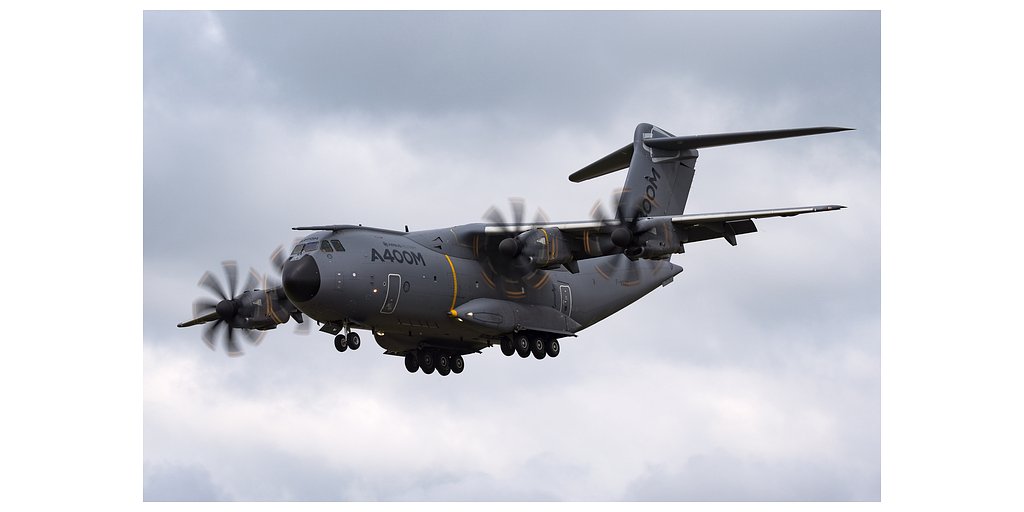
What started with a single spare component for a crew seat has scaled into an integral part of how modern aircraft like the A320, A350, and A400M are built and maintained. This isn't a pilot program or a niche experiment; it’s a fundamental change in manufacturing philosophy, one that carries significant implications for industrial efficiency, supply chain resilience, and the urgent push for a more sustainable aviation industry. The partnership between Airbus and Stratasys offers a clear view of a future where the digital file is as important as the physical part, rewriting the rules of production at a global scale.
The New Calculus of Flight Economics
The most compelling argument for this industrial shift lies in the numbers. For the flagship Airbus A350, implementing Stratasys’s Fused Deposition Modeling (FDM) technology has yielded a 43 percent weight reduction on certain parts. In an industry where every kilogram is meticulously accounted for, such a reduction is monumental. Lighter aircraft consume less fuel, and the long-term financial and environmental savings are staggering. Industry estimates suggest that every kilogram of weight saved on a commercial aircraft can prevent up to 25 tonnes of CO2 emissions over its operational lifetime.
Beyond weight, the impact on production speed is equally transformative. Airbus has seen an 85 percent reduction in lead time for these components. What once took weeks or months of tooling, setup, and traditional manufacturing can now be produced in a fraction of the time. This agility extends to the elimination of Minimum Order Quantity (MOQ) requirements, a long-standing constraint of conventional manufacturing. Instead of being forced to produce and store large batches of parts that may never be used, Airbus can print components on-demand.
This capability radically alters inventory management, freeing up capital and reducing the immense costs associated with warehousing and part obsolescence. It allows the company to respond to maintenance needs with unprecedented speed, minimizing costly aircraft-on-ground (AOG) situations and ensuring fleets remain operational.
Reshaping the Global Supply Chain
Recent global events have laid bare the fragility of intricate, continent-spanning supply chains. The Airbus-Stratasys model demonstrates a powerful alternative: distributed manufacturing. By placing Stratasys’s industrial-grade printers at various facilities, Airbus can produce parts where and when they are needed, sidestepping logistical bottlenecks and transportation delays. This localized approach not only enhances supply chain resilience but also represents a broader cultural shift away from the centralized, mass-production models of the 20th century.
“We can produce certified, repeatable parts faster, with less reliance on complex supply chains,” noted Serge Senac, Airbus Industrial Leader for Polymer Additive Manufacturing. “This manufacturing flexibility reduces costs and ensures improved response times to meet the needs of our customers around the world.”
This strategy is about more than just operational efficiency; it’s about de-risking the entire manufacturing ecosystem. For an industry as critical as aerospace, the ability to maintain production and service continuity independent of geopolitical disruptions or shipping crises is a competitive advantage of the highest order. The concept of a “digital warehouse”—where part designs are stored as files and transmitted for local printing—moves from theoretical to practical, ensuring that the means of production are always within reach.
The Green Takeoff: Sustainability as a Design Principle
As consumers and regulators alike demand greater environmental accountability, sustainability has become a non-negotiable pillar of brand strategy. The aviation industry faces immense pressure to decarbonize, and additive manufacturing has emerged as a key enabling technology. Airbus has explicitly linked this technology to its goal of achieving carbon neutrality by 2050. The connection is clear and multifaceted.
The most direct contribution comes from the weight savings that lead to improved fuel efficiency. However, the benefits run deeper. Traditional subtractive manufacturing, where parts are carved from a solid block of material, can be incredibly wasteful. In contrast, 3D printing is an additive process, building parts layer by layer with materials like Stratasys’s high-performance ULTEM™ 9085 filament. This method can reduce raw material waste by up to 90 percent and consumes significantly less energy during production.
By integrating sustainability into the very DNA of the manufacturing process, Airbus is not just trimming costs—it is building a brand aligned with the values of a new generation of travelers and investors. The ability to point to tangible reductions in waste, energy, and emissions provides a powerful narrative that resonates far beyond the factory floor.
An Industry at an Inflection Point
The scale of the Airbus implementation signals that the entire aerospace sector is at a turning point. What was once the domain of specialists and R&D labs is now a proven, certified, and scalable production method. “With tens of thousands of certified parts already flying, we are seeing an inflection point, not just for Airbus, but for the entire aerospace industry,” said Rich Garrity, Chief Business Unit Officer at Stratasys.
This trend is not isolated. Boeing has long used 3D printing for hundreds of parts across its fleet, and Lockheed Martin integrated over 100 3D-printed components into NASA’s Orion deep-space capsule. While Stratasys has carved out a leadership position in certified polymer parts for aircraft interiors and non-structural components, other players like GE Additive are pushing the boundaries of metal printing for critical engine parts. The industry-wide adoption confirms that additive manufacturing is no longer a question of if, but of how fast and how far it can be integrated.
The path forward is already being paved with innovations in materials and processes. Research is accelerating on advanced polymers like PEEK and PEKK, which offer even greater strength and heat resistance. Simultaneously, the development of larger, faster printers promises to scale production to include even bigger and more complex aircraft structures. The long-term vision of a digital inventory, where spare parts are transmitted as data and materialized on-demand anywhere in the world, is rapidly becoming today’s operational reality. This ongoing evolution is not just changing how aircraft are made; it is fundamentally expanding the possibilities for designing the next generation of flight.