
- €250 million investment: Firstcolo's FRA7 data center project in Germany.
- 24 MW facility: Designed for power densities up to 200 kW per rack with advanced liquid cooling.
- 40% AI/HPC capacity by 2030: Forecasted surge in Germany's data center capacity dedicated to AI and HPC.
Experts would likely conclude that firstcolo's FRA7 data center represents a strategic investment in AI sovereignty, sustainable infrastructure, and community integration, setting a new benchmark for energy-efficient and socially responsible data center development in Europe.
firstcolo's €250M Bet on AI, Sovereignty, and Sustainable Infrastructure
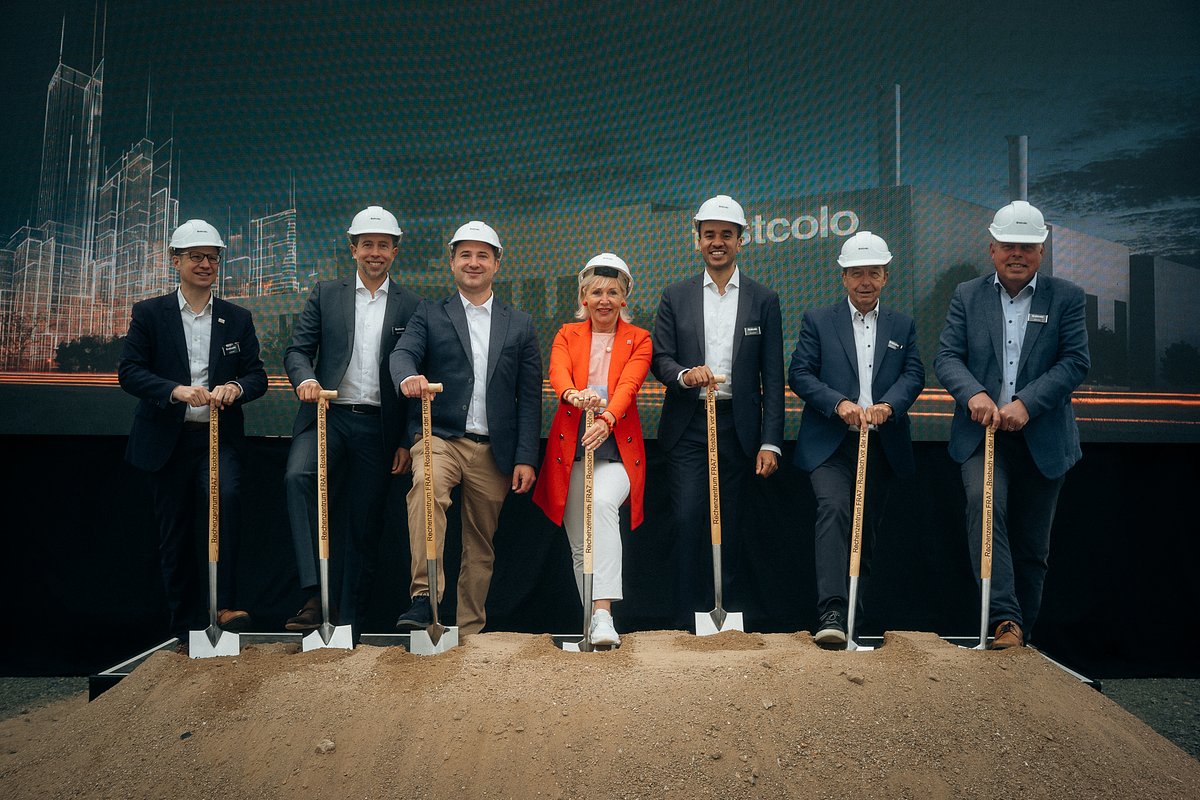
ROSBACH VOR DER HÖHE, Germany – June 15, 2026 – Amidst the hum of nearby construction and the optimism of local and state officials, data center operator firstcolo has broken ground on a project that represents more than just a new building. With a symbolic turn of the shovel, the company launched the construction of its FRA7 data center, a €250 million investment poised to become a critical node in Germany’s digital future. The facility is not only designed to meet the voracious power and cooling demands of artificial intelligence and high-performance computing (HPC) but also to set a new benchmark for sustainable infrastructure and community integration.
Powering Germany's AI Sovereignty
The FRA7 project is a direct response to a tectonic shift in the digital economy. As AI transitions from a niche technology to a foundational element of industry and society, the demand for specialized infrastructure is exploding. This new generation of data centers must go far beyond traditional colocation. firstcolo's planned 24 MW facility is engineered from the ground up for this new reality, designed to support power densities of up to 200 kW per rack through advanced liquid-cooling technologies. This is the kind of environment essential for housing clusters of powerful GPUs that drive modern AI models.
This investment arrives at a critical juncture for Germany and Europe. For Hesse’s Minister of Digitalization, Prof. Dr. Kristina Sinemus, the project is a cornerstone of a larger strategic vision. “High-performance data centers are a central prerequisite for digitalization and artificial intelligence,” she stated at the ceremony. “Today’s groundbreaking is not only a commitment to Hesse’s role as a leading digital hub, but also a commitment to European sovereignty.”
The sentiment reflects a growing consensus that technological independence hinges on the physical infrastructure where data is processed and stored. The project addresses a clear market need, as industry forecasts predict that the share of data center capacity in Germany dedicated to AI and HPC will surge from roughly 15% today to 40% by 2030. By building this capacity on German soil, firstcolo is contributing to a robust domestic ecosystem for innovation.
firstcolo founder and CEO Jerome Evans emphasized the project's forward-looking nature. “With FRA7, we are investing in Germany for the long term and creating the infrastructure for the next generation of digital applications – from AI to high-performance computing,” he explained. This isn’t merely about adding capacity; it’s about building the right kind of capacity to secure a competitive edge in the global technology race.
A Symbiotic Relationship with Rosbach
While the project has national significance, its most immediate and tangible impacts will be felt in the town of Rosbach vor der Höhe. The decision to build here, just outside the saturated Frankfurt data center market where securing massive power connections has become a significant challenge, has fostered a deeply collaborative partnership between the company and the community.
Mayor Steffen Maar hailed the investment as a “strong signal for Rosbach as a business location,” but his focus was equally on the tangible benefits for his constituents. “It is important to us to support such developments pragmatically while also creating concrete added value for our city,” he said. “The planned use of waste heat opens up a special opportunity here. This is what marks good economic development: It is future-oriented, cooperative, and focused on the local people.”
This “special opportunity” is a cornerstone of the project’s design. firstcolo has contractually committed to providing the waste heat generated by the data center to the city of Rosbach free of charge for at least 20 years. This heat, a byproduct that is often vented into the atmosphere, is set to become a central component of the town’s municipal heat plan, which is currently under development. It represents a direct conversion of digital activity into a sustainable resource for climate-friendly local heating.
The economic benefits extend further, with the project expected to create up to 140 qualified jobs and generate significant trade tax revenue. For Rainer Schwarz, President of the Gießen-Friedberg Chamber of Industry and Commerce, this is a vital stimulus. “Digital infrastructure is now a central location factor for companies,” he noted. “The FRA7 data center is an important investment signal in economically challenging times.”
Setting a New Standard for Green Data
FRA7 is designed to challenge the narrative that powerful computing must come at a high environmental cost. The project’s sustainability credentials are woven into its core design and operational strategy, a commitment that recently earned it the German Datacenter Talents & Impact Award 2025 in the “Sustainability & Green Data Centers” category.
The facility will be operated entirely with 100% certified green electricity, a policy consistent with firstcolo's existing data centers in Frankfurt. Furthermore, it is targeting a Power Usage Effectiveness (PUE) value below 1.2. In an industry where a PUE of 2.0 was once common—meaning for every watt used for computing, another was used for cooling and overhead—a score of 1.2 represents elite energy efficiency.
This efficiency is achieved through a joint venture consortium of specialized partners. SPIE is delivering the complete building services and critical infrastructure, while Lupp is responsible for the structural shell and fit-out. “With FRA7, we are building a technologically highly demanding data center that sets new standards in energy efficiency and power density,” explained Daniel Schmitt, Managing Director of SPIE Data Center GmbH. Dennis Bausch of the Lupp corporate group added, “As an ARGE partner, we are bringing all our experience in structural engineering and especially in data center construction to FRA7.”
Beyond the marquee commitments to green power and waste heat reuse, the project incorporates facade and roof greening and high-efficiency LED lighting designed to protect nocturnal wildlife. Modern battery storage solutions will also be deployed, enabling the data center to potentially feed surplus energy back into the grid, transforming it from a mere consumer into a stabilizing element of the local power system.
As an independent provider in a market dominated by global giants, firstcolo’s €250 million investment is a bold and strategic move. It is a declaration that the future of digital infrastructure is not just about being bigger and faster, but also smarter, greener, and more integrated with the communities it serves. As CEO Jerome Evans noted, FRA7 is just the beginning. “It marks the starting point of a comprehensive investment offensive – in the near future, we plan to significantly expand our data center capacities and thereby sustainably strengthen our presence in the region and beyond.”