
- 40% year-over-year growth - High single-digit EBITDA margins - Kitchen-level margins exceeding 25%
Experts would likely conclude that Feast & Fettle's vertically integrated, profitability-focused model and community-first approach set a new standard for sustainable growth in the meal delivery industry.
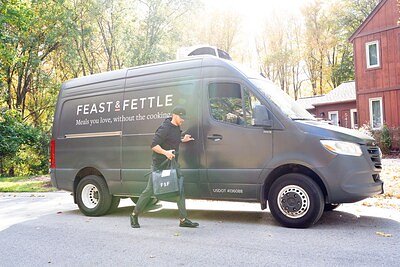
Feast & Fettle: A Profitable Recipe for Meal Delivery in the DMV
WASHINGTON, D.C. – January 05, 2026 – After nearly a decade of quiet, disciplined growth in New England, premium prepared meal delivery service Feast & Fettle has officially launched in the Mid-Atlantic, bringing its unique business model to a bustling and competitive market. The company is now serving households across Washington, D.C., Maryland, and Northern Virginia, backed by a new, large-scale production hub in Howard County, Maryland.
While the arrival of another meal service may seem routine, Feast & Fettle’s expansion is notable for two reasons that cut against the grain of the modern food-tech industry: it is profitable, and it began its market entry with community service, not a marketing blitz. This dual approach of financial sustainability and social goodwill offers a case study in a sector still recovering from a venture-capital-fueled “growth at all costs” era.
A Disciplined Model in a Crowded Market
Feast & Fettle enters a DMV region already populated with established national giants like Factor and Freshly, alongside a host of local services such as Healthy Fresh Meals and MightyMeals, all vying for the attention of busy professionals and families. The company's strategy for differentiation lies in its fully vertically integrated structure—a rarity in the sector. Unlike competitors that often rely on third-party kitchens or gig-economy delivery drivers, Feast & Fettle controls its entire operation in-house. This includes sourcing ingredients, chef-led cooking, proprietary packaging, and last-mile delivery handled by its own trained employees.
This end-to-end control is the engine behind the company's impressive financial health. While many direct-to-consumer businesses struggle for profitability, Feast & Fettle reports over 40 percent year-over-year growth, high single-digit EBITDA margins, and kitchen-level margins exceeding 25 percent—a figure the company calls an “uncommon benchmark” in the industry. This financial discipline is the result of a deliberate, decade-long strategy.
“There's constant pressure in this industry to grow faster than the fundamentals allow,” said Carlos Ventura, CEO of Feast & Fettle, in a statement. “We waited until the model was proven, repeatable, and profitable. Expanding our production footprint allows us to serve more households without compromising how we operate or what our Members expect from us.”
This patient approach aligns with a broader shift in the investment landscape. After a significant contraction in venture capital funding for food tech, investors are now prioritizing businesses with strong unit economics and clear paths to profitability. Feast & Fettle’s model, which emphasizes operational efficiency and margin control, appears well-positioned for this new reality, proving that slower, more deliberate growth can build a more resilient enterprise.
Community First, Commerce Second
Perhaps more distinctive than its financial success is Feast & Fettle’s market-entry strategy. The company established a meaningful presence in the DMV long before its first commercial delivery. In the fall of 2024, during a federal government shutdown, the service partnered with local non-profits Arlington Thrives and the Howard County Food Bank to deliver fully prepared meals to furloughed federal workers and their families.
When subsequent reductions in SNAP benefits created new challenges for food-insecure households, the company again stepped in, working with organizations like Bread for the City and the DC Food Project to provide support. These actions were not part of a launch campaign but were undertaken months before accepting a single paying customer in the region. This approach is consistent with the company's broader ethos, which includes its “Feast & Fettle Fridge” program in other markets—a community fridge initiative providing free meals without barriers.
“At its core, this is a hospitality business,” Ventura stated. “Showing up when people need support isn't something we schedule around a launch. It's part of how we operate.”
This community-first philosophy aims to build brand loyalty from the ground up, generating goodwill and establishing roots in the local fabric before asking for a sale. It’s a long-term play that seeks to define the brand by its actions, not just its product.
The Premium Promise for DMV Diners
For residents in the newly covered counties—including Alexandria, Arlington, Fairfax, Loudoun, Montgomery, and Prince George's—Feast & Fettle promises a premium, high-touch experience. The service delivers fully cooked, chilled meals from a rotating weekly menu, designed by chefs and ready to heat and eat in minutes. Customer reviews from its established Northeast markets consistently praise the “restaurant quality” and freshness of the food, highlighting it as a significant step up from typical meal kits or takeout.
A key component of this premium experience is the delivery itself. By using its own delivery fleet and employee drivers, the company ensures a reliable and personal touchpoint. Customers in existing markets frequently cite the professionalism and consistency of the delivery service as a major differentiator. This contrasts sharply with the often-unpredictable nature of third-party delivery apps.
This level of quality and service comes at a premium price point. Customer feedback indicates the service is more expensive than many competitors, positioning it for consumers willing to invest more for superior convenience, taste, and reliability. The new Howard County production facility, which is expected to create hundreds of jobs over the next few years, is designed to replicate this high standard at scale for the entire Mid-Atlantic region, serving as a launchpad for continued, sustainable expansion along the East Coast.