
- 200 mph: The speed at which Robert Wickens' car was traveling during his catastrophic 2018 crash.
- 989 days: The time between Wickens' accident and his first race car test in 2021.
- 5 consecutive years: The Hyundai Elantra N TCR's winning streak in the TCR class at the Nürburgring.
Experts would likely conclude that Robert Wickens' comeback represents a groundbreaking fusion of human determination and adaptive technology, redefining possibilities for athletes with disabilities in elite motorsport.
Faster Than Fear: Robert Wickens' Epic Nürburgring Comeback
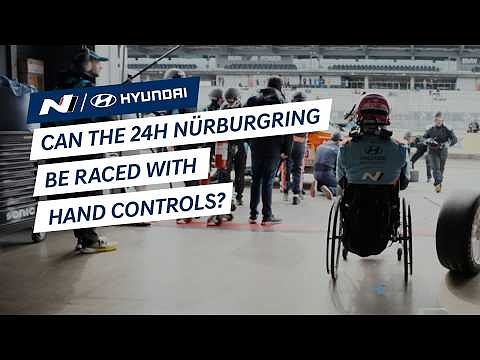
FOUNTAIN VALLEY, CA – May 14, 2026 – A new documentary released today chronicles one of modern motorsport’s most awe-inspiring stories: the return of racing driver Robert Wickens to elite competition. The film, Faster Than Fear: Wickens Into the Green Hell, debuted on Hyundai’s YouTube channel, offering an intimate look at Wickens’ journey to conquer one of the world's most feared circuits, the Nürburgring Nordschleife, years after a catastrophic crash left him paralyzed. The film is more than a racing documentary; it is a testament to human resilience, technological innovation, and the unbreakable spirit of a driver who refused to be defined by his limits.
A Comeback Forged in Fire
The story of Robert Wickens' return cannot be told without understanding the depths from which he climbed. On August 19, 2018, during an IndyCar race at Pocono Raceway, Wickens was involved in a horrifying accident. His car was launched into the catchfence at over 200 mph, disintegrating on impact. The promising Canadian driver sustained a litany of life-threatening injuries, including a thoracic spinal fracture and a severe spinal cord injury that resulted in paraplegia.
For many, a racing career would have been an impossible dream after such a trauma. But Wickens’ journey was just beginning. His grueling rehabilitation process, shared openly with the public, became a source of inspiration. Videos of him taking his first steps with mechanical assistance, just months after the crash, showcased a fierce determination. In 2021, 989 days after the accident, he got his first taste of a race car again, testing a Hyundai Veloster N TCR for Bryan Herta Autosport (BHA).
That test was the spark that reignited a fire. In 2022, Wickens made his full-time return to professional racing in the IMSA Michelin Pilot Challenge, driving a Hyundai Elantra N TCR specially fitted with advanced hand controls. It wasn't a ceremonial return; it was a competitive one. In 2023, in a stunning display of skill and perseverance, Wickens and his co-driver Harry Gottsacker won the TCR division championship, cementing his comeback not as a feel-good story, but as the return of a champion.
Conquering The Green Hell
With a championship under his belt, Wickens set his sights on an even greater challenge: the ADAC RAVENOL 24 Hours of the Nürburgring. The German circuit, nicknamed "The Green Hell" by legendary driver Jackie Stewart, is widely considered the most demanding and dangerous racetrack in the world. Its 15.5-mile layout features 154 treacherous corners, dramatic elevation changes, blind crests, and notoriously unpredictable weather. Surviving a 24-hour endurance race here is a monumental achievement for any driver.
For Hyundai, the Nürburgring is hallowed ground. The "N" in its high-performance N brand stands for both Namyang, its R&D center in Korea, and the Nürburgring itself. The track serves as the company's ultimate proving ground, where its N models are developed and validated under the most extreme conditions. The Elantra N TCR has a formidable record here, having secured the TCR class victory for five consecutive years.
The Faster Than Fear documentary, narrated by renowned automotive journalist Chris Harris, places Wickens’ personal quest squarely within this high-stakes context. His participation in the 2025 race wasn't just about finishing; it was about proving that he, his team, and his technology could compete and endure at the absolute pinnacle of touring car racing.
Innovation at 150 MPH
At the heart of Wickens' comeback is a remarkable fusion of human talent and engineering ingenuity. His Hyundai Elantra N TCR, prepared by Bryan Herta Autosport, is a masterpiece of adaptive technology. A bespoke hand-control system allows him to operate the throttle and brakes with his hands via a custom-made ring mounted on the steering wheel, while also managing gear changes.
This technology is the result of a deep collaboration between Wickens, BHA, and Hyundai's technical partners. It represents the cutting edge of a field pioneered by drivers like Alex Zanardi, who also returned to racing after a devastating accident. However, Wickens' system is designed for the unique demands of multi-driver endurance racing, where driver changes must be swift and the controls must be robust enough to withstand 24 hours of relentless punishment.
The documentary provides a behind-the-scenes look at this technology, showcasing how it enables Wickens to race on a level playing field against his able-bodied competitors and teammates. It’s a powerful demonstration that with the right innovation, physical limitations do not have to be a barrier to elite performance. The system is not an aid; it is simply a different interface for a world-class driver to apply his craft.
A Story Beyond the Finish Line
Hyundai's decision to produce Faster Than Fear reflects a savvy understanding of modern brand building. In an era where consumers seek authenticity and emotional connection, Wickens’ story offers a narrative far more powerful than any traditional advertisement. It perfectly embodies the company's "Progress for Humanity" vision, linking its technological capabilities to a profound human journey of overcoming adversity.
The film is not merely a marketing tool; it's a piece of compelling storytelling that resonates with motorsport fans and the general public alike. By documenting Wickens' assault on the Nürburgring, Hyundai showcases the performance and durability of its N brand while simultaneously aligning itself with values of resilience, inclusivity, and the relentless pursuit of progress.
Robert Wickens’ journey from a hospital bed to the starting grid of the world's toughest endurance race is a powerful chapter in motorsport history. It redefines the perception of what is possible for adaptive athletes and stands as a testament to the idea that true speed is measured not just on the track, but in the courage to face down fear and keep moving forward.