
- 24 pounds: Weight of the CRX-3iA lightweight collaborative robot designed for vertical-up welding.
- June 22-26, 2026: Dates of the Automate 2026 event in Chicago where FANUC will showcase its 'Physical AI' robots.
- NVIDIA's Jetson modules: Specialized hardware enabling advanced processing for Physical AI robots.
Experts view FANUC's 'Physical AI' robots as a transformative leap in industrial automation, enabling real-time adaptive decision-making and addressing critical manufacturing challenges like labor shortages and flexible production demands.
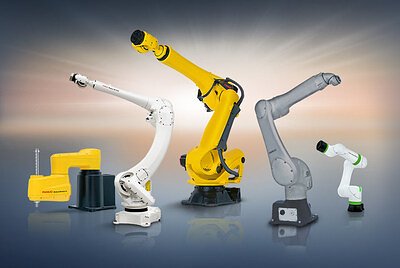
FANUC's 'Physical AI' Robots Learn to Think on the Factory Floor
ROCHESTER HILLS, MI – May 27, 2026 – The factory of the future is learning to think for itself. FANUC America, a global leader in robotics and automation, is set to unveil a new generation of intelligent machines at Automate 2026 in Chicago this June. The centerpiece of its showcase is the integration of 'Physical AI,' a technology that promises to move robots beyond repetitive, pre-programmed tasks into a new realm of adaptive, real-time decision-making.
From June 22-26, attendees at McCormick Place will witness demonstrations that blur the line between traditional automation and true artificial intelligence. These are not just stronger or faster robots, but smarter ones, capable of perceiving their environment, making judgments, and acting on them dynamically. This shift addresses some of the most persistent challenges in modern manufacturing, from labor shortages in skilled trades to the demand for hyper-flexible production lines.
"Physical AI is changing what's possible in industrial automation," said Mike Cicco, President and CEO of FANUC America, in a statement leading up to the event. "At Automate 2026, we're demonstrating how robots can perceive their environment, make decisions and act in real time, bringing a new level of responsiveness to production."
Beyond Repetition: The Dawn of Physical AI
For decades, industrial robots have been masters of repetition, executing the same precise motions millions of times with unwavering accuracy. Physical AI represents a fundamental paradigm shift. It refers to AI systems designed not just to process digital data, but to interact intelligently and autonomously with the tangible world. These systems integrate advanced sensors, powerful onboard processors, and sophisticated AI models, allowing them to learn from and adapt to unpredictable, real-world conditions.
Unlike traditional robots confined to cages and rigid programming, machines equipped with Physical AI can handle variability. They can identify a part that is slightly misplaced, adjust their path to avoid a human co-worker, or change their technique to compensate for material inconsistencies. This is made possible by a convergence of technologies, including high-resolution 3D vision, sensor fusion, and the immense processing power of specialized hardware like NVIDIA's Jetson modules. The result is a move from rigid automation to genuine adaptive autonomy, a leap that industry analysts believe is critical for the next wave of manufacturing productivity.
From the Lab to the Line: Robots Tackling Tough Jobs
FANUC's booth at Automate 2026 will serve as a proving ground for these new capabilities, with several demonstrations aimed at solving specific, high-value industry problems.
Making its debut is the CRX-3iA, a lightweight collaborative robot (cobot) designed to tackle vertical-up welding on structural steel. This task, notoriously difficult to automate due to gravity's effect on the molten weld pool, has historically been the exclusive domain of highly skilled human welders. The CRX-3iA, weighing just 24 pounds and mountable with a magnetic base, uses a specialized welding profile to replicate the complex motions of an expert, promising consistent, high-quality welds in the field.
In another display of dynamic intelligence, a CRX-20iA/L cobot will perform real-time bolt tightening on an engine block as it moves along a conveyor. Using Inbolt Physical AI technology and NVIDIA processing, the robot tracks the moving part and executes the tightening sequence without stopping the production line—a critical capability for flexible, continuous-flow assembly in the automotive sector.
Perhaps most transformative is the demonstration of a robot operated by generative AI. By translating natural-language voice commands into executable Python code, FANUC is showcasing a future where programming a robot could be as simple as telling it what to do. This dramatically lowers the barrier to entry for automation, empowering small and medium-sized manufacturers without dedicated robotics engineers to deploy and repurpose robots with unprecedented ease.
Other key demonstrations include:
* Human-Aware Collaboration: A CRX-10iA/L cobot will use 3D cameras and AI tracking to dynamically adjust its motion and create a safe space when a person approaches, all without halting production.
* High-Payload Automotive Tasks: The next-generation R-2000/E Series robots will showcase enhanced speed and capacity for heavy-duty spot welding and material handling, crucial for automotive body shops.
* Advanced Painting: The new P-55/15-21A paint robot, featuring a simplified, battery-less controller design, will demonstrate precise coating application on parts moving along a conveyor line.
The Power of Partnership and the Digital Twin
The engine driving these advancements is a deep, strategic collaboration with technology giants like NVIDIA. FANUC is leveraging the NVIDIA Isaac Sim and Omniverse platforms to create high-fidelity, physics-based digital twins of its robots and their work environments. This allows manufacturers to design, test, and optimize entire production cells in a photorealistic virtual world before a single piece of physical hardware is installed.
This 'simulate-first' approach is a cornerstone of the Physical AI strategy. It de-risks complex deployments, drastically reduces commissioning time, and allows for the training of AI models on vast amounts of synthetic data. By integrating its own ROBOGUIDE software with Omniverse, FANUC enables customers to build a virtual replica of their factory, test how a new robotic cell will interact with existing equipment, and validate performance under a variety of conditions. This virtual-to-physical pipeline is essential for deploying adaptive robots that can be trusted to perform reliably in the complex and dynamic reality of the factory floor.
Reshaping Manufacturing and the Workforce
The implications of these technologies extend far beyond the factory walls. By automating tasks that were previously too complex or variable for robots, Physical AI is poised to address critical labor shortages in skilled trades like welding and machining. For the automotive sector, it offers the flexibility needed to manage increasingly complex product mixes and customization demands on a single production line.
However, the widespread adoption of these systems is not without challenges. The initial cost of investment, the complexity of integrating with legacy systems, and the urgent need to upskill the workforce are significant hurdles. Yet, the opportunities are compelling. For workers, this technology signals a shift away from dangerous and repetitive tasks toward more value-added roles focused on system oversight, quality control, and process optimization. The simplification of programming through generative AI could democratize robotics, empowering more workers to interact with and command automation directly.
As FANUC and its competitors push the boundaries of what's possible, they are not just building better machines; they are laying the groundwork for a new industrial era. It will be an era defined by agility, intelligence, and a more deeply integrated partnership between humans and robots, working together to solve the manufacturing challenges of tomorrow.