
- Housing Shortage: The U.S. faces a deficit of 3 to 4 million homes needed to stabilize the market.
- Median Home Price: As of early 2026, the median existing-home price hovers just under $400,000.
- Material Waste Reduction: Offsite construction reduces material waste by over 50% compared to traditional site-built homes.
Experts agree that offsite construction offers a viable, scalable solution to the housing crisis by reducing costs, improving efficiency, and maintaining quality, making homeownership more attainable for a broader segment of the population.
Factory-Built Future: Can Offsite Homes Solve the Housing Crisis?
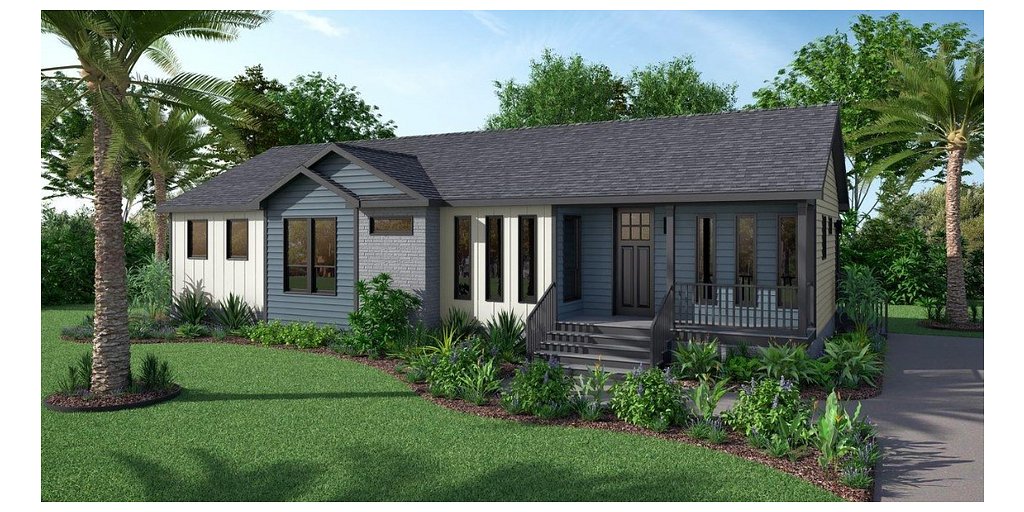
ORLANDO, FL – February 17, 2026 – Amidst the bustling energy of the NAHB International Builders’ Show, where the future of residential construction is on full display, a single-story home named the Coral Haven is drawing significant attention. It isn't a sprawling luxury estate, but its presence here may be far more consequential. Built by Champion Homes, a leading producer of factory-built housing, the 1,486-square-foot model represents a potent, tangible response to a question weighing on millions of Americans: How can we solve the nation's crippling housing affordability crisis?
As industry leaders and professionals tour its three bedrooms and open-concept living space, the Coral Haven serves as more than just a new product showcase. It’s a case study in the evolution of offsite construction—a method poised to challenge traditional building practices by offering a faster, more cost-effective, and higher-quality path to homeownership.
A Solution for an Intractable Problem
The American dream of homeownership feels increasingly out of reach. The nation faces a staggering housing deficit, with estimates suggesting a shortfall of at least 3 to 4 million homes needed to stabilize the market. This scarcity has driven prices skyward. As of early 2026, the median existing-home price hovers just under $400,000, while the income required to afford such a home is over $111,000 annually—about $25,000 more than the typical U.S. household earns. Coupled with mortgage rates that, while slightly cooled, remain in the 6% range, the barrier to entry is formidable.
It is within this challenging economic landscape that the value proposition of offsite construction becomes clear. By building homes in a climate-controlled factory, companies like Champion can streamline production, minimize weather delays, and leverage a skilled, centralized workforce. The result is a construction timeline significantly shorter than that of a comparable site-built home.
“We’re thrilled to have the opportunity to showcase Champion Homes’s forward-thinking approach to building attainable housing,” said Champion Homes President and CEO Tim Larson in a statement. “There is a critical need for cost-effective housing across the country, and we’re committed to delivering solutions so more people can have a high-quality, beautiful and attainable home to call their own.”
This efficiency translates directly to cost savings. Reduced labor hours, bulk purchasing of materials, and a drastic reduction in material waste—some studies suggest by over 50% compared to traditional sites—all contribute to a more attainable final price for the homebuyer.
Beyond the Stigma: The High-Tech Evolution of Housing
For decades, the term "factory-built" has been burdened by the stigma of outdated, low-quality "mobile homes." The Coral Haven, built at Champion's Ocala, Florida facility, is a direct rebuttal to this perception. With clean architectural lines, warm tones, beamed ceilings, and a spacious kitchen island, its design is indistinguishable from modern, site-built counterparts. The focus is on blending contemporary style with functionality, proving that budget-friendly does not mean a compromise on aesthetics or quality.
The modern offsite construction process is a high-tech endeavor. It relies on advanced software like Building Information Modeling (BIM) to create precise digital blueprints, allowing for virtual clash detection before a single piece of lumber is cut. In the factory, automation and robotics are increasingly used for repetitive tasks, ensuring a level of precision and consistency that is difficult to achieve on an open-air construction site. The result is a tighter building envelope, which improves energy efficiency by reducing air leakage and leads to lower utility bills for the homeowner.
Furthermore, the environmental benefits are substantial. Beyond minimizing landfill waste, offsite construction dramatically reduces neighborhood disruption. The constant noise, truck traffic, and debris associated with a months-long traditional build are condensed into a much shorter period of on-site assembly and finishing.
Bridging the Gap in Financing and Market Acceptance
Perhaps one of the most significant innovations propelling offsite construction into the mainstream is its ability to overcome historical financing hurdles. The Coral Haven highlights this versatility, as it can be built as either a modular home or a HUD-coded CrossMod®.
Modular homes are constructed in sections, or modules, in a factory and are built to the exact same state and local building codes as a traditional site-built home. Once transported to the property and placed on a permanent foundation, they are, for all legal and financial purposes, treated as real property. This makes them eligible for the same wide range of conventional mortgages, including FHA, VA, and USDA loans.
CrossMod® homes represent a critical bridge between manufactured housing and site-built homes. While built to the national HUD code, they incorporate features typically found in site-built construction, such as a permanent foundation, higher roof pitches, and garages or carports. This classification makes them eligible for conventional financing programs offered by government-sponsored enterprises like Fannie Mae and Freddie Mac, opening the door to a much larger pool of lenders and buyers.
“As a smart-built home that leverages the benefits of offsite construction, the Coral Haven represents Champion’s dedication to developing dynamic housing solutions for thoughtful homebuyers looking for a beautiful, high quality home they can afford,” noted Mike Tweden, the company's Vice President of Sales.
This growing acceptance in the financial sector is crucial. As more offsite-built homes are financed and sold, the availability of comparable sales data for appraisals improves, further smoothing the path for future buyers and solidifying these homes as a sound investment.
Reshaping an Industry from the Factory Floor
The rise of offsite construction is not just about building individual homes; it's about fundamentally reshaping the residential building industry. The traditional construction sector has long struggled with a persistent skilled labor shortage, a problem that factory-based building directly addresses by creating stable, year-round employment in a controlled setting where workers can be efficiently trained.
This shift is forcing a re-evaluation of everything from supply chains to local zoning laws. While regulatory hurdles and exclusionary zoning remain a challenge in many municipalities, momentum is shifting. States facing acute housing shortages are beginning to pass legislation to streamline permitting for modular and manufactured homes. The growing popularity of Accessory Dwelling Units (ADUs), often built using modular techniques, is also compelling local governments to modernize their regulations.
The increased visibility of high-quality offsite homes at major industry events like the International Builders' Show signals a critical turning point. It demonstrates that the technology, quality, and financial frameworks are now in place for offsite construction to move from a niche alternative to a mainstream solution, promising a future where the housing supply can finally begin to catch up with demand.
Topics & Related
Financial Services
Revenue
Related Company Pulse