
- €600 billion investment in Europe's battery storage market by 2030
- 77 GWh installed storage capacity in 2025, up 45% in one year
- 600 GWh projected storage capacity by 2030 (eightfold increase)
Experts agree that Europe's massive investment in battery storage is critical for grid stability, energy independence, and economic resilience, but regulatory harmonization remains a key challenge to achieving these goals.
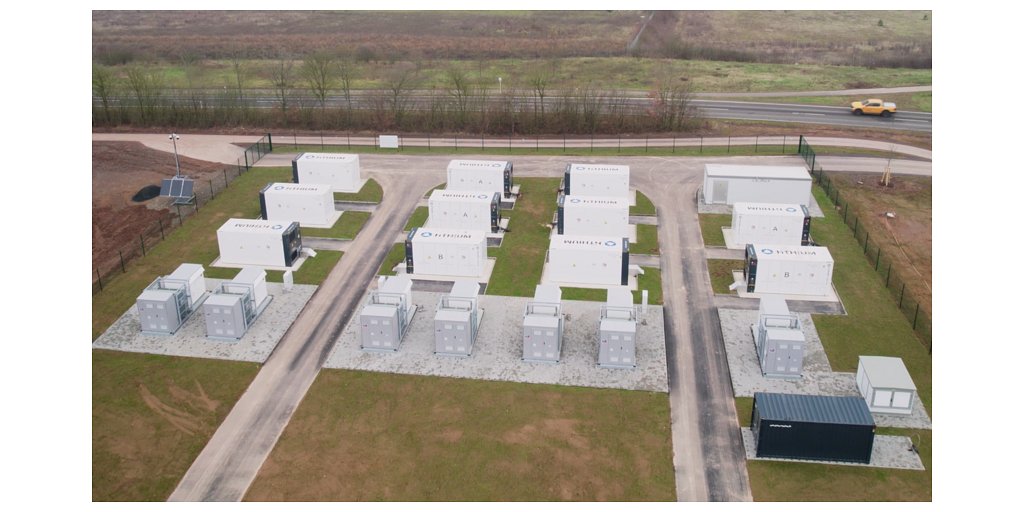
Europe's €600 Billion Bet on Batteries to Secure the Grid
MUNICH, Germany – June 03, 2026 – Europe is in the midst of a silent but monumental energy revolution, one measured not in barrels of oil but in gigawatt-hours. The continent's battery storage market is scaling at a breathtaking pace, transforming from a niche component of the green transition into a cornerstone of its economic and geopolitical strategy. By the close of 2025, the European Union's installed storage fleet had swelled to 77 gigawatt-hours (GWh), a staggering 45% increase in a single year. This is just the beginning.
Projections from SolarPower Europe's latest Solar+ scenario forecast an eightfold increase in storage capacity to nearly 600 GWh by 2030. This explosive growth, underpinned by hundreds of billions in investment, is not merely about powering homes after sunset. It represents a fundamental reshaping of the 2026 investment landscape, a high-stakes play to stabilize volatile energy grids, drive down costs, and decisively sever dependencies on foreign gas. As the industry converges in Munich for the ees Europe exhibition later this month, the central question is no longer if battery storage is the future, but how quickly Europe can build it and what roadblocks stand in its way.
The New Economic Arsenal: Storage as a Shield
The financial case for this massive build-out is becoming undeniable. The recent volatility in global energy markets has provided a stark lesson in the costs of dependency. In a powerful demonstration of the alternative, SolarPower Europe calculates that increased solar generation, enabled by a growing storage backbone, saved the EU an estimated €12.6 billion in avoided gas imports since the beginning of the most recent Middle East conflict. This isn't a one-off anomaly; it's a preview of a new economic reality.
Grid-scale batteries function as a critical economic shock absorber. By inhaling cheap, abundant solar and wind power during peak production and exhaling it during periods of high demand, they solve the renewable energy conundrum of intermittency. This flexible shifting of electricity prevents the proliferation of negative-price hours—a market distortion that can cripple the profitability of major solar and wind investments. For investors, this makes large-scale renewable projects more bankable and predictable.
In 2025 alone, the EU installed a record 27.1 GWh of new battery capacity. Tellingly, 55% of this was in the form of large-scale, subsidy-free battery energy storage systems (BESS). The market is proving it can stand on its own two feet, driven by clear commercial logic rather than government handouts. This momentum has attracted a torrent of capital, with analysts at Wood Mackenzie projecting European BESS deployment to reach 35 GW by 2034, signaling a long-term growth trajectory for a market already valued in the tens of billions.
A Technological Leap Forward
Driving this expansion is a profound technological shift. The industry is moving beyond simply providing short-term grid balancing. The average storage duration is projected to nearly double by 2030, from 1.9 hours to 3.5 hours. This leap is crucial, as it enables batteries to serve as a reliable power source for extended periods, effectively allowing renewables to function more like traditional baseload power.
This month's ees Europe exhibition, the continent's largest for the battery industry, will serve as a showcase for the hardware and software making this possible. Among the key innovations are advanced artificial intelligence platforms for storage management. These AI systems can optimize charging and discharging cycles with millisecond precision, forecasting grid demand, weather patterns, and market prices to maximize both grid stability and revenue. This layer of intelligence is what turns a static box of batteries into a dynamic, profit-generating asset.
Simultaneously, the industry is diversifying its chemical toolkit. While lithium-ion remains dominant, the emergence of sodium-ion batteries is a significant development. With major players like CATL signing multi-gigawatt-hour supply deals, sodium-ion technology is moving rapidly from the laboratory to commercial scale. Its potential for lower costs and reliance on more abundant materials makes it a compelling alternative for stationary storage, reducing supply chain risks associated with lithium and cobalt. These technological advancements are critical for pushing down costs and ensuring the industry can meet its ambitious deployment targets.
Navigating the Regulatory Headwinds
Despite the powerful economic and technological tailwinds, the path to 600 GWh is not without obstacles. Industry leaders and analysts uniformly point to a growing threat: a patchwork of "uncoordinated regulatory interventions" across EU member states. While the market is ready to deploy capital, it is being hindered by bureaucratic friction and inconsistent policy.
Industry associations like SolarPower Europe and the European Association for Storage of Energy (EASE) have been vocal in their calls for a unified EU "Energy Storage Action Plan." They argue that without a harmonized approach to grid connection, permitting, and market design, the continent risks squandering its momentum. The problem is tangible. In Germany, Europe's leading storage market, grid connection requests for BESS have ballooned to over 500 GW, creating a massive bottleneck that stalls projects and ties up capital. This is the friction that erodes investor confidence.
For the investment thesis to hold, policymakers must recognize energy storage as a political priority on par with renewable generation itself. As one industry strategist noted, "We need clear, consistent rules of the road. Capital will flow to markets where the framework is predictable and supportive." The upcoming ees Europe conference in Munich will dedicate significant time to these issues, with its ees Forum serving as a platform for intense discussions between industry executives, researchers, and policymakers on European law and market design. The outcomes of these discussions could very well determine the pace of Europe's energy transition for the remainder of the decade.