
- $6B annual cost: Necrotic enteritis (NE) costs the global poultry industry an estimated $6 billion yearly.
- 40% of flocks affected: Sub-clinical NE impacts approximately 40% of commercial broiler flocks worldwide.
- 2026 launch: BiomEdit's BE-101 probiotic aims for conditional USDA licensure and market launch by the end of 2026.
Experts view BiomEdit's engineered probiotic platform as a promising, sustainable alternative to antibiotics in poultry farming, with potential to disrupt the animal health market and address antimicrobial resistance concerns.
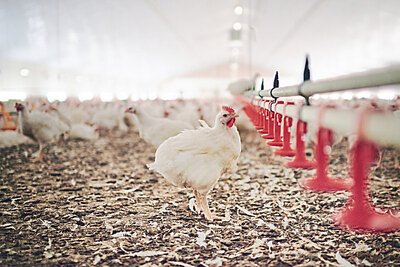
Engineered Probiotics: BiomEdit's Patented Fix for a $6B Poultry Problem
GREENFIELD, Ind. – April 21, 2026 – Animal health biotechnology company BiomEdit has secured foundational patents for a groundbreaking engineered probiotic platform, a move that solidifies its position as a pioneer in the quest to develop alternatives to antibiotics in agriculture. The newly issued patents protect the core technology behind the company's lead product, BE-101, a first-of-its-kind biologic aimed at combating a devastating intestinal disease in broiler chickens that costs the global poultry industry an estimated $6 billion annually.
The announcement signals a significant milestone for the Indiana-based firm and the broader ag-tech sector, providing a glimpse into a future where precision biologics could replace broad-spectrum drugs. BE-101 is now advancing toward conditional licensure from the U.S. Department of Agriculture (USDA), with a potential market launch anticipated by the end of 2026.
The Cost of a Common Scourge
The target of BiomEdit's innovation is necrotic enteritis (NE), a pervasive and destructive disease that haunts poultry operations worldwide. Caused by an overgrowth of the bacterium Clostridium perfringens, NE can spread rapidly through a flock, causing severe intestinal damage. In its acute form, the disease can lead to mortality rates as high as 50%. However, its sub-clinical presence is even more insidious, affecting an estimated 40% of commercial broiler flocks globally.
While not immediately fatal, sub-clinical NE quietly undermines the health and productivity of birds, impairing their ability to absorb nutrients. This leads to poor growth, reduced feed efficiency, and significant economic losses for farmers, estimated at up to $0.063 per bird. For decades, the primary tool for controlling NE was the routine use of antibiotic growth promoters (AGPs) in feed. However, mounting pressure from consumers and regulators over the rise of antibiotic-resistant superbugs has led to a dramatic reduction in antibiotic use in animal agriculture. This necessary shift has had an unintended consequence: a resurgence of diseases like NE, leaving the industry in urgent need of effective, sustainable alternatives.
This is the challenge BiomEdit aims to solve. The market is filled with non-antibiotic solutions like standard probiotics, prebiotics, and essential oils, but these often provide general gut support rather than targeting a specific pathogen with precision.
A Microscopic Factory for Gut Health
BiomEdit's approach represents a paradigm shift. The company's newly protected intellectual property, covered by U.S. Patents 12,599,637 and 12,427,174, centers on genetically engineering a beneficial bacterium, Lactobacillus reuteri, to perform a dual function. This well-characterized probiotic, known for promoting gut health, is transformed into a microscopic factory for targeted therapy.
This technology, which BiomEdit calls a probiotic vectored antibody (pvAb™), works by programming the Lactobacillus to produce and secrete specific antibodies directly within the chicken's gastrointestinal tract. In the case of BE-101, these antibodies are designed to bind to and neutralize the toxins produced by Clostridium perfringens, effectively disarming the pathogen before it can cause disease. This in situ delivery system is a key innovation, enabling localized and sustained expression of the therapeutic payload precisely where it is needed.
Unlike antibiotics, which can kill both harmful and beneficial bacteria, this targeted approach leaves the healthy gut microbiome intact. It is a precision strike rather than a carpet-bombing campaign, offering a way to control disease without contributing to antimicrobial resistance or disrupting the animal's natural defenses.
Navigating the Path to a Novel Biologic
Bringing such a novel technology from the lab to the farm is a complex journey, particularly when it involves genetically modified organisms intended for food-producing animals. BiomEdit is navigating this process through the USDA's Center for Veterinary Biologics (CVB), which has a specific pathway for innovative treatments: conditional licensure.
A conditional license is granted for products that address an unmet need, limited market, or emergency situation. It requires rigorous proof of purity and safety, as well as a “reasonable expectation of efficacy.” This allows promising biologics to become available more quickly than through the full licensure process, provided they meet strict criteria.
BiomEdit has been methodically advancing BE-101 along this regulatory path. The company has successfully completed all required laboratory safety studies and received USDA approval for its pivotal efficacy study protocol. Furthermore, its Summary Information Format (SIF) and Risk Assessment documents have been accepted, a crucial step that precedes public notification in the Federal Register. Based on this progress, the company anticipates receiving conditional licensure for BE-101 in the third quarter of 2026, with plans for commercial readiness in the fourth quarter.
The Future of Farming and Beyond
The successful development and launch of BE-101 could have an impact that reverberates far beyond the poultry house. The global animal health market is valued in the tens of billions of dollars and is rapidly evolving. Major players like Zoetis and Elanco have long dominated the space, but a new wave of biotechnology startups is driving innovation.
BiomEdit, founded in 2022, has attracted significant investor confidence, backed by a consortium of venture capital firms and strategic partners including Anterra Capital, Viking Global, and Nutreco. This support underscores the perceived potential of its platform to disrupt the market for traditional animal therapeutics. A commercially viable, non-antibiotic solution for a major poultry disease aligns perfectly with growing consumer demand for sustainably and transparently produced food.
The patented platform is not limited to chickens. The core technology of using engineered probiotics as delivery vehicles for therapeutic molecules is highly adaptable. BiomEdit has stated the patents cover applications across multiple species, spanning other livestock, pets, and potentially even human health. This suggests that BE-101 is not just a single product but the first proof-of-concept for a new class of precision microbiome-enabled biologics that could one day address a wide range of diseases.