
- $140 million funding round: Empower Semiconductor recently secured $140 million in Series D financing, bringing total funding to over $200 million.
- Data center energy surge: U.S. data center electricity use projected to rise from 183 TWh in 2024 to 426 TWh by 2030, with AI workloads expected to account for nearly half by 2026.
- Power efficiency gains: Empower’s Crescendo platform reduces power distribution losses by 5-20% and can cut processor power consumption by up to 50% in certain scenarios.
Experts agree that Empower Semiconductor’s global expansion and vertical power delivery technology represent a critical advancement in addressing AI’s escalating power demands, positioning the company as a key player in enabling sustainable AI infrastructure.
Empower's Global Push to Solve AI's Escalating Power Crisis
MILPITAS, CA – December 09, 2025 – As the artificial intelligence boom reshapes industries, a less visible but equally critical battle is being waged over power. This week, Empower Semiconductor, a key arms dealer in this conflict, announced a major global expansion, opening a new Silicon Valley headquarters and a German R&D center. This move, fueled by a recent $140 million funding round, is more than a corporate milestone; it’s a direct response to the immense energy demands of the AI revolution and a strategic play to dominate the specialized market for next-generation power delivery.
The Unseen Bottleneck: AI’s Insatiable Thirst for Energy
The generative AI models captivating the world are built on an infrastructure of unprecedented scale and power consumption. The data centers that house them are facing an energy crisis. Current projections show U.S. data center electricity use soaring from 183 terawatt-hours (TWh) in 2024 to a staggering 426 TWh by 2030. AI workloads, which accounted for roughly 20% of that consumption in 2024, are expected to make up nearly half by the end of next year.
This surge is driven by increasingly powerful processors. Next-generation GPUs, the workhorses of AI, are expected to consume up to 1,200 watts per chip, a significant jump from the 700-watt models of 2023. This escalating demand creates a fundamental engineering challenge: how to deliver massive amounts of clean, stable power to these processors with minimal waste. Traditional power delivery methods, which route electricity laterally across the motherboard, are proving inadequate. They suffer from significant transmission losses—often between 15% and 20%—and create electrical noise that can compromise the performance of sensitive AI chips.
Hyperscalers like Amazon and Microsoft have openly acknowledged this strain. In recent earnings calls, both companies reported massive capital expenditures on AI infrastructure, with Microsoft noting it remains "capacity constrained" despite billions in investment. This pressure creates a massive market opportunity for companies that can solve the power bottleneck, making innovations in power management as critical as the AI algorithms themselves.
A Vertical Leap in Power Technology
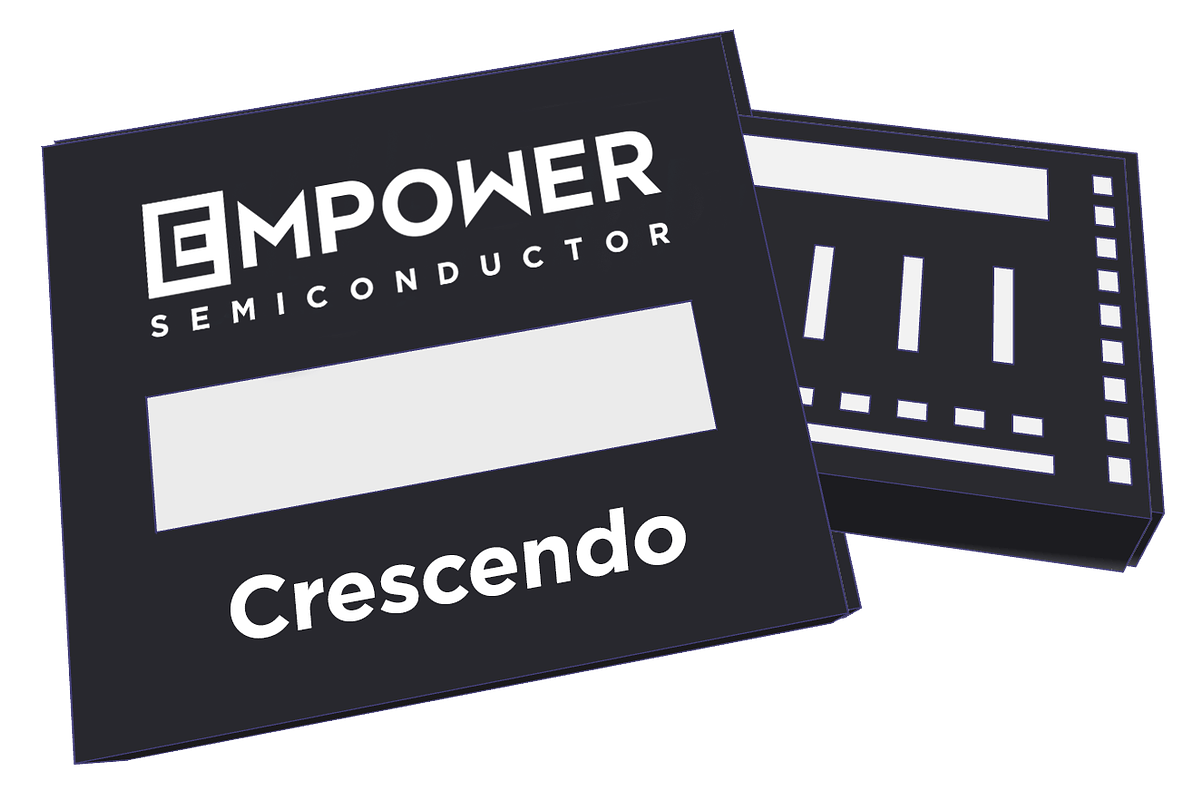
Empower Semiconductor is tackling this challenge by fundamentally redesigning how power reaches a processor. The company’s core innovation is its vertical power delivery (VPD) architecture, commercialized through its flagship Crescendo platform. Instead of routing power around the chip, Empower’s integrated voltage regulators (IVRs) are placed directly underneath it, creating a vertical, ultra-short path for electricity.
This seemingly simple change has profound implications. By drastically shortening the delivery path, the Crescendo platform cuts power distribution losses by 5-20% and eliminates the need for bulky external components, shrinking the total power solution footprint by up to five times. This space saving is invaluable in densely packed data center racks.
"The successful introduction of our industry-leading AI vertical power platform, known as Crescendo, has necessitated the scaling up of our engineering and manufacturing capacity,” said Tim Phillips, founder and CEO of Empower Semiconductor, in the company's announcement. “We’re now in a position to both accelerate our roadmap and provide the expansive capacity our customers demand.”
The technology’s performance benefits extend beyond efficiency. Empower's IVRs can perform dynamic voltage scaling—adjusting power levels in response to workload changes—100 times faster than competing solutions. This nanosecond-level responsiveness provides a more stable power supply, crucial for high-performance computing, and can reduce a processor's power consumption by up to 50% in certain scenarios. For data center operators, this translates directly into lower operating costs and a reduced environmental footprint, with estimates suggesting potential savings of 150 tons of CO2 per server rack over a three-year lifecycle.
Fueling Growth with Strategic Capital and Global Talent
The company's technological ambitions are backed by significant financial firepower. A recently closed Series D financing round, led by Fidelity Management & Research Company, injected over $140 million into the company, bringing its total funding to more than $200 million. The participation of investors like CapitalG, Alphabet's independent growth fund, and Maverick Silicon signals strong market confidence in Empower’s approach to solving what one investor called "one of the most critical enablers of AI infrastructure."
This capital is being deployed immediately to scale operations globally. The new headquarters in Milpitas, California, places the company squarely in the heart of Silicon Valley’s semiconductor ecosystem, providing access to an unparalleled pool of engineering and product development talent. This expansion is designed to support the rapid development of next-generation platforms beyond Crescendo.
Simultaneously, the new R&D center in Munich, Germany, serves as a strategic outpost in another global technology hotspot. Munich is a hub for power electronics and automotive engineering, offering a different but equally valuable talent pool. This dual-hub strategy allows Empower to run parallel development tracks, tapping into diverse expertise to accelerate innovation.
"We’re shortening our development cycles while broadening our portfolio,” noted Trey Roessig, CTO and senior vice president of engineering. “This step is instrumental in providing the breakthrough innovations the AI industry has been asking for.”
By establishing these strategic centers, Empower is not just expanding its physical footprint; it is building a global R&D engine designed to outpace competitors like Monolithic Power Systems and Navitas Semiconductor. The goal is to solidify its leadership in the specialized niche of high-performance power management and become an indispensable partner to the hyperscalers and chip designers building the future of AI. This calculated expansion underscores a crucial reality: the next great leap in artificial intelligence may depend less on the algorithm and more on the elegance of the power solution that fuels it.