
- Early Access Launch: March 10, 2026 on Steam
- Development Time: 5 years by a team of 15-20
- Demo Availability: February 23, 2026 during Steam Next Fest
Experts view DreamWorld as a high-risk, high-reward project with groundbreaking potential, but its success hinges on overcoming significant technical and execution challenges.
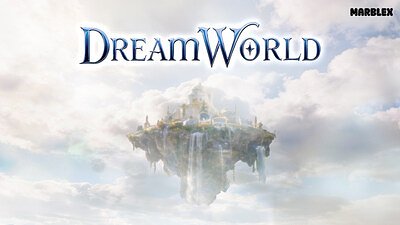
DreamWorld: AI Sandbox MMO Promises Infinite Worlds, Faces Hurdles
SEOUL, South Korea – February 19, 2026 – MARBLEX, the blockchain-focused subsidiary of gaming giant Netmarble, has announced its most ambitious project to date: DreamWorld, a next-generation Sandbox MMO slated for an Early Access launch on Steam, March 10. Developed by DreamWorld Realities Inc., the title promises a revolutionary experience built on Unreal Engine 5, featuring a single, infinite, shared world for all players and an AI system that generates 3D models from text prompts.
A playable demo will be available during the Steam Next Fest starting February 23, offering players a first look at what the developer calls a five-year effort. "DreamWorld has been five years in the making, built by a team obsessed with one goal: letting massive numbers of players create and build together in real time," said Garrison Bellack, CEO of DreamWorld Realities Inc., in the official announcement. "We're excited to bring that vision to Steam, and to collaborate with MARBLEX as our global marketing partner."
The announcement positions DreamWorld as a creator-driven platform that merges the boundless freedom of sandbox games with the deep progression of an MMORPG. However, this ambitious vision arrives carrying the weight of high expectations and a history of developmental challenges that the upcoming demo will need to overcome.
A Universe Forged by AI and Ambition
At the core of DreamWorld's appeal is its radical approach to scale and creation. The game eschews traditional MMO architecture, eliminating servers and shards in favor of a single persistent world powered by infinite procedural generation. In theory, this means every player, regardless of their location, will inhabit the same ever-expanding universe, where their creations can stand as permanent landmarks for all to see.
The most touted feature is an AI text-to-3D model generation system, reportedly a collaboration with AI platform Meshy. This tool is designed to allow players to describe an object or structure in text and have the game's AI generate it as a 3D asset in real-time. The promise is one of unparalleled creative freedom, enabling users to construct anything from towering fortresses and intricate mini-games to entire cities at a scale previously unseen.
Beyond this creative suite, the developer promises deep MMORPG systems. Players will explore vast, procedurally generated biomes to gather hundreds of resources, craft weapons and spells, and engage in combat. A wide array of mobility mechanics—including climbing, gliding, flying, and mounted travel—are intended to make traversing this infinite world a core part of the experience. The goal is to create a seamless blend of the directed progression found in RPGs and the emergent, player-driven narrative of a sandbox.
MARBLEX's Strategic Leap into Mainstream PC Gaming
The partnership with DreamWorld marks a significant strategic maneuver for MARBLEX. Primarily known for its blockchain-powered ecosystem integrated into Netmarble mobile titles like Ni no Kuni: Cross Worlds and A3: Still Alive, MARBLEX is now making a major push into the mainstream PC gaming market via Steam. The marketing for DreamWorld notably emphasizes its gameplay innovations—the AI, the single-shard world, the UE5 graphics—while the company's blockchain roots are left in the background.
This move suggests a diversification strategy, aiming to capture a broader audience that may be indifferent or even skeptical of blockchain gaming. By backing a high-concept, technologically ambitious title on PC's largest digital storefront, MARBLEX is signaling an intent to compete directly in the traditional games space. Success with DreamWorld could establish the company as a formidable publisher beyond its web3 niche, leveraging the vast resources and industry experience of its parent corporation, Netmarble, to carve out a new market share.
A Troubled Past and the Challenge of Execution
While the promises are grand, DreamWorld's development has not been without significant turbulence. Early playtests and alpha versions have drawn sharp criticism, raising questions about the project's ability to deliver on its ambitious technical claims. A playtest in late 2024 was described by one critic as an "AI Nightmare," where the cornerstone text-to-3D feature was reportedly non-functional in a multiplayer context. Generated assets were allegedly visible only to the creator, appearing as a generic placeholder to others and rendering the collaborative building promise moot.
Further critiques from mid-2025 painted a picture of a game that was "rudimentary, bland, and still quite buggy," with one outlet suggesting it was a "cautionary tale" in AI implementation that felt more like a tech demo than a cohesive game. The gameplay loop was compared unfavorably to existing survival crafting titles, with one early player describing it as a "Cruddy Valheim MMO" with clunky controls. The project's early history, which included a Kickstarter campaign, also faced community scrutiny over its development progress and management.
These past issues place immense pressure on the upcoming Steam Next Fest demo. Developer DreamWorld Realities Inc., a relatively small team of around 15-20 individuals, must now prove that it has solved these fundamental technical hurdles. For DreamWorld to succeed, the AI creation tools must not only work but be seamlessly integrated into a shared experience, and the core gameplay must be polished and engaging enough to compete in a crowded market that includes giants like Minecraft and Roblox, as well as a new wave of ambitious UE5 MMOs.
The concept of a single, infinite world also presents immense social and technical challenges, from moderation at scale to maintaining server stability. The demo will be the first true test of whether DreamWorld is a glimpse into the future of online gaming or another cautionary tale of a vision that was too ambitious to realize. For players and the industry alike, all eyes will be on the launch to see if this dream can finally become a reality.