
- $11 million in potential funding for the trial
- 50% higher incidence of UC in the U.S. military vs. the general population
- 50% remission rate with CurQD vs. 8% on placebo in prior study
Experts view this trial as a promising step toward improving ulcerative colitis treatment outcomes by combining evidence-based pharmaceuticals with well-researched nutraceuticals, reflecting a broader shift toward integrative medicine.
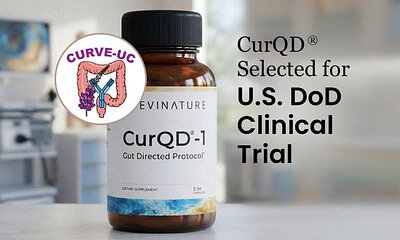
DoD Funds Trial Combining Drug and Herb for Ulcerative Colitis
NEW YORK, NY – March 18, 2026 – In a significant move that could reshape treatment for ulcerative colitis (UC), the U.S. Department of Defense (DoD) is funding a major clinical trial to test an innovative combination therapy. The study, led by researchers at Mount Sinai Hospital, will investigate whether a plant-based nutraceutical, CurQD, can enhance the effectiveness of a standard biologic drug. With an initial planning grant of $800,000 and the potential for up to $11 million in total funding, this international collaboration brings together leading institutions including the University of Chicago Medicine and Israel's Sheba Medical Center.
The trial aims to address a pressing health issue, particularly within the armed forces, and signals a growing willingness in mainstream medicine to explore evidence-based complementary therapies for chronic diseases.
A Battlefield Within the Ranks
The DoD's substantial investment is not arbitrary; it is a direct response to the disproportionate impact of inflammatory bowel disease (IBD) on its personnel. Ulcerative colitis and Crohn's disease affect over 35,000 military health-care beneficiaries. Alarmingly, the incidence rate of UC in the U.S. military is nearly 50 percent higher than in the general population. Researchers who authored the grant application suggest that environmental exposures unique to military service may be a contributing factor.
This chronic inflammatory condition of the large intestine can cause debilitating symptoms, including severe pain and diarrhea, significantly impairing a service member's ability to function and often leading to medical discharge. For veterans, UC can become a lifelong battle, with many seeking VA disability benefits for service-connected conditions. The physical and psychological toll, coupled with the economic burden, underscores the urgent need for more effective treatments that can improve health outcomes for this vulnerable population.
Breaking the 50% Treatment Plateau
For years, the treatment of moderate-to-severe ulcerative colitis has relied on powerful biologic drugs like vedolizumab, which works by preventing inflammatory cells from entering the gut lining. While these drugs have been a lifeline for many, their effectiveness hits a frustrating ceiling. Clinical trials for individual drug therapies consistently show that response and remission rates tend to plateau at around 50%. This leaves a large portion of patients still struggling with active disease, facing the prospect of cycling through different medications or eventually requiring surgery.
This new trial confronts that challenge head-on. The core question is whether combining two distinct approaches—a gut-selective pharmaceutical and an evidence-based nutraceutical—can synergistically raise the bar for patient outcomes. The study will pair the biologic vedolizumab with CurQD, a proprietary formulation from the Israeli company Evinature that combines curcumin and QingDai (indigo naturalis).
"One of several factors that is motivating us to explore this type of innovative combination is that we believe that patients are quite interested in the idea of using a non-pharmacological complementary approach to support the effectiveness of their care," said Dr. Ryan Ungaro, the director of clinical research in gastroenterology at Mount Sinai and the trial's principal investigator, in an interview with Crain's New York Business. "In essence, what we are trying to do here is to see if we can potentially improve that percentage [of responders] with different complementary approaches."
Bridging Plant Science and Pharmaceuticals
CurQD is not an unproven folk remedy. Its components, curcumin (the active compound in turmeric) and the traditional herb QingDai, are known for their anti-inflammatory properties. More importantly, the specific formulation has been subjected to the kind of rigorous testing usually reserved for pharmaceuticals. A 2024 randomized, double-blind, placebo-controlled trial published in Clinical Gastroenterology and Hepatology found CurQD to be highly effective for inducing remission in patients with active UC. In that study, 50% of patients taking CurQD achieved clinical remission after eight weeks, compared to just 8% of those on a placebo.
This scientific validation is a key reason for its inclusion in the DoD-funded trial. The European Crohn's and Colitis Organisation (ECCO) also recognized the growing evidence, including curcumin and QingDai in its 2025 consensus guidelines as recommended adjunctive considerations for IBD management.
"This landmark trial is unique in addressing a novel combination strategy for patients with ulcerative colitis, namely, rather than combining two pharmaceuticals, we will test the combination of a pharmaceutical with a plant-based nutraceutical for improving induction and maintenance of remission over giving the pharmaceutical alone," stated Prof. Shomron Ben-Horin, M.D., Chief of Gastroenterology at Sheba Medical Center and Medical Lead at Evinature.
This approach also aligns with a growing desire among patients for more holistic care. "This approach... addresses patients' wishes to harness nutritional support with plant-based natural compounds to improve their gut condition," added Nir Salomon, a co-founder of Evinature and Head of R&D.
Navigating a New Medical Frontier
The trial's design highlights a critical distinction in the U.S. regulatory landscape. CurQD is classified as a dietary supplement, which the FDA regulates as a category of food. Unlike drugs, supplements do not require pre-market approval demonstrating safety and efficacy. This has historically created a divide, with many medical professionals remaining skeptical of products that have not undergone stringent pharmaceutical-grade testing. The nutraceutical market, valued in the hundreds of billions of dollars, is booming, but it faces challenges of quality control and unsubstantiated claims.
However, this study represents a potential turning point. By placing a well-researched nutraceutical into a high-stakes, federally funded clinical trial alongside a leading pharmaceutical, researchers are treating it with scientific seriousness. It reflects a broader shift towards integrative medicine, where the best of different worlds are combined for patient benefit. The results of this study, once completed and peer-reviewed, could have significant implications not only for the 1.25 million Americans living with ulcerative colitis but also for the evolving relationship between mainstream medicine and evidence-based natural compounds.