
- 30% to 50% of patients abandon CPAP treatment due to discomfort or intolerance.
- 15 minutes: Time required to precision-fit the myTAP oral appliance.
- 172 VA Medical Centers and 95 DoD Medical Facilities now have access to the new treatment options.
Experts agree that the shift toward Oral Appliance Therapy (OAT) as a first-line treatment for mild to moderate sleep apnea represents a significant advancement in patient-centered care, particularly for veterans who struggle with traditional CPAP therapy.
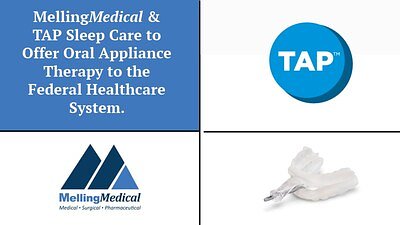
New Hope for Veterans: Oral Appliances Transform Sleep Apnea Treatment
ALEXANDRIA, VA – April 29, 2026 – A groundbreaking partnership is set to deliver quieter nights and better health to America's veterans and active-duty service members. MellingMedical, a Service-Disabled Veteran-Owned Small Business (SDVOSB), announced today a strategic alliance with TAP Sleep Care to provide innovative oral appliance therapies for obstructive sleep apnea (OSA) throughout the vast federal healthcare system. The collaboration makes cutting-edge, patient-preferred treatments immediately accessible, marking a significant shift in the standard of care for a condition that disproportionately affects the military community.
This move directly aligns with a major evolution in clinical guidance from the Department of Veterans Affairs (VA) and the Department of Defense (DoD). The partnership leverages MellingMedical’s unique position within the federal procurement system to fast-track solutions that promise higher patient adherence and improved quality of life, particularly for those who have struggled with traditional therapies.
A New Standard of Care Emerges
At the heart of this initiative is the recently updated 2025 VA & DoD Clinical Practice Guideline for the Management of OSA. In a landmark change, the guideline now recommends Oral Appliance Therapy (OAT) as a first-line treatment option for patients with mild to moderate sleep apnea. This places OAT on equal footing with the long-established Continuous Positive Airway Pressure (CPAP) therapy, signaling a paradigm shift toward more patient-centered care.
For decades, CPAP machines have been the default treatment, using pressurized air delivered through a mask to keep a patient's airway open during sleep. While effective, the therapy is plagued by low adherence rates, with studies indicating that 30% to 50% of patients abandon the treatment due to discomfort from the mask, noise, or feelings of claustrophobia. The new guidelines acknowledge this reality, emphasizing that a treatment is only effective if a patient actually uses it. Research cited in the guideline development shows that OAT can produce equivalent health outcomes to CPAP in real-world settings, largely because patients are more likely to use the less invasive devices consistently.
Beyond the Mask: Addressing Veteran-Specific Challenges
The challenges of CPAP adherence are often magnified within the veteran community. Many service members grapple with conditions such as Post-Traumatic Stress Disorder (PTSD), which can make wearing a restrictive facial mask all night an untenable proposition.
"Many veterans, particularly those managing conditions like PTSD, struggle with the restrictive masks and headgear of traditional PAP therapy, which often leads to poor adherence and continued sleep disruptions," said Chris Melling, founder and CEO of MellingMedical. "TAP Sleep Care's innovative approach changes that equation. By offering minimally invasive oral appliances that can be precision-fit in just 15 minutes, we are providing a highly effective, first-line alternative that patients actually prefer to use."
The products now available through the partnership, myTAP® and myTAP PAP®, are designed to overcome these barriers. The myTAP is a fully customizable oral appliance, similar to a mouthguard, that gently positions the lower jaw forward to keep the airway open. It is FDA-cleared and can be precision-fit by a provider in a single short visit. For patients who may still require some form of air pressure, the myTAP PAP® offers a comfortable, strapless nasal pillow mask, eliminating the cumbersome headgear that many find intolerable.
Navigating the Federal Labyrinth
Introducing new medical technology into the federal healthcare marketplace—the largest integrated medical system in the U.S.—is notoriously complex. The system is governed by a labyrinth of acquisition regulations, agency-specific requirements, and multiple contracting pathways. This is where MellingMedical’s role becomes critical.
As an SBA-Verified SDVOSB, MellingMedical holds established, long-term contracts with federal agencies, including the VA's Electronic Catalog (ECAT), the Federal Supply Schedule (FSS), and the Defense Logistics Agency's Distribution and Pricing Agreement (DAPA). By partnering with MellingMedical, companies like TAP Sleep Care can bypass years of bureaucratic navigation and gain immediate, compliant access to a network that includes all 172 VA Medical Centers and 95 DoD Medical Facilities.
This alliance effectively compresses the timeline for market entry, ensuring that state-of-the-art sleep solutions reach veterans and service members efficiently. It's a strategic model that leverages specialized expertise in federal procurement to bridge the gap between innovation and patient access.
Immediate Impact and Improved Outcomes
For veterans suffering from the debilitating effects of untreated sleep apnea—which include daytime fatigue, cognitive impairment, and increased risk of cardiovascular disease—this partnership promises tangible and immediate benefits. The availability of a comfortable, effective alternative means more patients are likely to start and stick with treatment.
Charles Collins, CEO of Airway Management, the innovator behind TAP Sleep Care, highlighted the rapid results. "We are excited to partner with MellingMedical to reach more patients who need effective OSA treatment. With myTAP, we are seeing immediate treatment results—patients often report noticeable improvements in sleep quality, reduced daytime fatigue, and enhanced daily function from the very first nights of use," he stated. "This partnership ensures access to life-changing devices quickly and seamlessly through established VA and DoD channels."
The collaboration represents more than just a business arrangement; it is an implementation of evidence-based, patient-first principles on a national scale. As Chris Melling concluded, "This partnership isn't just about adding another device to our schedule; it's about delivering immediate, life-enhancing improvements to the sleep and overall health of America's service members."