
DFCU’s Michigan Gambit: Betting on Branches in a Digital World
- $500 million: Total returned to members through DFCU's Cash Back program over 20 years.
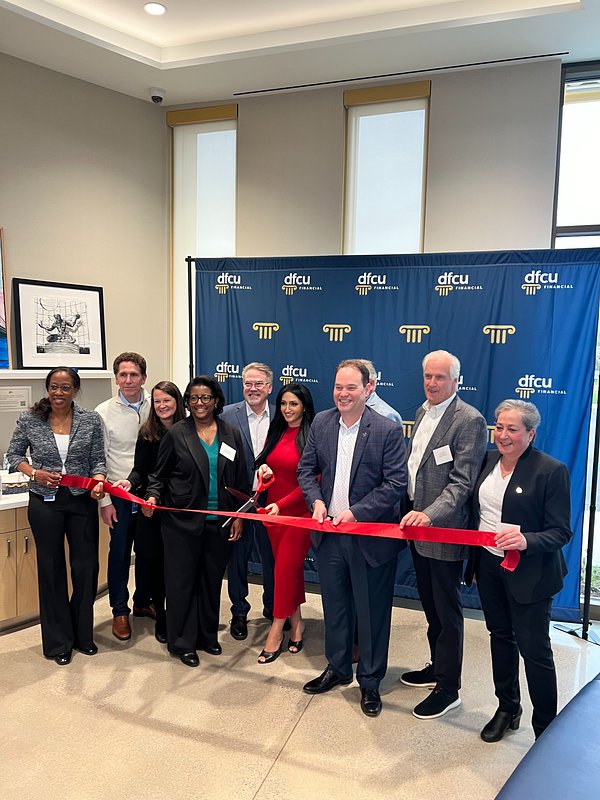
- 3 new branches: Opened in Southeast Michigan (Allen Park, White Lake, Bloomfield Township).
- 60% of Michigan population: Estimated credit union membership rate.
Experts would likely conclude that DFCU’s strategic expansion and member-centric rewards program demonstrate a strong bet on the enduring value of physical presence and cooperative banking in an increasingly digital financial landscape.
DFCU’s Michigan Gambit: Betting on Branches in a Digital World
DEARBORN, MI – June 22, 2026 – In an era where the prevailing wisdom dictates a retreat from physical banking, DFCU Financial is making a decidedly contrarian move. The Dearborn-based credit union has just capped a multi-month expansion with the opening of three new full-service branches in Southeast Michigan’s Allen Park, White Lake, and Bloomfield Township. On the surface, this is a standard corporate announcement. But reading the underlying signals, this is not just an expansion; it’s a calculated declaration of intent. DFCU is doubling down on a ground game, betting that in the fiercely competitive financial landscape of Michigan, tangible presence and tangible rewards are the ultimate differentiators.
A Counter-Cyclical Bet on Brick and Mortar
The financial industry’s narrative for the past decade has been one of digital transformation, often at the expense of local branches. Major national banks have been systematically consolidating their physical footprints, steering customers toward apps and websites. Yet DFCU, with nearly $8 billion in assets, is planting its flag in new suburban territories. This move places them directly in a bustling market populated by banking giants like Chase and Huntington, as well as formidable credit union peers like MSU Federal Credit Union and Lake Michigan Credit Union.
The strategic choice of these locations—Allen Park, White Lake, and Bloomfield Township—is revealing. These are diverse, established communities where a local presence can still cultivate deep relationships. For a credit union, which is fundamentally a cooperative owned by its members, that physical touchpoint is not a legacy cost but a strategic asset. It’s a place for complex conversations about mortgages, small business loans, and wealth management that many customers are still reluctant to have with a chatbot. While digital convenience is a given, DFCU’s strategy suggests a belief that trust is built face-to-face, a philosophy that resonates in Michigan, where an estimated 60% of the population are credit union members.
This expansion is a signal of confidence that the cooperative model can thrive not by simply mirroring the digital-first strategy of its larger competitors, but by integrating it with a robust, community-embedded physical network. The new branches, with their modern designs and full-service capabilities, are not just transaction centers; they are designed to be hubs of financial counsel and community connection.
The Half-Billion-Dollar Differentiator
If the new branches are the physical manifestation of DFCU’s strategy, its Cash Back program is the financial engine driving it. This is not a typical points program or a simple cash-back-on-debit-purchases offer. For 20 years, the credit union has been running a unique program that rewards members based on their entire relationship—encompassing both their savings and their loans. Over that period, it has returned more than $500 million directly to its members.
This is the kind of number that stops you in your tracks. Just this past January, the institution distributed another $22.2 million, the 19th consecutive year of the payout. The mechanism is powerful in its simplicity: the more a member banks with DFCU, the more they get back. It transforms the traditional bank-customer dynamic into a genuine partnership. Savers and borrowers are rewarded alike, creating a virtuous cycle where member loyalty is directly tied to the institution's success. As CEO Ryan Goldberg stated in the announcement, it’s about "putting value back into the hands of our members."
In a market where consumers are increasingly savvy about extracting value, this program is a formidable competitive weapon. It moves the conversation beyond marginal differences in interest rates to a substantial, tangible annual return. While other institutions offer perks, DFCU has institutionalized a system of shared prosperity. This half-billion-dollar figure is more than a marketing point; it is a clear signal of long-term ambition, demonstrating an unwavering commitment to a member-centric model that larger, shareholder-driven banks are structurally incapable of replicating on the same scale.
Weaving the Community Fabric
A branch in a community is just a building. A trusted local institution is part of the community’s fabric. DFCU’s strategy clearly understands this distinction. The grand openings for the new locations were not quiet ribbon-cuttings; they were community festivals featuring local radio personalities, family entertainment, and, notably, pet adoption events in partnership with organizations like The Michigan Humane Society.
This is not an isolated charm offensive. A look at DFCU's broader activities reveals a consistent pattern of deep community integration. During its 75th-anniversary celebration in 2025, the credit union committed to a series of substantial donations to local nonprofits nominated by its own members. This practice of empowering members to direct charitable giving reinforces the cooperative spirit and builds goodwill that no advertising campaign can buy. By investing in local causes, from student grants to animal welfare, DFCU is embedding itself in the daily lives and values of the communities it serves.
This community engagement is the essential third leg of their strategic stool. The physical branches provide the access, the Cash Back program provides the financial incentive, and the community involvement provides the trust. It’s a holistic approach designed to make DFCU not just a place to bank, but a fixture of the local landscape.
Reading the Signals: Confidence in the Cooperative Model
When you deconstruct DFCU Financial's recent moves, what emerges is a picture of profound strategic clarity and confidence. The decision to expand its branch network, the long-term investment in a massive member rewards program, and the deep-seated community engagement are not separate initiatives. They are interconnected components of a single, coherent strategy: to win by being the most authentic version of a credit union possible.
"Growth is about more than adding locations. It’s about continuing to invest in the communities we serve and creating opportunities to build lasting relationships with our members,” said CEO Ryan Goldberg. This statement, while typical for a press release, rings true when viewed against the backdrop of the half-billion-dollar cash-back figure and consistent community partnerships. The strategy is validated by the robust health of the credit union sector in Michigan, where institutions are posting strong earnings and loan growth that outpaces the national average.
In the final analysis, DFCU’s expansion is a high-stakes bet on the enduring power of the cooperative model. It’s a signal that in the battle for the modern consumer, the winning formula may not be found in algorithms alone, but in a powerful combination of digital convenience, hyperlocal presence, and a genuine commitment to sharing success with the members who create it.
📝 This article is still being updated
Are you a relevant expert who could contribute your opinion or insights to this article? We'd love to hear from you. We will give you full credit for your contribution.
Contribute Your Expertise →