
- 48 new affordable housing units filled in 6 weeks with 330+ applications. - 20,000-unit deficit of affordable housing in Delaware, with 50,000 cost-burdened households. - Low-Income Housing Tax Credit (LIHTC) program raises $0.90 in equity per $1 of tax credits invested.
Experts would likely conclude that Delaware's housing crisis demands scalable public-private solutions, with Reese Apartments serving as a successful model for affordable housing development through financial innovation and community-focused design.
Delaware's Housing Blueprint: A 48-Unit Case Study in a 20,000-Unit Crisis
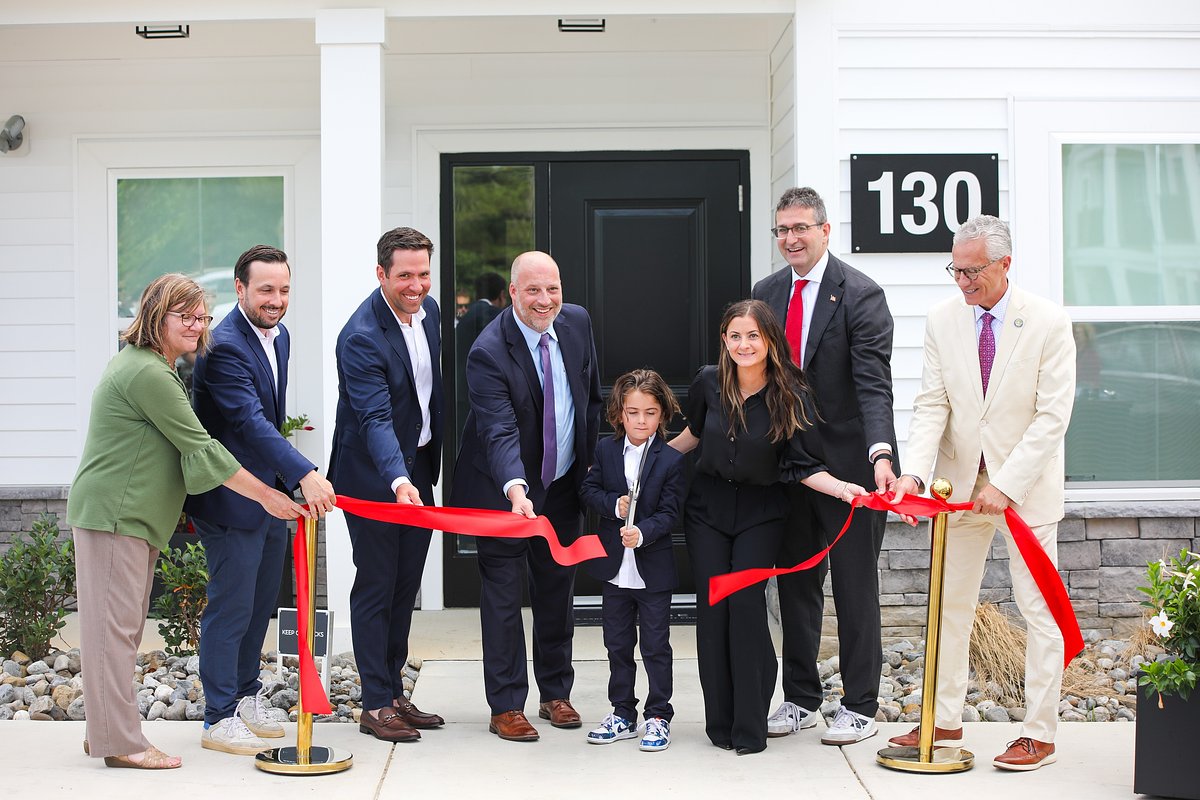
FELTON, DE – June 11, 2026 – At the ribbon-cutting for the Reese Apartments this morning, the mood was celebratory. Governor Matt Meyer and local leaders lauded the 48 new affordable housing units as a victory for Kent County. But the real story wasn’t the ceremony; it was the number that preceded it. Before the doors even officially opened, more than 330 applications flooded in for those 48 spots. The community reached full occupancy in just six weeks, a stark metric that transforms this local success story into a critical data point on Delaware’s profound housing shortage.
This overwhelming demand is a direct reflection of a statewide crisis. According to state data, Delaware has a deficit of over 20,000 affordable rental units, and approximately 50,000 households are classified as “cost-burdened,” spending more than 30% of their income on housing. In this environment, a project like Reese Apartments is more than just new housing; it’s a high-pressure test of the systems designed to solve the problem. Developed by Carson Development LLC, the project serves as a powerful case study in the effectiveness of public-private partnerships, the vital role of financial innovation, and the emerging leadership shaping the industry’s future.
A Crisis of Supply, A Blueprint for a Solution
The gap between housing supply and demand in Delaware is not a gap; it's a chasm. The rapid lease-up at Reese Apartments is a microcosm of this market failure. The project, however, also provides a clear blueprint for a functional solution, one heavily reliant on the Low-Income Housing Tax Credit (LIHTC) program. Administered by the Delaware State Housing Authority (DSHA), the LIHTC program is the financial engine that makes projects like this possible.
“Reese Apartments is a great example of how strategic investment and programs such as LIHTC can help solve Delaware’s housing crisis,” said DSHA Director Matthew Heckles. The program works by providing a dollar-for-dollar reduction in federal income tax liability in exchange for private investment in affordable housing. As Heckles explained, “For every $1 of tax credits invested, we raise a minimum of approximately 90 cents in equity.” This mechanism allows developers like Carson to bridge the financing gap that often makes affordable projects financially unfeasible, delivering high-quality housing that must remain affordable for at least 30 years.
The collaboration extends beyond state and federal levels. Support from Kent County and private financing partners was crucial, demonstrating a multi-layered partnership model. This intricate financial architecture is precisely the kind of scalable strategy that state policymakers, grappling with recommendations from the recent Affordable Housing Production Task Force, are looking to replicate.
More Than Walls: Engineering Community and Economic Uplift
What sets the Reese Apartments model apart is its focus on building a community, not just a collection of units. This philosophy is visible in the physical design—which includes a community room, playground, and walking paths—and embedded in its operational strategy. The grand opening featured booths from the Delaware Food Bank and Delaware State University’s Expanded Food and Nutrition Education Program, which hosted a “ReThink Your Drink” nutritional awareness campaign. This is not a one-off event; it’s the start of planned on-site services, including health education and financial counseling, offered free to residents.
“Access to stable housing plays a direct role in the health and economic strength of our communities,” Governor Meyer noted at the ceremony. The project’s design directly supports this principle. Key infrastructure upgrades, including expanded water and sewer capacity and a new on-site bus stop along the vital Route 13 corridor, were integrated into the development. This improves connectivity to regional job centers, transforming the development from an isolated island of housing into a connected node in the local economy.
For residents, the impact is immediate and profound. One new resident described the move as providing a crucial sense of “stability,” allowing them to better manage other essential costs like groceries and medication. “When it was finished being built here at Reese, I was able to move in in March,” they shared. “And so now this place I can call home.” This sentiment underscores that the true product isn’t the apartment itself, but the foundation it provides for families to succeed.
The New Face of Development: How Diverse Leadership is Shaping Housing
Behind this community-centric project is Carson Development, a firm breaking new ground in more ways than one. As the first and only Women-Owned Business Enterprise (WBE) to be a LIHTC developer in Delaware, the company represents a significant shift in a traditionally male-dominated industry. This isn’t merely a demographic footnote; it speaks to a potentially different approach to development.
“From the beginning, our goal was to create more than just housing. We wanted to build a community that residents would feel proud to call home,” said Danielle Smith, President of Carson Development. This ethos, focused on the holistic well-being of residents, is woven throughout the project’s design and its integration of social services. The success of Reese Apartments suggests that diverse leadership can bring fresh perspectives and priorities, leading to innovative models that are more responsive to the complex needs of modern communities.
Scaling the Model: From Felton to a Statewide Strategy
With the successful completion of Reese Apartments, the question now turns to scalability. Carson Development is already moving forward with additional projects in Newark, Delaware, and Chestertown, Maryland, indicating a clear intent to replicate and refine its model. The challenge for the state is to create an environment where such projects are the norm, not the exception.
This requires tackling systemic obstacles. The state’s Affordable Housing Production Task Force has already outlined a path forward, emphasizing the need for zoning reform, streamlined approval processes, and expanded funding opportunities. DSHA officials have repeatedly noted an overabundance of single-family homes and a critical need for more diverse housing stock, including the kind of multi-family units seen at Reese Apartments. The project’s success delivers a tangible proof of concept that can empower local governments to embrace density and mixed-use development. As construction firm Gillis Gilkerson delivered this project on schedule, it also demonstrates that with strong coordination and a shared vision, the execution of these complex projects can be both efficient and high-quality.