
- 4,151% surge in phishing volume since late 2022
- 54% success rate of AI-generated phishing emails (up from 12% for traditional phishing)
- 79 webpage attributes analyzed in real-time by Dashlane’s AI model
Experts agree that AI-powered phishing scams pose a growing threat, but Dashlane’s new Scam Protection feature offers a proactive, privacy-first defense that adapts to emerging threats.
Dashlane Deploys AI to Combat AI-Powered Phishing Scams
NEW YORK and PARIS – February 03, 2026 – As cybercriminals increasingly weaponize artificial intelligence to create sophisticated and convincing scams, credential security leader Dashlane has responded in kind, launching a new AI-powered Scam Protection feature for its personal plan users. The new tool represents a significant evolution in personal cybersecurity, moving beyond traditional defenses to provide real-time, on-device analysis that can identify and block phishing attempts before a user ever enters sensitive information.
This proactive shield is designed to work across the entire web, protecting users not just on sites where they have saved logins, but also during first-time interactions like online shopping checkouts, new account sign-ups, and even fraudulent job applications. The launch signals a new front in the digital arms race, where AI is becoming an indispensable tool for both attackers and defenders.
An AI Detective Fighting Fire with Fire
The digital landscape has become increasingly perilous with the advent of accessible generative AI. Cybersecurity reports indicate a staggering 4,151% surge in phishing volume since late 2022, with AI-generated phishing emails now boasting a success rate of 54%, a dramatic increase from the 12% success rate of their predecessors. These AI-crafted attacks are often free of the typos and grammatical errors that once served as red flags, and they can mimic official communications with uncanny accuracy.
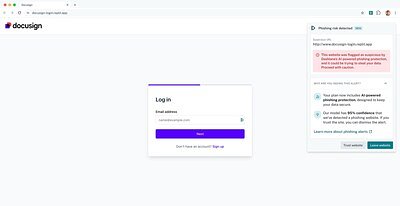
In response, Dashlane’s Scam Protection acts as what the company calls a "specially-trained digital detective." The feature employs a patent-pending, proprietary AI model that analyzes 79 different attributes of a webpage in real time. This analysis includes scrutinizing for URL anomaly patterns, detecting an excessive number of external links, and even identifying hidden images—subtle indicators of malicious intent that a busy or distracted user would likely miss.
"AI has made it easier for scammers to quickly create convincing phishing campaigns that now reach consumers through social media platforms, texts, email and more," said Christophe Frenet, Chief Product Officer at Dashlane, in the company's announcement. "Scam Protection brings users peace of mind as a specially-trained digital detective that spots what humans can't, stepping in and alerting busy people who, naturally, are not vigilantly checking every site they visit."
When the AI model flags a site as suspicious, it triggers an immediate pop-up alert, warning the user of the potential danger and giving them the clear choice to leave the website or, if they are certain of its legitimacy, to trust and continue. This intervention occurs at the precise moment of risk, before any credentials, credit card numbers, or personal data can be submitted.
Protection Beyond the Password Vault
For years, password managers have served as a crucial line of defense against phishing by preventing the autofill of credentials on websites with mismatched URLs. While effective, this "vault-based" protection has a fundamental limitation: it only works for sites where a user has already saved a login. It offers no protection against the growing number of scams that target first-time interactions.
Dashlane’s new feature is engineered to close this security gap. It provides a safety net for scenarios where traditional methods fail, such as when a user is tempted by a deal on a fake e-commerce site, creating a new account on a fraudulent service, or submitting a resume to a scam job posting. In these cases, since there is no saved credential to compare, conventional phishing alerts are never triggered, leaving the user completely exposed.
Furthermore, the speed and scale of AI-driven attacks have rendered static security measures, like blacklists of known phishing domains, increasingly inadequate. Attackers can now spin up and discard new, highly realistic phishing sites in minutes, far faster than blocklists can be updated. According to the 2025 Dashlane State of Credential Security Report, 74 percent of IT leaders agree that AI poses an increased threat to password security. By analyzing the intrinsic characteristics of a webpage rather than relying on a known-threat database, Scam Protection offers an adaptive, dynamic defense capable of identifying zero-day phishing threats as they emerge.
A Privacy-First Approach to AI Security
While the power of AI in security is undeniable, its deployment often raises significant privacy questions about data collection and usage. Dashlane addresses these concerns head-on by building its Scam Protection on the foundation of its patented zero-knowledge security architecture.
The most critical aspect of this privacy-first design is that all AI analysis occurs entirely on the user's device. The AI model resides within the Dashlane browser extension, and no browsing data—including the URLs of sites visited or the content on them—is ever transmitted to Dashlane's servers or any third party. This on-device processing ensures both instantaneous alerts and complete user privacy.
Moreover, the security firm asserts that no user data is leveraged to train its AI model. The model is developed and refined internally by Dashlane using a vast dataset of both legitimate and known phishing sources, but it remains entirely separate from its users' personal information. This commitment ensures that the tool's intelligence is not built at the expense of user privacy, a key differentiator in an era of widespread data harvesting for AI training. This approach allows the company to deliver advanced, intelligent protection without ever needing to see or collect its users' data.
Leveling the Digital Playing Field
The introduction of AI-powered Scam Protection is the latest step in Dashlane's broader mission to create a phishing-resistant future. The company first deployed its AI anti-phishing technology for its business customers and was also a market leader in supporting FIDO2 security keys, which offer robust protection against phishing without relying on a master password.
By making this advanced AI defense available to consumers—enabled by default for its Premium and Friends and Family plan subscribers—the company aims to democratize access to next-generation security tools. It equips everyday users with the same caliber of technology that enterprises use to defend against sophisticated threats.
"Dashlane is leveling the playing field between attackers and users, making AI-powered security available to consumers globally to protect them from the barrage of scams and phishing attacks they encounter," Frenet stated. "Scam Protection represents the next generation of anti-phishing tech - protection that works across the entire web, not just where users have saved credentials." As the digital threat landscape continues to evolve at a breakneck pace, such intelligent, proactive, and privacy-respecting tools are becoming less of a luxury and more of a necessity for safe navigation of the online world.