
- Market Growth: The TCXO market is projected to grow from $2.5 billion in 2024 to $3.84 billion by 2032, with integrated crystal units growing at a 13.7% CAGR.
- Product Innovation: CTS's TSX Crystal integrates a thermistor directly into the crystal package, improving thermal response and frequency stability.
- Target Markets: Key sectors include 5G telecommunications, advanced automotive systems, and connected medical devices.
Experts would likely conclude that CTS's integrated crystal solution represents a significant technological advancement in electronic components, particularly for high-growth markets demanding precision and miniaturization, though adoption may depend on cost and design flexibility.
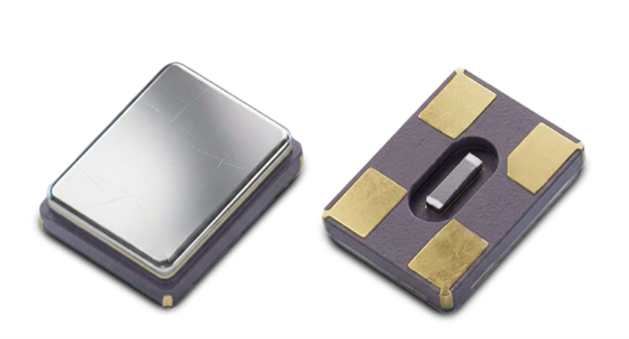
CTS Heats Up Component War with Integrated Crystal
LISLE, IL – June 16, 2026 – In the relentless push for smaller, faster, and more reliable electronics, the battle is often won at the microscopic level. Today, CTS Corporation (NYSE: CTS) made a significant move on this granular battlefield, announcing the launch of its TSX Crystal with Integrated Thermistor. The product, a first for the company, embeds a temperature sensor directly within the crystal’s package, a seemingly subtle engineering feat that carries substantial strategic weight in the fiercely competitive electronic components market.
This is more than a simple product line extension. It’s a direct response to the insatiable demand from high-growth sectors like 5G telecommunications, advanced automotive systems, and connected medical devices, where every square millimeter of board space is precious and performance stability is non-negotiable. By integrating these two critical components, CTS is making a clear bet that simplification and precision at the foundational level will give its customers—the engineers designing the next generation of technology—a decisive competitive edge.
Miniaturization Meets Thermal Precision
At the heart of virtually every modern electronic device is a crystal oscillator, a tiny component that acts as the system's pacemaker, generating the precise timing signals required for everything from data transmission to processing commands. However, the frequency of these crystals naturally drifts with changes in temperature, an Achilles' heel that can degrade performance in sensitive applications. For decades, engineers have compensated for this by using Temperature Compensated Crystal Oscillators (TCXOs), which employ a separate temperature sensor (a thermistor) to monitor ambient conditions and adjust the frequency accordingly.
The conventional approach involves placing a discrete thermistor near the crystal on the circuit board. While effective, this method has inherent limitations. Thermal lag and gradients across the board mean the sensor may not accurately reflect the crystal’s exact temperature in real-time. CTS’s TSX series aims to eliminate this imprecision. By integrating the thermistor directly into the hermetically sealed ceramic package alongside the crystal element, it achieves what the company calls “excellent thermal coupling.”
This close physical integration enables a fast thermal response and a much tighter correlation between the temperature measurement and the crystal’s behavior. The result is more accurate, real-time frequency compensation across a wide operating temperature range. As Angelo Assimakopoulos, Vice President of Global Sales at CTS, noted in the announcement, “By integrating a thermistor directly into the crystal package, we are enabling designers to access precise temperature information at the source, supporting improved frequency stability in space-constrained and performance-driven applications.”
Offered in industry-standard compact packages (2520, 2016, and 1612), the TSX series supports a broad frequency range from 16 MHz to 285 MHz. This versatility makes it a viable solution for a vast array of designs, from handheld consumer devices to complex industrial machinery. Overcoming the engineering challenges of integrating dissimilar materials into a single, reliable package without compromising the crystal’s intrinsic performance is a testament to the advanced manufacturing capabilities CTS is bringing to bear.
A Calculated Strike on High-Growth Markets
The launch of the TSX is not happening in a vacuum. It is a calculated strike into a lucrative and rapidly expanding market. The market for TCXOs was valued at approximately $2.5 billion in 2024 and is projected to climb towards $3.84 billion by 2032. More tellingly, the specific niche for crystal units with integrated thermistors is forecast to grow at an explosive compound annual growth rate (CAGR) of 13.7%, signaling a powerful industry shift toward such integrated solutions.
CTS is targeting sectors where this value proposition is most acute:
- Telecommunications: The rollout of 5G and future wireless technologies demands unprecedented levels of network synchronization. The TSX’s stability is critical for maintaining low latency and high data throughput in base stations, routers, and other network gear.
- Automotive: Modern vehicles are becoming data centers on wheels, with dozens of Electronic Control Units (ECUs), advanced driver-assistance systems (ADAS), and infotainment platforms all requiring precise timing. In the harsh thermal environment of a car, an integrated, reliable component that can operate flawlessly from -40°C to over 100°C is a significant advantage.
- Medical and Industrial: In devices where failure is not an option, from patient monitoring systems to factory automation controls, the reliability and precision offered by a hermetically sealed, integrated component provide essential peace of mind.
This strategic offensive places CTS in direct competition with established players like Epson and Kyocera, which already offer similar integrated products. However, the market is also seeing a strategic divergence. Just this year, competitor Murata began promoting a discrete solution, pairing a high-precision crystal with an external thermistor. Murata’s pitch centers on offering designers greater flexibility and potential bill-of-materials (BOM) cost optimization. This sets up a fascinating industry debate: does the future lie in the elegant simplicity of integration, as championed by CTS, or the modular flexibility of discrete components?
The Broader Strategy: Integration as a Moat
This product launch aligns perfectly with CTS’s corporate identity as a manufacturer of products that “Sense, Connect, and Move.” The TSX Crystal is a quintessential example of this philosophy, integrating a sensing element (the thermistor) to improve a core connectivity function (the timing signal). It’s a move to strengthen the company’s extensive frequency control portfolio and build a competitive moat based on technical differentiation.
However, adoption is not guaranteed. While the technical merits are clear, designers face practical considerations. “For an engineer on a tight deadline, swapping out a trusted two-component design for a new integrated part requires a compelling total-cost-of-ownership analysis,” noted one industry consultant. Integrated solutions can carry a higher upfront unit cost, and designers may be hesitant to abandon familiar layouts or commit to a single-source component without a clear and significant benefit.
CTS is betting that the benefits of a smaller footprint, reduced board-level complexity, and superior performance will be more than enough to win those critical design slots. The success of the TSX will likely depend on the company's ability to demonstrate these advantages through robust documentation, application support, and competitive pricing.
Ultimately, the CTS TSX crystal represents more than just a new component. It is an embodiment of a powerful trend shaping the future of electronics: the push to make foundational components smarter, more self-sufficient, and more integrated. By embedding intelligence directly at the source, such innovations reduce the burden on system designers, enabling them to build more complex and powerful devices within ever-tighter constraints.