
- 41% of Arkansas households are ALICE (Asset Limited, Income Constrained, Employed)
- Over $195 million in grants distributed by WRF over its 50-year history
- Total assets of over $150 million
Experts view Cory Anderson's appointment as a strategic and seamless transition that ensures continuity while bringing renewed energy to addressing systemic barriers and supporting ALICE families in Arkansas.
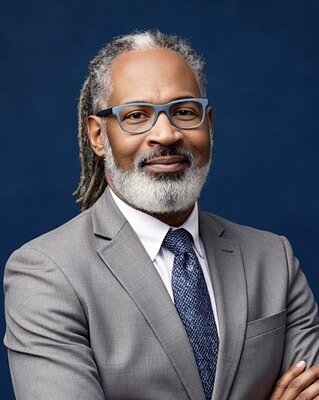
Cory Anderson to Lead Winthrop Rockefeller Foundation's Next Chapter
LITTLE ROCK, AR – December 16, 2025 – The Winthrop Rockefeller Foundation (WRF), a leading force for equity in Arkansas, today announced the appointment of Cory S. Anderson as its next Chief Executive Officer. The move signals a deep commitment to continuity and strategic evolution, elevating a long-time internal leader who has been a key architect of the foundation’s nationally recognized, equity-driven work for over a decade.
Anderson, who most recently served as the foundation’s Chief Innovation Officer, steps into the role with a profound understanding of the organization's mission and the complex challenges facing the state. His appointment is seen by philanthropic leaders and community partners as a seamless transition that also promises a renewed vigor in tackling systemic barriers to opportunity for all Arkansans.
He succeeds Dr. Sherece West-Scantlebury, whose transformative tenure since 2007 solidified WRF’s reputation as a catalyst for change. The foundation’s board expressed unanimous confidence that Anderson is the ideal leader to build upon that powerful legacy.
“Cory Anderson embodies the spirit and the standard of the Winthrop Rockefeller Foundation,” said Cedric Williams, Board Chair. “He brings a depth of understanding about Arkansas, a fierce commitment to ALICE families, and a strategic clarity that positions WRF for its next horizon of work. Cory has long been a driving force behind the Foundation’s impact.”
A Vision of Continuity and Innovation
Anderson’s leadership represents what the foundation describes as both “continuity and renewal.” He has been instrumental in shaping WRF’s AR Equity framework, a comprehensive strategy guiding its data-informed investments and push for systems-level change. As Chief Innovation Officer, he cultivated a culture of “failing forward”—an approach that encourages bold ideas and views setbacks as critical learning opportunities in the complex work of social change.
This philosophy is crucial as the foundation continues to address entrenched issues. Outgoing CEO Dr. Sherece West-Scantlebury, who Anderson worked alongside for years, lauded his readiness for the role.
“Cory Anderson represents the very best of what the Winthrop Rockefeller Foundation stands for,” said Dr. West-Scantlebury. “He leads with moral clarity, strategic discipline, and a deep respect for the people and communities of Arkansas. Cory has been instrumental in shaping the work that defines this institution today, and he is exceptionally prepared to steward its future.”
This sentiment is echoed by the incoming board leadership. “Cory Anderson is the right leader for this moment in the Winthrop Rockefeller Foundation’s journey,” said Fred Leonard, Chairman-Elect. “He brings a rare combination of institutional knowledge, national credibility, and deep respect for Arkansas communities. I am confident in his ability to steward the Foundation’s mission with integrity, foresight, and a clear commitment to the future we are building together.”
Championing Arkansas's ALICE Families
Central to Anderson’s vision is a sharpened focus on Arkansas's ALICE households—an acronym for Asset Limited, Income Constrained, Employed. These are the thousands of families and individuals who work hard, often in essential jobs, yet earn more than the Federal Poverty Level but less than what is needed to afford basic household necessities.
Research supported by WRF reveals the stark reality: approximately 41% of all households in Arkansas fall into the ALICE category. Compounding this, more than half of the jobs in the state pay less than $15 per hour, a wage insufficient to support a family. These are the families that Anderson’s work has long centered on, seeking to move beyond temporary aid to dismantle the systemic barriers that trap them in financial precarity.
Anderson’s approach is informed by a belief that these families are not defined by their struggles but by their strength. “I have seen firsthand the brilliance and resilience of ALICE families across our state—families who deserve systems designed for their success,” Anderson stated upon his appointment. This human-centered perspective aims to transform how the state perceives and supports its working-class population, shifting the narrative from one of deficit to one of potential.
His strategy involves strengthening partnerships and elevating community leadership to create durable pathways to economic mobility, ensuring that the foundation’s investments translate into tangible improvements in people's lives.
Arkansas Roots, National Influence
Anderson brings a unique and powerful blend of deep local experience and national philanthropic credibility to the CEO position. His career began not in a foundation boardroom but in the field as a journalist for the Arkansas Gazette. His investigative series, “Why Kids Kill,” which delved into the root causes of youth violence, was an early indicator of his lifelong commitment to understanding and addressing systemic issues rather than just their symptoms.
This foundation in journalism and community storytelling was followed by work with the national Annie E. Casey Foundation, where he utilized KIDS COUNT data to guide investments in child advocacy across the country. This national experience provided him with a broad perspective on best practices in philanthropy and policy, which he brought back to Arkansas when he joined WRF.
At WRF, he was a key figure in establishing ForwARd Arkansas, a coalition co-founded with the Walton Family Foundation to transform the state’s education system. His leadership roles in national philanthropic groups, including serving as former Chair of the Association of Black Foundation Executives (ABFE) and current Co-Chair of the Asset Funders Network, have further solidified his reputation as a bridge between local needs and national strategy. This dual perspective allows him to ground WRF’s work in the lived realities of Arkansans while leveraging a national network of resources, ideas, and influence.
Building on a Legacy of Systemic Change
Anderson inherits an institution that, under Dr. West-Scantlebury's leadership, has become a formidable agent for systemic change. Over the past 18 years, WRF has directed over 80% of its endowment to values-aligned firms, co-founded critical initiatives like Excel by 8 to support early childhood development, and launched a $50 million campaign for the Arkansas Enterprise Capital Grant Fund to help nonprofits grow.
With total assets of over $150 million, the foundation has a long history of making catalytic investments, providing over $195 million in grants over its 50-year history. Anderson’s challenge and opportunity will be to direct this financial power with even greater precision and impact.
His stated goals align perfectly with the foundation’s multi-pronged strategy of supporting narrative change, building community power through movement building, and advocating for public policies that expand opportunity. His commitment to dismantling systemic barriers is not just a talking point but the central theme of his career.
“I am deeply honored to serve as the next Chief Executive Officer of the Winthrop Rockefeller Foundation,” Anderson said. “This institution has shaped my life's work, and I remain committed to advancing its mission with humility, purpose, and an unwavering belief in the people of Arkansas. As we move forward, I look forward to strengthening partnerships, elevating community leadership, and continuing the work of creating pathways to opportunity for every Arkansan.”