
- 97% energy cost savings achieved at Cortec's solar-powered facility in Split, Croatia.
- 30% post-consumer recycled (PCR) content in VpCI®-126 film, meeting EU 2030 targets early.
- 80% less energy used in recycling plastic compared to virgin production.
Experts would likely conclude that Cortec's integrated approach of renewable energy and closed-loop recycling sets a high benchmark for sustainable industrial operations, though scalability challenges remain for the broader sector.
Cortec's Croatian Gambit: A Blueprint for Resilient, Green Supply Chains
ZAGREB, CROATIA – June 10, 2026
In the high-stakes arena of European manufacturing, the twin pressures of volatile energy markets and ambitious climate mandates are forcing a strategic reinvention. For years, the concept of a sustainable supply chain has been a boardroom talking point, often relegated to corporate social responsibility reports. Now, as companies stare down the barrel of the EU’s Green Deal and the persistent threat of geopolitical disruption, sustainability is rapidly evolving from a cost center into a core pillar of competitive advantage. At the heart of this transition is Cortec® Corporation, whose European operations are quietly building a powerful blueprint for what a resilient, circular, and self-powered industrial future looks like.
Through its Croatian subsidiaries, EcoCortec® and CorteCros®, the company is tackling two of the largest sources of industrial carbon emissions: energy consumption and packaging waste. By integrating on-site solar power generation with a functional closed-loop recycling system for its specialized corrosion-inhibiting plastics, Cortec® is providing a tangible answer to the elusive challenge of Scope 3 emissions—the indirect footprint embedded deep within a company's value chain.
Energy Independence as a Strategic Imperative
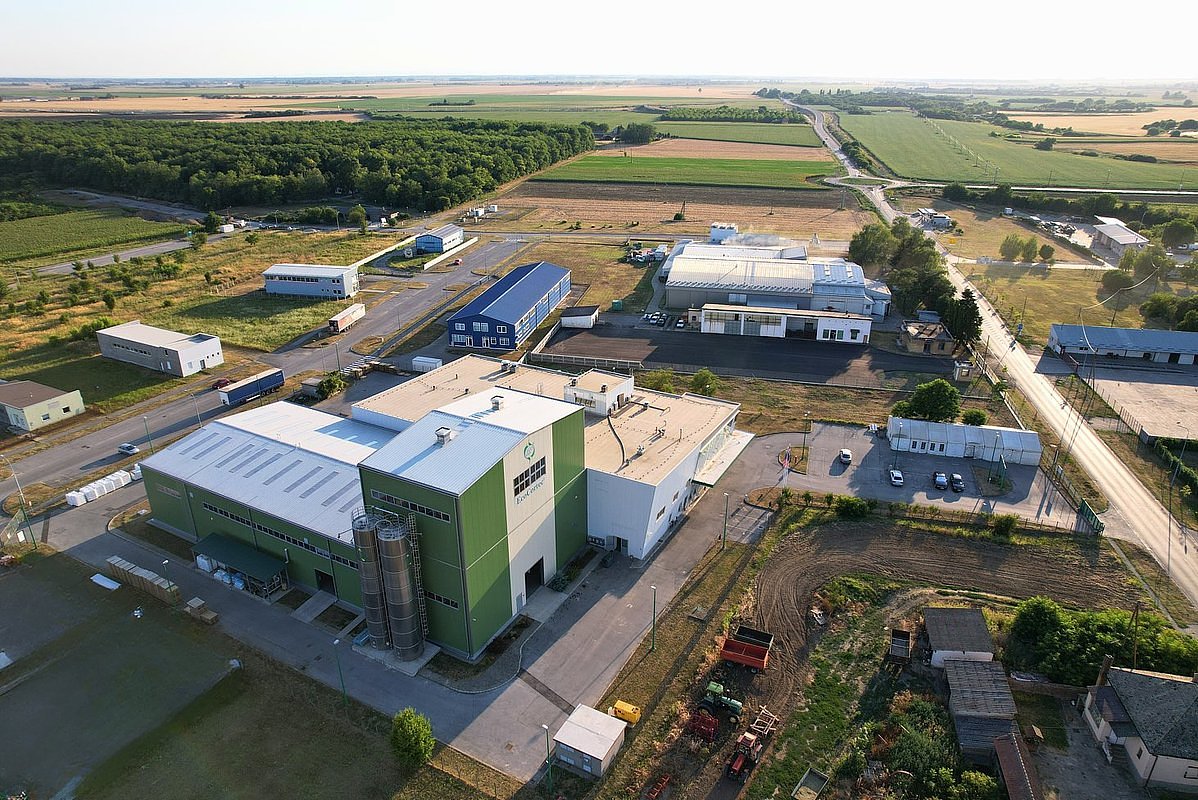
In response to soaring energy prices and the strategic vulnerabilities exposed by regional instability, European manufacturers are desperately seeking to de-risk their energy supply. EcoCortec®, a producer of green corrosion protection packaging, has taken a decisive step in this direction by becoming the first VCI (Volatile Corrosion Inhibitor) plant in Europe to generate its own electricity via a massive solar panel installation. This investment directly powers the facility’s energy-intensive extrusion lines with renewable energy, reducing both operational costs and the carbon intensity of every product that rolls off the line.
This move is not an isolated experiment. At another Cortec® facility, the CorteCros® logistics and manufacturing hub near the sun-drenched coastal town of Split, a similar solar power system has yielded energy cost savings as high as 97%. The strategic placement of these facilities in a region with maximum sun exposure is a clear example of aligning geography with green technology for economic benefit. For a company whose mission is to pioneer circular models, this push for energy autonomy is a foundational layer. “Cortec’s operations across Croatia, from the fields of Baranja to the Adriatic coast, operate under a unified green mandate,” says Cortec’s CEO, Boris Miksic. “As a company whose mission is to pioneer circular economy models... we wanted to make sure that our solutions are not only eco-friendly in their chemistry but also in the way they are manufactured and moved.”
Closing the Loop on Industrial Plastics
While energy is one part of the puzzle, the other is material circularity. The industrial packaging sector has long been a major contributor to plastic waste. EcoCortec® is addressing this head-on with a state-of-the-art in-house recycling center that transforms a linear process into a circular one. The company reprocesses plastic waste from multiple sources, including its own production scrap and used packaging from customers, turning it back into high-quality resin.
This initiative’s most compelling feature is a “closed-loop” partnership with its German distributor, Jakob Schober GmbH, which began in early 2024. The system is elegant in its simplicity. Trucks that deliver new VpCI® films to Schober’s facility in Germany, which would otherwise return to Croatia empty, are instead loaded with clean, used VpCI® film scrap. This backhauling process adds virtually zero additional transport emissions to the equation. Once the used material arrives at EcoCortec®’s plant, it is re-granulated and used to produce new VpCI®-126 PCR film, which contains a guaranteed 30% post-consumer recycled (PCR) content. Given that recycling plastic uses approximately 80% less energy than manufacturing virgin plastic from petroleum, the environmental and economic benefits are substantial.
This isn't just about collecting scrap; it's about proving that industrial-grade packaging with significant recycled content can meet stringent performance standards. The VpCI®-126 PCR film maintains the same corrosion protection for metal parts for up to five years, debunking the long-held industry assumption that sustainable alternatives inherently mean a compromise in quality. By vertically integrating the recycling process, EcoCortec® ensures a consistent supply of high-quality recycled material, a frequent bottleneck for companies attempting to scale their use of PCR content.
Navigating Europe's Green Transition
Cortec’s integrated model is not happening in a vacuum. It directly aligns with the EU’s ambitious Green Deal and the recently enforced Packaging and Packaging Waste Regulation (PPWR), which mandates that all packaging be recyclable by 2030 and sets aggressive targets for recycled content. By already offering films with 30% PCR content, the company is positioning its clients to meet the EU's 2030 targets years ahead of schedule. This proactive stance provides a clear competitive advantage for manufacturers who need to demonstrate regulatory compliance and a reduced environmental footprint to their own customers.
The broader VCI packaging market is taking notice, with competitors like ZERUST®/EXCOR® and ARMOR VCI also launching products with recycled content and their own take-back programs. This industry-wide shift signals that sustainability is no longer a niche differentiator but a baseline expectation. However, Cortec’s combination of on-site renewable energy generation with a functional, cross-border closed-loop system demonstrates a level of integration that sets a high bar for what a truly sustainable industrial operation can achieve.
Despite the clear momentum, barriers to widespread adoption remain. According to industry analysts, concerns about the higher cost of sustainable materials, potential performance trade-offs, and the logistical complexity of establishing reliable reverse supply chains can slow progress. Securing a consistent supply of high-quality recycled feedstock remains a challenge for the industry at large. Yet, the success of the EcoCortec®-Schober partnership shows that these hurdles can be overcome with strategic collaboration and a focus on logistical efficiency. By proving the model works at scale, Cortec® is providing a crucial case study for an industry at a crossroads, demonstrating that the path to a circular economy is built not on rhetoric, but on practical, profitable, and resilient operations.