
- $1 million in land provided by Ducks Unlimited Canada to expand the Brookdale Research Farm
- 467-acre Odanah Pasture added, increasing the farm's size by 42%
- 6,500 cattle farms in Manitoba's billion-dollar beef industry will benefit from the research
Experts agree that this partnership represents a critical step toward integrating conservation and commercial agriculture, providing scalable, data-driven solutions to enhance both environmental sustainability and economic resilience for Manitoba's cattle industry.
Conservation and Cattle: A New Era for Manitoba Farm Research
By Brenda Thompson
STONEWALL, MB – March 16, 2026 – A landmark partnership between a leading conservation group and an agricultural research initiative is set to transform a swath of restored prairie into a living laboratory for Manitoba’s billion-dollar beef industry. Ducks Unlimited Canada (DUC) is providing the use of $1 million in land to expand the Brookdale Research Farm, a key research and demonstration centre operated by Manitoba Beef & Forage Initiatives (MBFI) near Brandon.
The agreement adds the 467-acre Odanah Pasture to the research farm, increasing its total size by 42 percent. This significant expansion is poised to accelerate the development of innovative and sustainable practices for the more than 6,500 cattle farms that form a cornerstone of the province's economy.
A New Frontier for Commercial-Scale Research
The Odanah Pasture is more than just extra land; it represents a unique opportunity to conduct research on a scale that directly mirrors the real-world conditions faced by producers. MBFI, which has already delivered over 40 innovative studies since 2018, can now ask bigger questions with more certainty.
"It's a blank canvas, ready for us to approach projects in new ways," says MBFI General Manager Mary-Jane Orr. "This land provides the opportunity to ask questions on a commercial scale. The benefit will be more representative of the context of beef operations, which ultimately means better research to help producers."
Priorities for the new pasture have been guided by input from producers, industry, and academic researchers. For the 2026 season, MBFI is developing a case study focusing on two cutting-edge areas: virtual fencing and the economics of high-capacity rotational grazing. Virtual fencing uses GPS collars and digital boundaries to manage livestock, offering unprecedented flexibility and reducing infrastructure costs. This, combined with intensive grazing strategies, aims to provide clear, actionable data on how to maximize both productivity and profitability. This approach moves beyond traditional small-plot studies, allowing MBFI to validate practices on a field scale that lowers the risk of adoption for individual farmers.
Bridging Conservation and Commerce
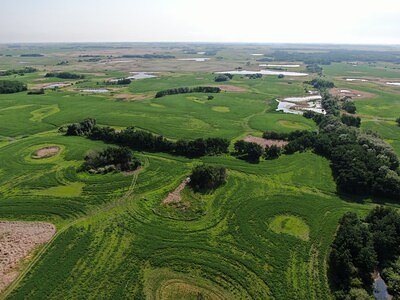
The partnership exemplifies a growing movement that sees environmental stewardship and agricultural productivity as two sides of the same coin. The Odanah Pasture itself is a testament to this synergy. Acquired by DUC in 2020 with funding from conservation agencies, the land was previously used for crop production, with drained wetlands and cultivated uplands. DUC meticulously restored the area to its natural state, which now features primarily native grasslands and 123 distinct wetland basins.
This history makes the land ideal for studying how modern cattle operations can integrate with and even enhance natural ecosystems. Melissa Atchison, a cattle farmer from Pipestone and Research and Extension Specialist with Manitoba Beef Producers, sees the immense value in this approach.
"In landscapes like this, cattle grazing and conservation go hand in hand," explains Atchison. "I see the value of research that helps us manage grasslands in ways that support productive cattle operations, healthy ecosystems and biodiversity... This expansion will increase MBFI's capacity to quantify, validate, and qualify beneficial practices on a field scale."
DUC, a founding partner of MBFI in 2014, has long championed this collaborative model. "Ducks Unlimited Canada has been a champion for Manitoba farmers since we began operations in 1938," says Karli Reimer, DUC's Head of Communications and Outreach for the Prairies. "This land partnership builds upon that history of collaboration, providing opportunity for new research to make farms more profitable and resilient."
Bolstering a Billion-Dollar Industry
The timing of this expansion is critical. While Manitoba’s cattle sector has seen record cash receipts in recent years, producers are simultaneously grappling with significant challenges. Rising input costs for fuel and fertilizer, coupled with recurring droughts and market volatility, have put immense pressure on profit margins. From 2020 to 2024, the average cash cost per cow in the province increased by over $200, squeezing producers even as cattle prices hit record highs.
Research conducted at the expanded Brookdale farm will directly address these pressures. Projects focusing on extended grazing, pasture rejuvenation, and drought response strategies are designed to give producers data-driven tools to reduce their reliance on costly winter feed and build resilience against climate variability. By transparently capturing the economics of every practice tested, MBFI aims to provide a clear roadmap for enhancing long-term environmental and economic sustainability.
The announcement was strategically timed to coincide with Manitoba Agriculture Awareness Day and the third annual DUC Day on March 17, a date legislated to recognize the conservation group's long-standing contributions to the province.
A Blueprint for Enduring Collaboration
This initiative is not a fleeting arrangement but the deepening of a long and successful alliance. DUC, MBFI, Manitoba Beef Producers, and the Manitoba government form a core partnership that has been driving agricultural innovation for years. The government's recent commitment of up to $2.85 million through the Sustainable Canadian Agricultural Partnership underscores the recognized value of MBFI's work in accelerating the adoption of best practices.
With this expansion, more than half of the nearly 2,000 acres managed by MBFI are now owned by Ducks Unlimited Canada, a powerful symbol of the trust and shared vision between the organizations. The work done here will generate vital data on everything from soil carbon sequestration and herd health to precision ranching and forage variety testing.
"This partnership is a win for habitat restoration and a win for forage and livestock production," Reimer states. "In the future, farmers will use data from the newly expanded Brookdale Research Farm to make land use decisions that are beneficial to their operation and the environment."
Topics & Related
Sustainability & Climate
Expansion
Related Company Pulse