
- $555 million raised by Colossal Biosciences
- 80x larger than a chicken egg: the estimated size of the South Island Giant Moa's egg
- 50% of bird species in decline, with 1 in 8 facing extinction
Experts view the artificial egg as a groundbreaking tool for both de-extinction efforts and conservation, though they caution that ecological and ethical challenges remain significant.
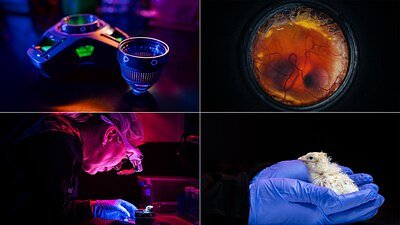
Colossal Hatches Artificial Egg, Fueling De-Extinction and Conservation
DALLAS, TX – May 19, 2026 – In a move that blurs the line between science fiction and biological reality, de-extinction company Colossal Biosciences today announced a landmark achievement: the successful hatching of live chicks from a fully artificial, shell-less egg. This first-of-its-kind system, which supports an avian embryo from its earliest stage to a pecking, breathing chick, represents a critical stepping stone in the company's ambitious quest to resurrect extinct species, most notably the South Island Giant Moa.
While the headline-grabbing goal is de-extinction, the technology itself could have more immediate and far-reaching consequences for the planet's existing bird populations, offering a powerful new tool in the desperate fight against accelerating biodiversity loss.
A New Blueprint for the Egg
For decades, scientists have attempted to culture avian embryos outside of a shell, but these efforts were stymied by a fundamental challenge: oxygen. Previous systems required hyperoxic environments—chambers flooded with pure oxygen—which proved damaging to the embryo's DNA, impacted long-term health, and were impossible to scale. Colossal claims to have solved this puzzle by re-engineering the egg from first principles.
Their system features a 3D-printed lattice shell containing a novel, bioengineered silicone-based membrane. This membrane is the core innovation, designed to precisely mimic the gas exchange properties of a natural eggshell under normal atmospheric conditions. The result is a device that can be used in standard commercial incubators, eliminating the need for costly and harmful oxygen supplementation.
"Every new scalable system for de-extinction is ultimately a biology problem wrapped in an engineering problem. The artificial egg is a perfect example," said Ben Lamm, CEO and Co-Founder at Colossal. "We didn't just replicate the egg; we re-engineered it... to create something more scalable and controllable."
The implications for Colossal's de-extinction pipeline are immense. The South Island Giant Moa, a flightless bird from New Zealand that stood up to 12 feet tall, laid an egg estimated to be 80 times the volume of a chicken egg. No living bird is large enough to serve as a surrogate host, making a natural incubation path impossible. A size-scalable artificial egg is not just helpful for the moa program; it is essential.
The transparent design of the device also provides an unprecedented window into avian development, allowing researchers to monitor an embryo in real-time. This is crucial for de-extinction work, where scientists need to visually confirm that edited genes—for traits like feather type or beak shape—are expressing correctly.
A Lifeline for Endangered Species
While bringing back the moa captures the imagination, the artificial egg's most immediate impact may be in conservation. With over half of all bird species in decline and one in eight facing extinction, conservationists are in a race against time. Colossal’s technology offers a new front in this battle.
Many critically endangered birds struggle to breed in captivity, and low hatch success rates can cripple recovery programs. The artificial egg provides a sterile, controlled environment that can reduce environmental variability and increase the chances of a successful hatch. It also allows for the rescue of compromised embryos from damaged or abandoned eggs.
"The avian reproductive toolkit has lagged behind mammalian systems for decades because birds present unique developmental challenges," noted Dr. Beth Shapiro, Colossal's Chief Science Officer. "The artificial egg changes that... For species where surrogacy is impossible and genome recovery has outpaced our ability to use it, this is the missing piece."
This technology could unlock the potential of biobanked genetic material, or "frozen zoos," for birds. By providing a universal incubation platform, genetic material from long-dead individuals could be used to culture new embryos, injecting vital genetic diversity back into bottlenecked populations.
The Ethical Frontier and the Billion-Dollar Bet
The announcement inevitably re-ignites the fierce ethical debate surrounding de-extinction. Critics raise valid concerns about resource allocation, arguing that the hundreds of millions of dollars flowing into Colossal—which has raised over $555 million and boasts a valuation exceeding $10 billion—could be better spent protecting the countless species currently on the brink. Some ethicists warn of a "moral hazard," where the promise of de-extinction could lessen the urgency to prevent extinctions in the first place.
Furthermore, profound ecological questions remain unanswered. How would a resurrected species, engineered in a lab, integrate into a modern ecosystem that has changed dramatically since its disappearance? Could it become an invasive species, or would it fail to survive without its native habitat?
Colossal and its proponents counter that the technologies developed for de-extinction have dual-use benefits for conservation. They also argue that reintroducing keystone species like the woolly mammoth or moa could help restore degraded ecosystems. Still, some independent scientists urge caution, with one stem cell expert calling the development "technically interesting" while noting that a viable animal requires not just a reconstructed genome, but also learned behaviors and a suitable environment—challenges that remain immense.
Beyond the ecological and ethical debates, the artificial egg has significant commercial potential. The platform's ability to provide a controlled environment for genetic manipulation could revolutionize the biotechnology industry. Transgenic chickens are already being explored as cost-effective bioreactors for producing therapeutic proteins, such as monoclonal antibodies used in cancer treatments. Colossal's system could dramatically streamline the development of these pharmaceutical-producing birds, a market worth hundreds of billions.
By spinning off its software division into the company Form Bio, Colossal has already shown a strategy of monetizing the powerful tools it builds along the path to de-extinction. The artificial egg, a tangible piece of hardware born from a moonshot idea, now stands as a potent symbol of this approach: a platform built for a long-extinct giant that may first serve to save its smaller, living relatives and transform an industry.