
- 80x larger: Colossal's artificial egg is designed to be scalable, addressing the challenge of a moa egg being 80 times the volume of a chicken egg.
- 1980s breakthrough: The new system solves a decades-old problem of high oxygen concentrations damaging DNA in shell-less incubation.
- 3D-printed lattice shell: The bioengineered silicone-based membrane matches the oxygen transfer capacity of a natural eggshell under normal atmospheric conditions.
Experts emphasize the need for peer-reviewed data to validate the claims, but the breakthrough represents a significant step forward in de-extinction technology, provided the methodology holds up to scientific scrutiny.
Colossal Hatches Life from Artificial Eggs, Eyeing Moa's Return
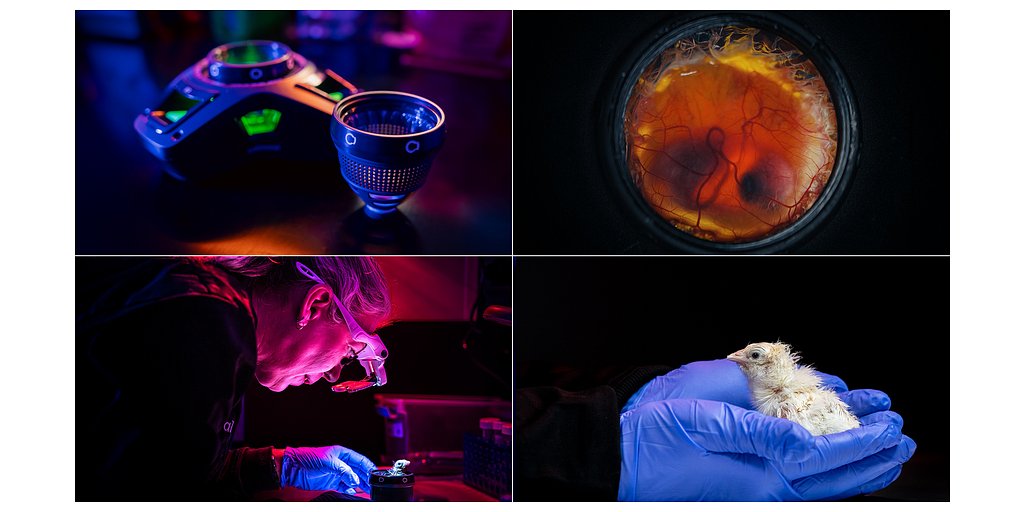
DALLAS, TX – May 19, 2026 – In a development that blurs the line between science fiction and biological reality, Colossal Biosciences announced today it has successfully hatched multiple healthy chicks from fully artificial eggs. The company, known for its ambitious de-extinction goals, says the breakthrough is a pivotal step toward resurrecting the South Island Giant Moa and could revolutionize avian conservation.
The new incubation platform supports the complete development of an avian embryo outside a biological shell, a feat that has eluded scientists for decades. The hatched chicks are now reportedly living at the Colossal Avian Preserve, representing a tangible outcome of the company's blend of genetic and engineering prowess.
A Shell Re-Engineered
Previous attempts at shell-less incubation, dating back to the 1980s, were hampered by a critical flaw: they required high concentrations of pure oxygen. This hyperoxic environment often caused DNA damage and developmental issues, making the process unreliable and difficult to scale. Colossal claims to have solved this fundamental problem.
Their solution is a 3D-printed lattice shell containing a novel, bioengineered silicone-based membrane. This membrane is engineered to perfectly match the oxygen transfer capacity of a natural eggshell under normal atmospheric conditions. The result is a system that is not only healthier for the developing embryo but also compatible with standard commercial incubators, a key factor for scalability.
"Every new scalable system for de-extinction is ultimately a biology problem wrapped in an engineering problem," said Ben Lamm, CEO and Co-Founder of Colossal Biosciences, in a statement. "At Colossal, we didn't just replicate the egg; we re-engineered it from first principles to create something more scalable and controllable."
The largely transparent design also provides an unprecedented window into avian development, allowing researchers to monitor the embryo in real-time. This capability is invaluable for confirming that genetic edits have been successfully expressed, a cornerstone of de-extinction science.
The Path to the Giant Moa
While hatching chickens is a significant proof of concept, Colossal's ultimate avian target is far grander: the South Island Giant Moa (Dinornis robustus), a massive flightless bird driven to extinction in New Zealand centuries ago. The primary obstacle to its return has always been reproductive. A moa egg is estimated to have been 80 times the volume of a chicken egg, far too large for any living bird to serve as a surrogate mother.
Colossal's artificial egg is explicitly designed to be size-scalable, directly addressing this challenge. "The genome is the blueprint, but without a place to build, it's meaningless," explained Professor Andrew Pask, the company's Chief Biology Officer. "The artificial egg gives us that platform: controlled, scalable, and completely independent of a surrogate."
The company's next steps involve testing the system with larger eggs, such as those from emus and ostriches, to validate its scalability on the long road to creating an incubator suitable for a moa.
A Breakthrough Awaiting Peer Review
Despite the excitement generated by the announcement, it has been met with a degree of scientific caution. The breakthrough was revealed through a press release, not a peer-reviewed scientific publication, leaving many details of the methodology and data unavailable for independent scrutiny.
Several experts in the field have noted the difficulty in evaluating the claims without access to the underlying research. "Without data, it's hard to evaluate," commented one biologist from North Carolina State University who is not involved with the project.
This sentiment was echoed more sharply by others. "I look forward to reading more details when they're published, but until there's a peer-reviewed paper I might as well give expert commentary on a YouTube ad," stated an Associate Professor of Evolutionary Genetics at the University of Reading. The lack of published data makes it difficult to assess the reproducibility and true significance of the findings, a standard requirement for scientific validation.
The Ethics of a Second Genesis
The technology propels long-simmering ethical debates about de-extinction to the forefront. Proponents argue that humanity has a moral obligation to correct past ecological damage and that these technologies can create more resilient ecosystems. Dr. Beth Shapiro, Colossal's Chief Science Officer, noted that for species where surrogacy is impossible, this technology is "the missing piece."
However, critics raise profound questions about the wisdom of such endeavors. Concerns range from the welfare of the engineered animals to the unpredictable ecological consequences of reintroducing a species into a modern environment that has changed dramatically since its disappearance. Some argue that a genetically engineered proxy is not the same as the original extinct species. Furthermore, many conservationists express concern that the vast resources and attention funneled into high-tech de-extinction projects could be more effectively used to save the thousands of species currently on the brink of extinction.
From Lab to Lifeline and Market
Beyond the headline-grabbing goal of de-extinction, Colossal's artificial egg has more immediate and potentially widespread applications in conservation. "The ability to hatch avian embryos outside a biological shell, at any size and in standard commercial incubators, is a capability conservation programs simply don't have today," said Matt James, the company's Chief Animal Officer.
This technology could be used to rescue compromised embryos from damaged eggs, support breeding programs for critically endangered birds with low reproductive success, and utilize cryopreserved genetic material to enhance the diversity of threatened populations. It represents a significant leap for avian reproductive tools, which have historically lagged behind those available for mammals.
The artificial egg also fits into Colossal's broader business strategy, which appears to treat de-extinction as a powerful engine for developing a portfolio of commercially valuable biotechnologies. The company is also developing an "Artificial Uterus" for mammals, indicating a strategic focus on cornering the market for advanced reproductive solutions. The technologies born from the quest to resurrect the mammoth and moa could ultimately be licensed to conservation groups, sold to agricultural biotech firms, or spun out into new companies, turning the science of species restoration into a viable and potentially lucrative industry.