
- Less than 25% of customers use more than one product from their primary financial institution, highlighting untapped growth potential. - Multi-LOB platform integrates retail, wealth management, and commercial banking into a unified system. - Structured access maintains strict data separation and permission controls for compliance.
Experts agree that Coconut Software's Multi-LOB platform addresses a critical industry need for unified banking experiences, though successful implementation will require overcoming regulatory and technical challenges.
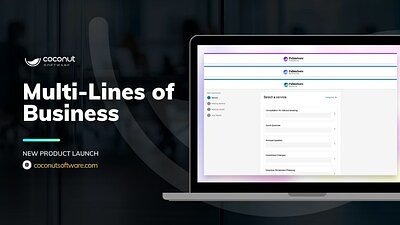
Coconut Software Aims to Unify Banking With New Multi-LOB Platform
SASKATOON, SK – March 11, 2026 – Coconut Software, a provider of AI-powered solutions for financial institutions, today launched its Multi-Lines of Business (Multi-LOB) capability, a new platform designed to dismantle the operational silos that have long fragmented the banking industry. The solution aims to create a unified "one bank" experience for customers by connecting retail, wealth management, and commercial departments, a move that addresses a critical pain point for both consumers and the institutions that serve them.
The Persistent Challenge of Siloed Banking
For decades, the structure of most financial institutions has been a collection of independent fiefdoms. A customer's mortgage is handled by one department, their investment portfolio by another, and their small business loan by a third, with little to no communication between them. This internal fragmentation leads to a disjointed and often frustrating customer journey, forcing clients to repeat information, navigate different systems, and deal with advisors who lack a holistic view of their financial lives.
Industry research underscores the depth of this problem. While banks universally recognize the need to increase their "share of wallet," studies show that less than a quarter of customers use more than one product from their primary financial institution. This represents a massive untapped potential for growth, lost to inefficient processes and a failure to understand and anticipate customer needs across different life stages. The rise of digital banking has only magnified the issue; while convenient, it has often stripped away the personal relationships that once allowed bankers to provide holistic advice.
"Banks don't want to function in silos, but it's very complicated when all lines of business operate independently of one another," said Katherine Regnier, CEO of Coconut Software, in today's announcement. The industry is now at a crossroads, seeking technological solutions that can restore a sense of personalized, connected service in an increasingly digital world. The demand is clear for platforms that can bridge internal divides to present a single, cohesive face to the customer.
A Unified Platform for a Fragmented Industry
Coconut Software's Multi-LOB enters the market as a direct response to this challenge. The platform integrates into the company's existing AI-powered Intelligent Branch Solutions, which already unify operations, workforce planning, and customer engagement. The new capability extends this integration across previously walled-off business units.
At its core, Multi-LOB is built on three key pillars:
- Structured Access: This allows a financial institution to configure its various lines of business—such as retail banking, wealth management, and commercial lending—within a single instance of the software. Crucially, it maintains strict data separation and permission controls, ensuring that sensitive information is only accessible to authorized personnel.
- Shared Client Profiles: The platform creates a unified profile for each client that can be accessed across departments. This profile's visibility is highly configurable, meaning a retail advisor might see a client's basic account information and a note about a potential wealth management need, while the wealth advisor sees a more detailed financial picture. This provides staff with the necessary context to offer relevant advice without compromising privacy.
- Cross-Booking: This feature empowers staff to seamlessly book appointments for clients with specialists in other departments. Instead of a manual, often untracked referral that can "fall through the cracks," an advisor can schedule a meeting directly, creating a smooth hand-off and a trackable pathway for cross-selling.
"Instead of referrals falling through the cracks or clients repeating themselves across departments, every interaction becomes an opportunity to deepen the relationship," Regnier explained. "The other benefit: Customers now feel like they are receiving a consistent experience across all departments. One bank. One customer. That's the goal."
Navigating the Labyrinth of Compliance and Competition
While the vision of a unified bank is compelling, the path to achieving it is fraught with regulatory and competitive hurdles. Financial institutions operate under a complex web of rules designed to prevent conflicts of interest and protect consumer data. Regulations like GDPR and sector-specific rules from bodies like FINRA often necessitate strict "Chinese Walls" between departments, particularly between investment and retail divisions.
Coconut Software asserts that its Multi-LOB platform was designed with these constraints in mind. The emphasis on "structured access" and "configurable visibility" is not just a feature but a foundational requirement. Compliance experts note that for such a system to be viable, it must provide banks with granular, auditable control over who can see what data and under what circumstances. The ability to configure these permissions to align with specific regional and departmental regulations will be a critical factor in its adoption.
The competitive landscape is also crowded, with major players like Salesforce Financial Services Cloud and specialized firms like Engageware and Q-nomy all offering solutions to improve customer engagement. However, Coconut's differentiator appears to be its holistic approach, specifically targeting the integration of branch operations and workforce planning alongside customer engagement across multiple business lines. While many CRM systems aim for a 360-degree customer view, Coconut's platform extends this into the physical and virtual branch environment, connecting the dots between scheduling, staffing, and service delivery.
The Implementation Reality and the Regional Advantage
Despite the platform's promise, its implementation is not a simple plug-and-play affair. Most large financial institutions are built on decades-old legacy systems, creating significant technical debt and deeply entrenched data silos. Integrating a modern, cloud-based platform like Multi-LOB into this complex environment will require substantial investment in IT resources and, just as importantly, a commitment to organizational change management. Staff will need to be trained on new workflows, and long-standing departmental habits will need to be broken.
However, where larger banks may see a complex integration project, smaller regional banks and credit unions may see a strategic opportunity. These institutions often lack the massive internal IT budgets of their national competitors but are fiercely competing on the basis of customer service and community relationships. A platform like Multi-LOB could level the playing field, enabling them to offer the kind of sophisticated, integrated customer experience that was previously the exclusive domain of the largest players.
By leveraging a third-party solution, these smaller institutions can leapfrog the technological hurdles of building a unified system from scratch. This allows them to focus on what they do best—building relationships—while the technology ensures every interaction is informed and seamless. As the financial industry continues its push toward hyper-personalization and efficiency, the ability to operate as one cohesive unit may no longer be a luxury, but a fundamental requirement for survival and growth.