
- 63 million people in India live with significant auditory impairment, about 6.3% of the population.
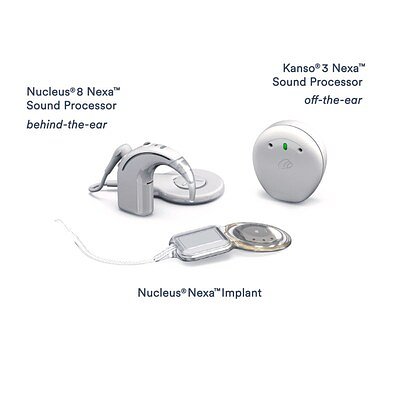
- The new Cochlear™ Nucleus® Nexa® System is the world's first smart cochlear implant with upgradeable firmware and built-in memory.
- Cochlear implant surgery in India costs between USD $12,000 and $18,000, though government subsidies help bridge affordability gaps.
Experts view the Nucleus Nexa System as a groundbreaking advancement in hearing technology, offering future-proof upgrades and smart features that significantly improve user experience and accessibility, though affordability and market competition remain key challenges.
Cochlear's Smart Implant Aims to Future-Proof Hearing in India
MUMBAI, India – March 02, 2026 – On World Hearing Day, global medical device leader Cochlear launched a technology in India that promises to redefine the experience of hearing loss. The new Cochlear™ Nucleus® Nexa® System, unveiled today, is being hailed as the world's first smart cochlear implant, introducing features like upgradeable internal firmware and built-in memory that have more in common with a smartphone than a traditional medical device.
The launch addresses a critical public health issue in the nation. Approximately 63 million people in India, or about 6.3% of the population, live with significant auditory impairment. The challenge begins at birth for many, with studies indicating that over 100,000 babies are born with a hearing deficiency each year.
"The launch of the Nucleus Nexa System marks a defining moment in hearing care. Built around the evolving needs of recipients and the realities of modern life," said Vandana Pisharody, Regional General Manager for South Asia & Southeast Asia. She described the system as a new category of smart hearing technology designed for a more connected and future-ready experience.
A New Era for Hearing Implants
For decades, advancements in cochlear implant technology were tied to the external sound processor—the component worn on or behind the ear. To access new features, users had to wait for and purchase an upgraded processor. The Nucleus Nexa System fundamentally changes this paradigm.
At its core is a new chipset, the result of over 20 years of intensive research, which allows the internal implant itself to be upgraded. "This is the first cochlear implant with its own firmware, so the device can be upgraded to new features and advancements throughout the lifetime of the user's implant," explained Jan Janssen, Cochlear's Chief Technology Officer. "Just like a smartphone receives a firmware update, now people with a Cochlear implant can stay connected to the latest technology updates today and well into the future."
This innovation effectively future-proofs the implant, turning a one-time surgical procedure into an investment in an evolving technological platform. The system also introduces built-in memory, another first for the industry. This allows a user's personalized hearing settings, known as MAPs, to be stored directly on the implant.
The practical benefit of this feature is profound. Previously, losing or damaging a sound processor meant a trip to the clinic for a replacement to be programmed by a professional. With the Nexa system's 'Smart Sync' feature, a user can simply receive a blank processor, and their unique settings are automatically copied from the implant in seconds, restoring their hearing with minimal downtime and inconvenience.
Addressing India's Silent Epidemic
The introduction of such advanced technology in India is timely. As the country undergoes a rapid digital transformation, its healthcare sector faces the immense challenge of providing modern solutions to its vast population. Hearing loss, often called a silent epidemic, carries significant social and economic costs, impacting education, employment, and overall quality of life.
"As India continues to advance rapidly in digital innovation and AI-led transformation, we are proud to bring a breakthrough that reflects the same spirit of progress, helping recipients, clinicians and families navigate the future of hearing care with greater confidence," Pisharody stated.
Unlike hearing aids, which simply amplify sound, cochlear implants bypass the damaged parts of the ear to directly stimulate the auditory nerve, focusing on providing sound clarity. This distinction is crucial for individuals with severe to profound hearing loss, for whom loudness alone is not enough. The Nexa system builds on this by using smart technology to automatically adjust listening settings based on the user's environment, aiming to provide clearer hearing and optimize battery life without manual intervention.
The Price of Clarity: Access and Competition
While the technology is groundbreaking, its accessibility remains a key consideration. Cochlear implant surgery in India, while less expensive than in Western countries, can still cost between USD $12,000 and $18,000. This places it beyond the reach of a large portion of the population.
Recognizing this barrier, the Indian government has implemented crucial programs to subsidize the cost. Schemes like the Assistance to Disabled Persons (ADIP) scheme and the Rashtriya Bal Swasthya Karyakram (RBSK) provide significant financial support for cochlear implants, particularly for children from lower-income families. These initiatives are vital for bridging the affordability gap and have made India a key market for hearing solutions.
The launch also occurs within a highly competitive global market. Cochlear, as the established leader, competes with other major players like Sonova (Advanced Bionics) and MED-EL. By introducing a device with upgradeable firmware and other smart features, the company not only raises the technological bar but also strengthens its competitive position, particularly in fast-growing regions like Asia-Pacific.
The Human Impact and Future of Connected Health
Beyond the technical specifications and market dynamics lies the human impact. The press release highlighted the story of Stephen Dyt, an Australian recipient who struggled with hearing aids for years before receiving the Nexa implant. "This new implant has dramatically changed things for me and most importantly, my family," Dyt said. "I am now able to interact and live with confidence and life is a lot easier as I can now hear clearly."
His experience underscores the ultimate goal of the technology: restoring connection and improving quality of life. The convenience of features like 'Smart Sync' and automatic environmental adjustments reduces the cognitive load and daily hassle for users, allowing them to focus on living rather than on managing their device.
Furthermore, the shift to a smart, connected implant platform raises the importance of data security and privacy. As a Class D high-risk medical device, the Nucleus Nexa System has undergone rigorous regulatory scrutiny. For a global company like Cochlear, adherence to international cybersecurity standards, similar to those mandated by the FDA in the U.S. and GDPR in Europe, is paramount to ensuring patient safety and maintaining trust. This secure-by-design approach is essential as medical devices become more integrated into our connected world, housing sensitive health data and becoming platforms for future innovation.