
- 100,000+ designs available in Rugs.com's catalog, now enhanced with AR visualization.
- AR technology enables true-scale virtual placement of rugs in users' homes.
- Visual search and AI-powered tools reduce uncertainty in online rug shopping.
Experts would likely conclude that Rugs.com's AR and AI-powered app represents a strategic advancement in reducing online shopping uncertainty, setting a new standard for niche e-commerce retailers.
Closing the Showroom Gap: How AR is Remaking Home Decor Retail
FORT MILL, SC – June 11, 2026 – For decades, the central challenge of selling furniture and decor online has been the “imagination gap”—the chasm between a product glowing on a screen and its physical reality in your home. Will that color clash? Is that size right? The uncertainty has fueled high return rates and customer hesitation, a persistent friction point in the otherwise seamless world of e-commerce. Now, a 25-year-old e-commerce pioneer is rolling out its latest solution, and it offers a clear look at how technology is systematically dismantling this old-world problem.
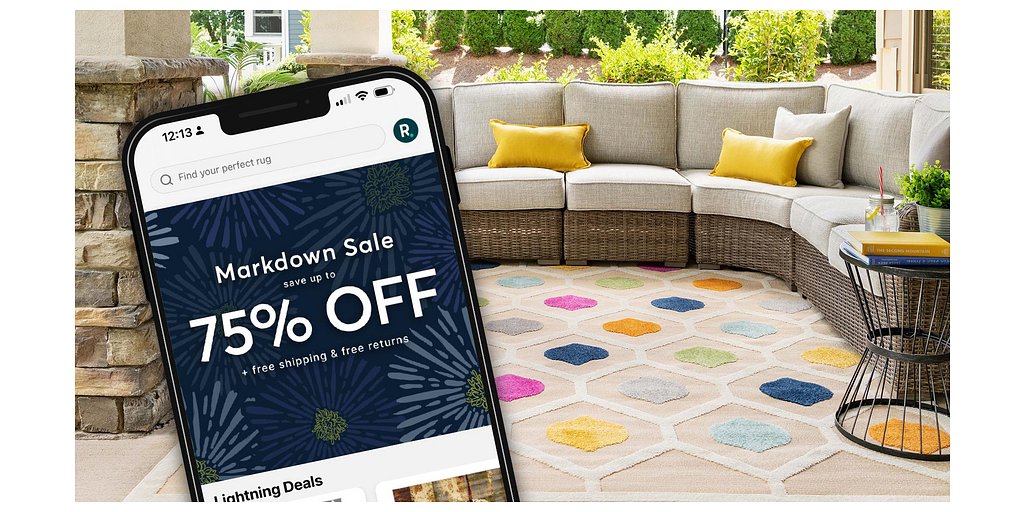
Rugs.com, a family-owned business that transitioned from brick-and-mortar to a leading online retailer, has launched a new mobile application that does more than just display its catalog of over 100,000 designs. It aims to place the showroom directly into a customer’s pocket, leveraging a suite of technologies designed to replace guesswork with certainty. It’s a move that signals a broader shift in retail, where augmented reality is no longer a novelty but a foundational tool for building the next generation of digital storefronts.
Bridging the Imagination Gap with Technology
The core of the new Rugs.com app is a direct assault on consumer uncertainty. The headline feature is an interactive augmented reality (AR) tool that allows a user to virtually place any rug onto their floor through their phone’s camera. The technology renders the rug at true scale, letting shoppers assess not just the color and pattern, but the crucial element of size and proportion in their own environment. This isn’t about looking at a stock photo; it’s about seeing how a specific 8x10 Persian-style rug interacts with your personal sofa and the morning light in your living room.
“Not only can shoppers browse by color, size, and design, they can see how rugs will look in their homes with the new update, all on their phones,” said Andrew Haltom, the company's Director of Customer Success, in a statement. His comment underscores the app’s primary function: to make the digital shopping experience as tangible and risk-free as possible.
Beyond AR, the app integrates other forms of artificial intelligence to streamline discovery. A visual search function allows users to upload a photo—from a magazine, a Pinterest pin, or a friend’s home—and instantly receive a list of visually similar products from the company's massive inventory. This addresses the common “I’ll know it when I see it” dilemma, where a consumer has a clear aesthetic in mind but lacks the specific vocabulary to search for it. Complementing this is a color palette search, which lets customers find rugs that harmonize with a room’s entire color scheme, not just a single accent hue.
To further build confidence, the system provides tailored design guidance for individual products, offering recommendations on what furniture finishes or wall colors pair well with a specific rug. By layering these tools—visualization, intelligent search, and professional guidance—the app creates a comprehensive support system that mimics and, in some ways, surpasses the traditional in-store design consultation.
An Arms Race in the Digital Showroom
Rugs.com is not the first to deploy AR in the home goods space. The move can be seen as a critical volley in an ongoing technological arms race among major online retailers. E-commerce giants like Wayfair and Amazon, along with the globally recognized IKEA Place app, were early adopters of AR, proving its power to increase conversion rates and customer satisfaction. Their success established a new benchmark for what consumers expect from an online home furnishing platform.
What makes the Rugs.com launch significant is not the invention of the technology, but its specialized and comprehensive application within a niche. While larger competitors offer AR across a vast and varied catalog of goods, Rugs.com is focusing these advanced tools on a single, notoriously difficult-to-buy-online category. By combining AR with AI-powered visual search, summarized reviews, and deep filtering options, the company is creating a highly specialized toolset designed to solve the unique challenges of rug shopping. This represents a strategic decision to compete not by being the biggest, but by being the best at solving a specific set of customer problems.
Industry analysts have noted that for visually-driven product categories, AR is rapidly transitioning from a differentiator to a competitive necessity. The technology directly impacts the bottom line by reducing returns—a massive logistical and financial burden for retailers, especially those dealing with bulky items. By allowing a customer to virtually “try before they buy,” retailers can significantly cut down on purchases returned for purely aesthetic reasons.
From E-commerce Pioneer to Modern Innovator
The app launch is also a revealing chapter in the company’s own story. With 25 years of experience in e-commerce, Rugs.com is part of the first wave of retailers who proved that consumers were willing to buy significant household items online. Its long-standing policies of free shipping and 30-day free returns were built to lower the perceived risk of making such a purchase sight-unseen. This new app is the logical, technologically-advanced extension of that same customer-centric ethos.
Instead of simply managing the consequences of uncertainty with a good return policy, the company is now using technology to prevent that uncertainty from arising in the first place. It represents a shift from a reactive to a proactive model of customer service, one that leverages data and processing power to build buyer confidence on the front end. This evolution is crucial for established players to maintain relevance against both larger giants and nimble new startups. The app serves as a powerful tool for customer retention and loyalty in a market where shoppers have endless choices at their fingertips.
This commitment is further reflected in the company’s broader initiatives, such as its partnership with the Eden Reforestation Project to plant a tree for every rug sold. By pairing technological innovation with tangible social and environmental responsibility, the brand is building a modern identity that appeals to a consumer base that increasingly values both convenience and corporate ethics.
The lines between digital and physical commerce continue to dissolve, and the systems we use to design our personal spaces are being rebuilt in code. By creating a tool that so effectively closes the gap between the screen and the home, Rugs.com offers a clear blueprint for the future of retail, where the primary goal is no longer just to sell a product, but to sell certainty itself.