
- March 17-18, 2026: Date of the Info-Tech LIVE 2026 conference in Brisbane
- 50% of APAC enterprises by 2026: Will prioritize sovereignty-based controls when selecting cloud and AI vendors (Forrester report)
- 12-step framework: Workshop to help IT departments transition from reactive to forward-driving data strategies
Experts emphasize that the primary obstacle to effective decision-making is not data access but foundational weaknesses in data quality, governance, and literacy, particularly in the APAC region, where regulatory and cultural nuances add complexity.
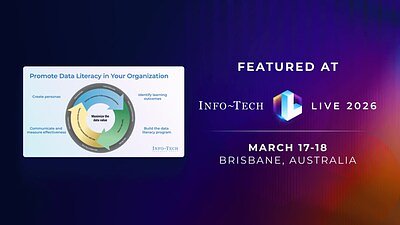
CIOs to Tackle Data-Decision Gap at Brisbane Summit
BRISBANE, AU – February 02, 2026 – As organizations drown in a sea of data, a critical question looms for IT leaders: Why aren't we making better decisions? Despite massive investments in data collection and analytics, many enterprises struggle to translate information into consistent, confident action. This "data-decision gap" is now the central challenge for Chief Information Officers, a challenge that will take center stage at Info-Tech LIVE 2026 in Brisbane this March.
The two-day conference, running from March 17-18 at the W Brisbane, is poised to bring together senior IT executives from across the Asia-Pacific region. Its mission is to move beyond the hype of big data and focus on the brass tacks of execution—equipping leaders with the strategies and frameworks needed to build a culture of decisive, data-informed leadership.
The Execution Imperative in the Age of AI
For years, the mantra has been "more data." Yet, as data volumes have exploded, so has the complexity of using them effectively. The rise of artificial intelligence has only intensified this pressure. According to Info-Tech Research Group's recent 'Data Priorities 2026' report, foundational weaknesses in data quality, governance, and literacy are the primary obstacles limiting AI readiness and confident enterprise decision-making. The report underscores a growing realization among IT leaders: feeding AI with inconsistent or poor-quality data doesn't scale intelligence; it scales confusion.
This sentiment is echoed by the firm's regional leadership. "Data only becomes valuable when leaders can consistently act on it and make choices they're willing to stand behind," says George Khreish, Managing Partner at Info-Tech Research Group, APAC. "Across many APAC organisations, we're seeing that the main challenge is not so much access to data, but more the lack of shared understanding around how it should inform decisions."
The Brisbane event aims to address this head-on. The core issue is no longer data acquisition but decision execution. Without clear frameworks and a common language around data, even the most sophisticated analytics platforms can become little more than expensive reporting tools, with insights stalling at the point of action. The conference's agenda is designed to shift this paradigm, focusing on building the organizational muscle required for repeatable, high-quality decision-making.
A Focus on Actionable Frameworks, Not Just Theory
In a landscape crowded with technology conferences promising transformative insights, Info-Tech LIVE is positioning itself as a "hands-on strategy conference" dedicated to practical application. The goal is to provide attendees with more than just inspiration; it's to arm them with actionable playbooks and roadmaps they can implement immediately upon returning to their organizations.
Several key sessions are structured to deliver on this promise. The workshop titled 'The Data and Analytics Playbook: Secrets and Steps to Systematically Achieve IT Excellence' promises to guide participants through a 12-step framework. The session is designed to help IT departments evolve from a state of "reactive firefighting" to becoming a "forward-driving" force for the business, using a systematic approach to improve data and analytics capabilities.
Another foundational session, 'Build a Robust and Comprehensive Data Strategy,' will challenge leaders to rethink their approach entirely. The focus is on positioning data as a core decision-enabling capability, not merely a backward-looking reporting function. Attendees will explore how to align their data strategy directly with critical business outcomes, ensuring that data initiatives are purpose-driven and directly support what matters most to the organization's leadership.
Navigating the Unique Challenges of the APAC Region
While the challenge of leveraging data is global, the Asia-Pacific region presents a unique and complex set of hurdles. The conference's second annual APAC edition specifically acknowledges that a one-size-fits-all approach is insufficient. Issues of data sovereignty and residency are becoming increasingly critical, with a Forrester report predicting that by 2026, nearly half of all APAC enterprises will prioritize sovereignty-based controls when selecting cloud and AI vendors.
Navigating the fragmented and evolving regulatory landscape—from strict data localization laws in countries like India and Vietnam to varying privacy standards across the region—adds another layer of complexity for CIOs. Using external AI services, for example, can inadvertently lead to data transfers that violate these intricate residency requirements, creating significant compliance risks.
To address these regional nuances, the conference will feature a session titled 'Info-Tech's Data Digest: Insights From Our APAC Members' Experiences.' Grounded in research from the firm's regional member base, this session will provide evidence-based perspectives on how local technology, regulatory, and cultural dynamics are shaping IT decisions. It promises to offer a vital benchmark for leaders to gauge their priorities and inform their strategies within the specific context of the APAC market.
Redefining Leadership for a Data-Driven World
Ultimately, transforming data into value is a leadership challenge, not just a technical one. Recognizing this, the conference is expanding the conversation beyond pure technology to include the human elements of strategy, resilience, and performance. A keynote address from Steven Bradbury, the Australian Olympic gold medalist, will draw parallels between the high-stakes world of elite sport and the pressures of modern IT leadership.
Bradbury's iconic victory is often cited as a story of luck, but it was underpinned by years of relentless preparation, strategic positioning, and the resilience to stay in the race. His presence on the agenda serves as a powerful metaphor for the conference's theme: success in a complex, fast-moving environment is not accidental. It requires a clear strategy, disciplined execution, and the readiness to act decisively when the moment arrives.
This focus on leadership permeates the event's structure, which includes not only mainstage sessions but also interactive breakouts, peer-to-peer discussions, and one-on-one meetings with analysts. The format is designed to foster a collaborative environment where executives can move from abstract strategy to concrete execution plans, learning not only from experts but also from the shared experiences of their peers who are navigating the same complex challenges. By combining practical frameworks with leadership insights and region-specific intelligence, the summit aims to empower IT leaders to finally close the gap between data and decision.