
- 72x Labor Advantage: AI tools provide solo founders with the equivalent of $72 in developer labor for every $1 spent.
- 75% Non-Technical Founders: 75% of solo founders in China now come from non-technical backgrounds.
- $39 Median AI Spending: The median monthly expenditure on AI tools among surveyed founders is $39.
Experts conclude that AI is democratizing tech entrepreneurship in China, shifting the focus from technical skills to industry expertise and commercial judgment, while highlighting the critical role of community support in overcoming the challenges of isolation and market acquisition.
China's Solo Founder Boom: AI Delivers a 72x Labor Advantage
HANGZHOU, CN – April 29, 2026 – A tectonic shift is reshaping the foundations of tech entrepreneurship in China, powered by an unprecedented surge in artificial intelligence. For every dollar a solo founder spends on AI tools, they are now gaining the equivalent of $72 in developer labor, according to a landmark report released today by Honghub, China’s first accelerator community for one-person companies (OPCs).
The “2026 OPC Insight Report: Gravity, Leverage & Evolution” documents the collapse of traditional barriers to starting a technology business. The findings, drawn from over 1,500 surveys and 100 hours of interviews, reveal a landscape where technical prowess is no longer the primary prerequisite for innovation. Instead, industry expertise, commercial judgment, and user insight have become the new cornerstones of success.
The End of the Engineer-Dominated Era
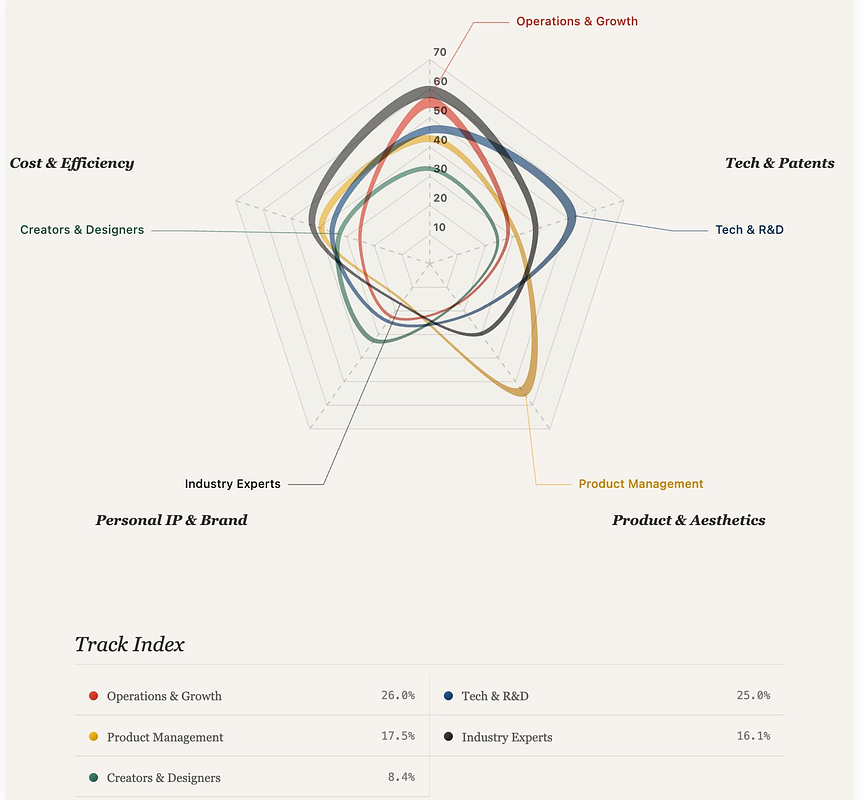
The report signals a definitive end to an era where independent development was the exclusive domain of computer science graduates. Today, a staggering 75% of solo founders in China come from non-technical backgrounds. The data shows operations and growth specialists (26%) are now just as likely to launch a tech venture as engineers (25%), a stark reversal from the pre-2020 landscape.
This “democratization of building” is attributed directly to the collapse of the marginal cost of producing code. As AI models become proficient at generating complex user interfaces and application logic on demand, the bottleneck for new ventures has shifted from how to build to what to build. The report finds that even among founders with technical backgrounds, nearly half now prioritize deep “industry knowledge” over proprietary technical patents as their core competitive advantage.
“We are seeing a new class of Industry Translators and Experience Curators who use AI as their core workforce,” said Zou Ling, founder of Honghub, in the report’s release. “These founders are not selling their time — they are building autonomous systems that run globally without them in the room.”
The New Economics of a Solo Startup
At the heart of this revolution is a new economic model defined by extreme efficiency. To quantify this, the Honghub report introduces the Human-AI Cost Ratio (HACR), a new metric that compares the cost of AI tooling against the cost of equivalent human labor. Calculated using 2024 wage data from China’s National Bureau of Statistics, the 72-to-1 ratio underscores a dramatic reduction in startup capital requirements.
The median monthly expenditure on AI tools among surveyed founders is a modest $39, roughly the cost of two subscriptions to frontier AI models. Over 82% of founders have entered the paid tools market, treating these subscriptions as a form of “Digital Office Rent”—a variable, instantly adjustable operating expense that replaces the fixed costs of headcount and physical assets.
This low overhead stands in sharp contrast to the high cost of traditional software development talent in China, where monthly salaries for mid-level developers can range from ¥25,000 to ¥40,000 (approximately $3,500 to $5,600 USD). This cost disparity is fueling a broader trend visible across China’s digital economy. At e-commerce giant Alibaba.com, for instance, an estimated 30% to 40% of its merchants are now solo entrepreneurs who leverage AI for everything from marketing and logistics to customer service.
Beijing's Bet on the Solo Economy
This grassroots movement has not gone unnoticed by policymakers. Recognizing the potential to spur innovation and address a challenging youth job market, Chinese authorities have moved swiftly to support the burgeoning OPC ecosystem. Since October 2025, 23 major cities, including tech hubs like Shenzhen, Shanghai, and Beijing, have launched dedicated support frameworks for one-person companies.
The city of Shenzhen has been particularly aggressive. Its Luohu District recently unveiled a “4x10” development plan, which includes building four specialized OPC communities and introducing ten targeted support measures. Qualified OPCs can receive at least one year of dedicated office space, financial support for computing power and data usage up to 1 million yuan annually, and talent incentives that include household registration subsidies. Other cities like Suzhou have pledged to cultivate over 10,000 OPC talents by 2028, while Chengdu offers direct subsidies to graduates establishing AI-driven firms.
This coordinated government push provides a powerful tailwind, positioning China at the forefront of a global shift toward AI-augmented solopreneurship. The initiatives aim to transform what could be a fragmented movement into a structured, scalable economic engine.
The 'Isolation Tax' and Community as Infrastructure
While the economics of the OPC model are compelling, the report highlights a significant, often overlooked liability: the “isolation tax.” Solo founders must act as their own CTO, CMO, and CFO, leading to acute decision fatigue and psychological strain with no internal safety net. External research confirms this burden, showing that solo founders fail at a significantly higher rate than founding teams, partly due to the psychological toll of isolation.
Honghub’s research found that conventional sentiment analysis, which logged anxiety and loneliness in single-digit percentages, failed to capture the depth of this struggle. Founders rarely used clinical labels, instead describing their emotional state with potent metaphors like “tunnel moment,” “empty warehouse period,” and “isolated exhaustion.”
In this context, community becomes more than a social amenity; it functions as critical infrastructure. Honghub’s data reveals that community interaction provides “productive friction” that is vital for survival and growth. Within its own accelerator, 20% of members redirected their entire business strategy and 30% validated their product-market fit through peer exchanges—milestones they admitted they could not have achieved alone.
The report cites Zhang Jinhui, founder of the AI comic platform Humify, who pivoted from AI music to short-drama content after community feedback helped her stress-test the business model. Similarly, Zhang Xiangxi, founder of Kuangxiang Qino, was guided by peer-to-peer friction to shift from a slow-moving psychology product to the more immediate knowledge management space. “The value of community lies not only in the support it provides, but in the friction,” Zou Ling noted.
This model mirrors the success of global communities like Indie Hackers, where peer validation and shared knowledge are essential currencies. It proves that even in an era of powerful AI, human connection is indispensable for navigating the ambiguities of building a business.
However, the report concludes with a crucial warning. The solo-founder economy is currently in a state of “oversupply of building capability and shortage of acquisition capacity.” As AI makes it exponentially easier to create products, the fundamental challenge of finding and retaining customers becomes more acute. In this new landscape, the ultimate competitive advantage will belong to the founders who can successfully bridge the ever-widening gap between AI-driven production and real-world market traction.