
- 100 million in sales: Kmind's Strategic Product model helped MINISO's YOYO toy surpass 100 million in sales, becoming one of the fastest proprietary toys to achieve this milestone.
- 7 clients exceeding RMB 10 billion: Kmind has guided seven of its clients to revenues exceeding RMB 10 billion (approx. $1.4 billion USD).
- 9 case studies at Harvard Business Publishing: Since 2020, nine of Kmind's client case studies have been accepted into the Harvard Business Publishing Education platform.
Experts view Kmind's Strategic Product model as a compelling alternative to traditional Western frameworks, offering a human-centric approach that prioritizes deep customer insight and durable cognitive advantages in the BANI era.
China's New Playbook: Kmind's Strategy Model Challenges Western Norms
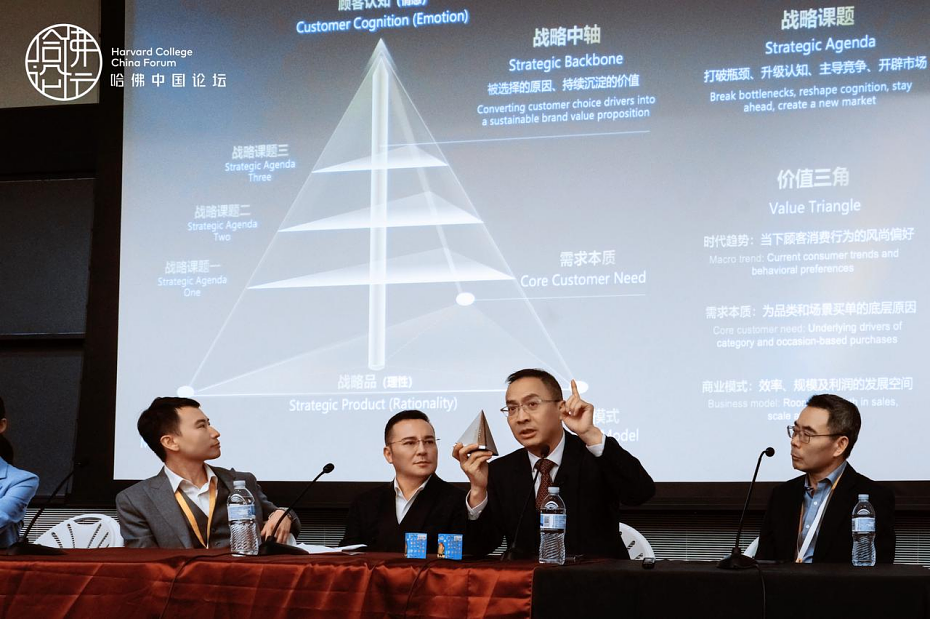
CAMBRIDGE, Mass. – April 20, 2026 – At the prestigious Harvard College China Forum, a strategic framework developed in China is capturing the attention of Western academics and future business leaders. Kmind Consulting, a Shanghai-based firm, recently presented its "Strategic Product" model, an approach that diverges from traditional Western methodologies and offers a new lens for navigating today's chaotic global market. The enthusiastic reception suggests a growing appetite for fresh strategic thinking, particularly from the East.
Noah Xie, President and CEO of Kmind Consulting, addressed the 29th annual forum, an event the firm has attended for four consecutive years. He detailed a model born from over a decade of advising top-tier enterprises, sparking what the company described as "enthusiastic discussions" among Harvard business academics and students.
A Human-Centric Compass for a "BANI" World
The core of Kmind's pitch is its relevance in the so-called "BANI" world—an environment defined as Brittle, Anxious, Non-linear, and Incomprehensible. This acronym, a successor to the more familiar VUCA, describes a landscape where established business logic often fails and unpredictability reigns. Many global companies struggle with a disconnect between their high-level strategy and the products they sell, creating a tension between the need for rapid growth and the quest for a sustainable competitive edge.
Kmind’s "Strategic Product" model aims to bridge this gap by focusing on deep, often unarticulated, human needs rather than relying solely on big data or fleeting industry trends. The approach is a unique blend of Eastern philosophy, drawing on principles from classics like Sun Tzu's "Art of War," and modern Western management theory. The methodology is built upon a "Value Triangle," guided by a "Strategic Backbone," and organized around a "Strategic Agenda." According to Xie, the Strategic Backbone defines "the fundamental reason customers choose it over its competitors," anchoring the company's long-term development.
This focus on customer cognition and unmet needs is what attendees found particularly innovative. It provides a potential antidote to the anxiety and incomprehensibility of the BANI framework, offering a more intuitive, human-centric path forward.
The YOYO Effect: From Strategy to Blockbuster Product
To illustrate the model's practical power, Xie presented the case of MINISO's trendy toy, YOYO. In 2025, the global retail giant MINISO appointed Kmind as its global strategic advisor. The firm helped develop YOYO not merely as a new item, but as a "Strategic Product."
The results were dramatic. YOYO became one of the fastest proprietary toys to surpass 100 million in sales. This success was not a fluke or a lucky bet on a trend. MINISO reportedly chose Kmind specifically because its model was grounded in understanding human behavior. The success of YOYO, part of MINISO’s rapidly growing in-house IP portfolio, has driven significant foot traffic to its more than 8,000 stores worldwide and sparked a wave of user-generated content on social media, proving its cross-cultural appeal.
The case stands in contrast to the often-elusive formula for creating blockbuster toys. It demonstrates how a strategic framework that prioritizes deep customer insight can translate directly into tangible commercial success, creating a durable advantage that goes beyond a single hit product.
A Shanghai Firm on the Global Stage
While Kmind Consulting may be a new name to some in the West, the firm has been building a formidable track record in Asia since its founding in 2015. Its founder, Noah Xie, has over two decades of experience in the consulting field. The firm boasts that it has guided seven of its clients to revenues exceeding RMB 10 billion (approx. $1.4 billion USD).
Its client list includes major Chinese brands that have achieved market dominance, such as down jacket manufacturer Bosideng, which saw its revenue surge past the 10 billion yuan mark in 2018 following Kmind's engagement. Another client, infant formula giant Feihe, reached annual revenue of 22.78 billion yuan by 2021. This history of working with billion-dollar enterprises substantiates the firm's claims of having a proven methodology.
Kmind's influence is also growing in academic circles. Since 2020, nine of its client case studies have been accepted into the prestigious Harvard Business Publishing Education platform, used by top business schools globally. This makes it the most-featured Chinese consulting firm in the collection. Further accolades, including a top ranking for innovation from Vault's Best Consulting Firms in Asia-Pacific in 2024, cement its status as a significant player. Its consistent presence at the Harvard College China Forum—North America's longest-running student conference on China—is a clear indicator of its ambition to contribute to the global business dialogue.
The Shifting Tides of Business Strategy
The interest in Kmind’s model at Harvard signals a potential shift in the global business landscape. For decades, strategic management has been dominated by Western frameworks, from Porter's Five Forces to Design Thinking and Agile methodologies. While these models remain powerful, the complex challenges of the BANI era are creating an opening for new perspectives.
Kmind's approach, with its synthesis of Eastern and Western thought, offers a compelling alternative that prioritizes building durable cognitive advantages in the minds of consumers. As one fellow entrepreneur on stage with Xie commented, "Behind the framework of Kmind’s Strategic Product model, I see a comprehensive system that integrates corporate vision and product strategies. This system will help businesses achieve more sustainable growth."
The enthusiastic response from Harvard students, many of whom expressed a desire to learn more, highlights a generational shift. Future leaders appear eager to explore strategic thinking and business insights emerging from China's dynamic economy, suggesting that the flow of business wisdom may no longer be a one-way street from West to East.