
- 50+ mentions of 'artificial intelligence' in China's 15th Five-Year Plan (2026-2030), a fourfold increase from the previous plan.
- 7.2 million online viewers of the JXQ AI Forum 2026, highlighting national interest.
- 37% market share held by Alibaba Cloud in China's AI cloud market as of late 2025.
Experts would likely conclude that China is executing a highly coordinated, top-down strategy to achieve AI dominance, leveraging standardized platforms, urban benchmarking, and localized innovation districts to scale AI adoption nationwide.
China's AI Blueprint: BEDI Unveils National Integration Strategy
BEIJING – April 27, 2026 – A series of major initiatives unveiled at a high-profile forum in Beijing has offered the clearest look yet at how China plans to execute its national strategy for artificial intelligence dominance. Concluding on April 16, the JXQ AI Forum 2026, hosted by Beijing Electronic Digital & Intelligence (BEDI), served as the launchpad for a coordinated suite of programs designed to deeply integrate AI into the nation's urban and industrial fabric, directly aligning with the ambitious goals of the recently initiated 15th Five-Year Plan.
The forum saw BEDI, a key player in the country's technology sector, announce the launch of its Spark•AI Cloud 2.0 platform, release a groundbreaking "China Urban Artificial Intelligence Index Report," and kick off both an "AI China Tour" and a new alliance for AI Innovation Districts. Together, these moves signal a shift from isolated AI experiments to a standardized, top-down push to scale AI adoption across the country, creating what officials term "new quality productive forces."
A National Strategy for AI Dominance
The announcements are not happening in a vacuum. They are a direct manifestation of China's 15th Five-Year Plan (2026-2030), a national economic blueprint that mentions "artificial intelligence" over 50 times—a fourfold increase from the previous plan, signaling its elevated strategic priority. The plan frames AI as a critical engine for offsetting demographic headwinds and slower growth through accelerated automation and innovation.
This national strategy calls for "decisive breakthroughs" in core technologies like AI chips and algorithms, emphasizing the need for technological self-reliance. It also mandates the deep integration of AI into key industries like manufacturing and energy, alongside public services such as healthcare and education. BEDI's initiatives appear custom-built to serve as the implementation engine for these directives. By providing a standardized cloud platform, a national urban assessment tool, and a roadmap for local implementation, the strategy aims to orchestrate a nationwide technological upgrade, moving in lockstep with central government policy.
The forum itself underscored this tight integration between government and industry, drawing academicians, ministry officials from the MIIT and SASAC, and government representatives from Beijing and other regions, alongside international guests. The massive online viewership of over 7.2 million highlights the significant national interest in this state-driven push for AI leadership.
Spark•AI Cloud 2.0: The Engine for Urban Transformation
At the heart of BEDI's strategy is Spark•AI Cloud 2.0, a platform described not merely as a source of computing power but as an "integrated AI production environment." Powered by its proprietary Qianjin•AIOS and Xintian•AgentOS, the system aims to unify computing, models, and applications into a single, streamlined architecture.
The goal is to solve the three most common barriers to enterprise AI adoption: complex deployment, high costs, and limited scalability. "The transition to large-scale AI adoption is defined by lower barriers to use," said Xie Dong, Chief Technology Officer of BEDI, at the event. "Enterprises will be able to deploy and apply AI at lower costs and in simpler ways, so that data can be continuously transformed into real productivity."
This move places BEDI in a fiercely competitive domestic market dominated by tech giants. As of late 2025, Alibaba Cloud held a commanding 37% market share, followed by Huawei Cloud and Tencent Cloud. These incumbents have mature AI platforms, with Alibaba focusing on vertical integration with its Qwen models, Huawei targeting specific industries, and Tencent leveraging its vast social media distribution channels. BEDI’s Spark•AI Cloud 2.0, by positioning itself as a comprehensive "production system," is making a strategic play to become a foundational infrastructure provider for the government's industry-city integration goals, potentially carving out a significant niche by aligning closely with national policy.
A New Benchmark for Urban AI Development
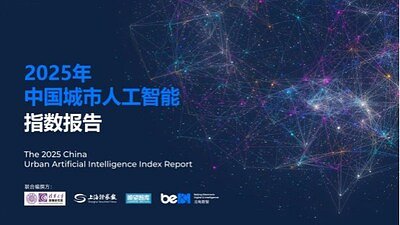
To guide this nationwide rollout, the forum saw the release of the "China Urban Artificial Intelligence Index Report." Developed in a major collaboration between Tsinghua University, Shanghai Securities News, and BEDI's own research institute, among others, the report establishes a new framework for measuring and guiding AI development across China's diverse urban landscape.
The report's evaluation system assesses cities across four key dimensions: industrial development, technological innovation, public services, and the governance environment. More significantly, it introduces a three-tier classification system for the first time, categorizing cities as "Leading," "Dynamic," or "High-Potential." This tiered approach acknowledges that a one-size-fits-all strategy is ineffective, given the vast differences in resources and industrial foundations across the country.
For "Leading Cities," the focus may be on pioneering cutting-edge research and global competition. For "Dynamic Cities," the goal could be to scale proven applications and build robust talent pipelines. For "High-Potential Cities," the strategy might involve building foundational infrastructure and attracting initial investment. By providing tailored, actionable roadmaps for each category, the report aims to prevent regional disparities from widening and instead foster a more balanced national AI ecosystem.
From Blueprint to Reality: The 'AI China Tour' and Innovation Districts
Translating this report into action is the objective of two other key initiatives. The "AI China Tour," co-launched with Shanghai Securities News, will dispatch a team of experts to engage directly with local governments. Using the index report as a guide, the tour will provide consultations on industrial planning and help implement targeted measures to upgrade AI capabilities city by city.
This on-the-ground effort is complemented by the establishment of designated AI Innovation Districts. Beijing has already announced four such districts, with the "Guangzhi Space" in the city's Chaoyang District serving as a prime example. This hub will focus on next-generation computing infrastructure and advanced AI applications, particularly the integration of optical computing and intelligent technologies.
These districts are not being built from scratch. Chaoyang is already home to a significant concentration of tech talent and the Beijing Digital Economy Computing Power Center, a massive intelligent computing facility. To accelerate development, the district has launched a global call for planning contributors and established the Collaborative Industry Alliance for AI Innovation Districts, in which BEDI will play a pivotal role. The alliance will support projects ranging from technological innovation to industrial deployment, solidifying Beijing's ambition to become a global AI innovation leader. By combining high-level strategic planning with localized, infrastructure-rich innovation zones, China is methodically constructing an end-to-end ecosystem designed to turn its AI ambitions into economic reality.