
- 7.6 million people could be lifted from extreme poverty by 2030 due to BRI-related investments, per World Bank estimates.
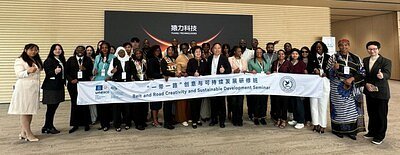
- 26 participants from 13 countries attended the 2026 Belt and Road Creativity and Sustainable Development Seminar.
- China's 'precision poverty alleviation' policy has lifted hundreds of millions out of poverty.
Experts view China's Belt and Road Initiative as a viable but controversial development model, offering rapid infrastructure growth and poverty reduction while raising concerns about debt sustainability and transparency.
China Exports Its Development Blueprint to Belt and Road Nations
BEIJING – April 17, 2026 – As China continues to expand its global influence through the Belt and Road Initiative (BRI), it is increasingly exporting not just goods and infrastructure, but a comprehensive development philosophy. This was on full display at the 2026 Belt and Road Creativity and Sustainable Development Seminar held in Beijing this week, where 26 participants from 13 countries across Africa, Asia, and the Pacific gathered to study China's approach to innovation-driven growth.
The event, co-hosted by UNESCO's International Center for Creativity and Sustainable Development (ICCSD) and Jilin University, combined high-level lectures with field visits, offering international delegates a curated look at the nation's playbook for poverty alleviation, urban renewal, and technological advancement.
A Model for Development Diplomacy
At the heart of the seminar was a clear message: China's experience offers a viable, alternative path to prosperity for the Global South. This was articulated in a keynote lecture by Yang Baozhen, a former Chinese diplomat, who detailed the country's strategy for implementing the UN 2030 Agenda for Sustainable Development. She elaborated on China's signature “precision poverty alleviation” policy, which has been credited with lifting hundreds of millions out of poverty.
Yang highlighted a multi-pronged strategy involving precise household identification, targeted industrial support, and the relocation of populations from inhospitable areas. This state-led, data-driven approach is a cornerstone of the development model China is promoting to its BRI partners. The World Bank has estimated that BRI-related investments could lift 7.6 million people globally from extreme poverty by 2030, lending statistical weight to the initiative's potential.
However, the BRI is not without its critics. The massive infrastructure projects it entails have raised global concerns about debt sustainability for borrowing nations, environmental degradation, and a lack of transparency in project financing. For many participating countries, the challenge lies in balancing the allure of rapid infrastructure development with the long-term economic and social risks. The seminar represents a concerted effort by Beijing to frame the narrative around its successes and present its model as a template for sustainable, rather than purely extractive, development.
Beijing's Urban Innovation on Display
To translate theory into practice, the seminar’s participants were guided through several of Beijing’s flagship innovation sites. The tour was designed to showcase how China is embedding technology and creativity into the fabric of its urban centers.
One key theme was urban regeneration. At C work, a venue for conferences and events, attendees saw how a former industrial plant was repurposed into a modern innovation park. This approach of transforming industrial skeletons into vibrant economic hubs is a central part of Beijing’s strategy to renew its urban landscape without erasing its history.
Another focus was the use of digital technology to preserve and monetize cultural heritage. At the UCP Universal Creative Park, the "Angkor Smile" multi-immersive exhibition demonstrated how digital tools can create new, engaging ways to experience ancient wonders, offering a model for countries rich in cultural history but lacking in preservation resources. This blend of culture and commerce was further underscored by a visit to the 798 Hyper Vision VR Cinema, located in the city's famed 798 Art Zone, where virtual reality is being harnessed to push the boundaries of creative expression.
The tour also included a stop at the Yuan Programming Exhibition Hall, which highlighted China's focus on cultivating the next generation of tech talent. Participants observed educational systems for children's programming and artificial intelligence, reflecting the country's top-down push to dominate the technologies of the future.
Lessons for the Global South
The lessons presented at the seminar resonated deeply with attendees, many of whom come from nations actively engaged with China through the BRI and grappling with similar development challenges.
KELVIN GWANZURA, a participant from Zimbabwe, found the discussion on targeted poverty alleviation and governance innovation “highly inspiring.” His interest is particularly relevant given Zimbabwe’s long-standing “Look East Policy,” which has positioned China as its primary development partner for infrastructure projects, including new airports and power stations. For Zimbabwe, understanding the governance structure behind China's success is as critical as the financing it provides.
Similarly, AMINA NASOLO from Malawi remarked that the lecture clarified how a country can formulate “practical and effective development policies.” Malawi, a more recent signatory to the BRI in 2022, is navigating how to leverage Chinese cooperation for its 'Malawi 2063' vision while managing public debt, making China's policy implementation framework a subject of intense study.
The practical application of technology was a major takeaway for VISHAL LAL CHAUHAN from Fiji. He noted that using tech to protect cultural heritage and create innovation hubs from old factories was an “excellent innovative concept.” As a Pacific island nation that was an early BRI partner, Fiji has seen direct Chinese investment in roads and bridges. Chauhan's realization that “creativity and sustainable development complement each other” points to a desire to move beyond basic infrastructure to more holistic economic and cultural progress.
For JAGITAY SALAMATU from Sierra Leone, the experience was transformative. “Creativity, innovation, and technology are the keys to solving future development challenges,” she exclaimed. Her country is already deepening cooperation with China on major projects like the Pepel Railway and Port, and sees the Chinese model as a potential pathway to modernize its agricultural sector and achieve sustainable growth.
As an annual event, the seminar solidifies its role as a key platform for China's development diplomacy. It represents a systematic effort to share not just technical expertise but a comprehensive philosophy of state-led innovation and control. As these delegates return home, the ideas and models discussed in Beijing will inevitably influence national development debates, continuing the global dialogue on the diverse paths to a sustainable future.