
- Magic Layers transforms static AI-generated images into fully editable, multi-layered designs
- The feature intelligently separates components like backgrounds, text, and graphic objects into individual, movable layers
- Public beta rollout begins in the United States, United Kingdom, Canada, and Australia
Experts view Magic Layers as a significant advancement in AI design tools, bridging the gap between AI-powered generation and human-led creative control, making AI-generated content more actionable and scalable.
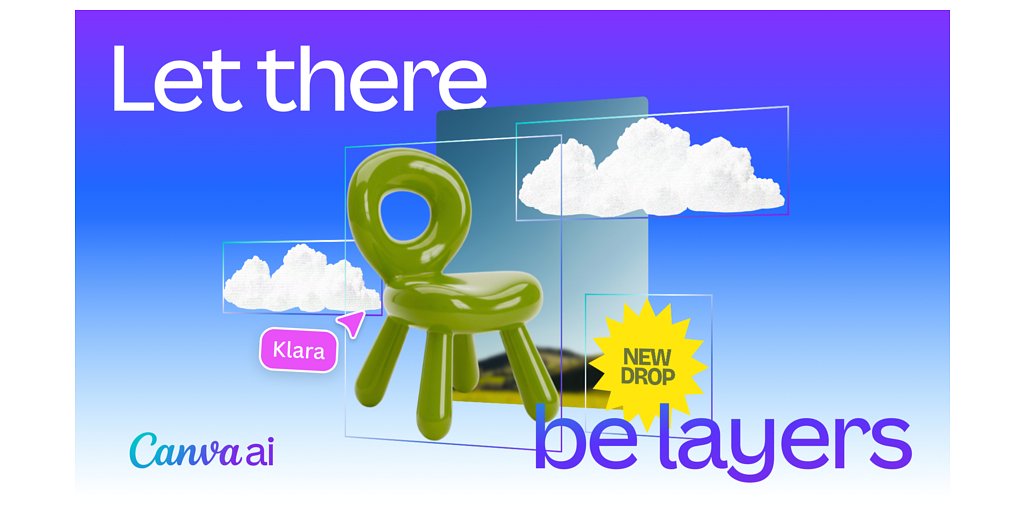
Canva's Magic Layers Unlocks Editable AI-Generated Designs
NEW YORK, NY – March 11, 2026 – Visual communication platform Canva today announced a significant step toward solving one of the biggest frustrations in the era of generative AI: the static, uneditable image. The company unveiled Magic Layers, a new technology designed to transform flat images and AI-generated visuals into fully editable, multi-layered designs directly within its editor.
The feature, now entering public beta, addresses a widespread pain point for designers, marketers, and creators. While generative AI tools can produce a flood of visual content from a simple text prompt, the output is typically a “flattened” image file like a .png or .jpg. This leaves users at a dead end, unable to tweak individual elements, change text, or adjust the layout without starting the entire generation process over, often with unpredictable results.
Magic Layers promises to bridge the gap between AI-powered speed and human-led creative control, turning what was once a finished product into a flexible starting point.
A Solution to AI's "Dead End" Problem
The rapid rise of generative AI has been a double-edged sword for the creative industry. The ability to generate complex visuals in seconds has been revolutionary, but the inflexibility of the output has created a significant workflow bottleneck. Designers frequently find themselves with an AI-generated image that is nearly perfect but contains flaws—such as distorted text, strange anatomical artifacts, or elements that don't align with brand guidelines. Correcting these issues has traditionally required painstaking work in separate, complex software or endless rounds of re-prompting.
This frustration is widely felt across the design community, where static images are often seen as a creative roadblock rather than a launchpad. Magic Layers is engineered to dismantle this barrier. When a user uploads a .png or .jpg file, the technology intelligently analyzes the image, separating components like backgrounds, text, and graphic objects into individual, movable layers. It preserves the original layout relationships while converting text from pixels back into live, editable text boxes.
“There's been an explosion of AI-generated content that has, until now, been a dead end. You'd get a finished image you couldn't edit, refine, or make your own. We think AI should spark creation, not stop it,” said Cameron Adams, co-founder and Chief Product Officer at Canva, in the announcement. “Generation is just the beginning - real creative freedom comes from being able to edit without losing momentum.”
Under the Hood: The Canva Design Model
The technology powering Magic Layers is a new capability of the Canva Design Model, the company's proprietary foundation model built on years of internal AI research. Its approach represents a significant leap beyond traditional image processing techniques like vector tracing, which converts pixel regions into outlines but fails to understand what those shapes represent.
Instead of simply tracing an image, Magic Layers interprets the design as a whole. It leverages advanced computer vision and scene understanding to identify the semantic meaning of different components. It distinguishes a headline from a background object, understands which elements belong together, and reconstructs the design's underlying structure. This intelligent segmentation is what allows it to produce a truly editable design, not just a collection of traced shapes.
The ability to restore text as live, editable layers is particularly noteworthy. Garbled or uneditable text is a common failing of many AI image generators. By using sophisticated text recognition, Magic Layers allows users to correct spelling, change fonts, or update messaging directly, a crucial function for marketing and branding applications.
Reshaping Creative Workflows and the Competitive Landscape
By integrating this deconstruction capability directly into its user-friendly platform, Canva is poised to reshape creative workflows for millions of users. For marketing teams, it means an old campaign graphic can be instantly updated with new messaging. For small businesses, an AI-generated product shot can be quickly refined to match brand colors. This makes AI-generated content far more actionable and scalable.
The move also positions Canva uniquely in an increasingly competitive market. While industry giants like Adobe have integrated powerful AI features like Generative Fill into Photoshop, their tools are often aimed at professional users within a complex ecosystem. Microsoft Designer leverages AI for quick graphic creation but has focused more on generating new content from templates. Canva’s Magic Layers is distinct in its focus on intelligently deconstructing an existing flat image into a simple, layered, and editable asset within an accessible platform.
This capability addresses a clear market demand. Several smaller startups have emerged with the explicit goal of converting static AI art into editable files, signaling a broader industry shift. By launching Magic Layers, Canva brings this next-generation functionality to its massive user base, potentially setting a new standard for what users expect from AI design tools.
Beyond Generation: The Future of Editable AI
The introduction of Magic Layers marks a pivotal moment in the evolution of AI in design, signaling a move into what some observers call the “Post-Prompt” era. The initial novelty of generating images from text is giving way to a focus on utility, interoperability, and editability. The real value is no longer just in creating content, but in being able to intelligently manipulate and refine it.
This shift reframes the role of AI from a potential replacement for designers to a powerful creative assistant. It allows professionals to automate initial brainstorming and drafting, freeing them to focus on higher-level strategic thinking, brand storytelling, and applying the nuanced human touch that AI cannot replicate. By providing the tools to correct AI's inevitable imperfections and inject unique creativity, Canva reinforces the idea that human oversight remains essential for producing polished, effective design work.
Magic Layers begins its rollout today in public beta in the United States, United Kingdom, Canada, and Australia, with global availability expected to follow. As this technology matures, it points toward a future where the line between AI-generated content and human-edited design becomes seamlessly blurred, empowering a new level of creative freedom for everyone.
Topics & Related
Software & SaaS
AI & Machine Learning
Generative AI
Computer Vision
Revenue
Related Company Pulse