
- 39 fellowships supported over the next two years under the new agreement.
- $128 million invested by INOVAIT into the medtech sector through its Pilot Fund.
- 150+ innovators mentored by Medventions since 2016.
Experts would likely conclude that this partnership represents a strategic and scalable effort to bridge Canada's medtech innovation gap by fostering clinical immersion, talent development, and regional collaboration.
Canada's Medtech Engine: A New Blueprint for Homegrown Innovation
TORONTO, ON – June 17, 2026 – In a move designed to forge a direct path from clinical need to commercial product, a landmark partnership is set to scale up Canada’s pipeline for medical technology talent. Medventions, a medtech innovation fellowship founded at Toronto’s Sunnybrook Research Institute, has formalized a national agreement with Mitacs, a non-profit that bridges academia and industry. The new Medventions Mitacs Umbrella agreement will streamline and expand support for dozens of medtech fellowships across the country, starting with programs in Ontario, Nova Scotia, and Newfoundland and Labrador.
The collaboration formalizes a relationship that has been quietly proving its value since 2021, but its new scale signifies a more ambitious national strategy. “The launch of the Medventions Mitacs Umbrella represents an important milestone in building a pan-Canadian health innovation talent pipeline and expanding experiential innovation training opportunities for the next generation of healthcare innovators,” said Dr. Ahmed Nasef, Co-founder and Co-director of Medventions, at the announcement.
A Blueprint for Bridging the Innovation Gap
For years, Canada has grappled with a persistent paradox: a world-class research engine that struggles to translate its discoveries into commercialized solutions that reach patients. Innovations often get stuck in "pilot limbo," unable to navigate the complex procurement and adoption pathways of the country's fragmented healthcare systems. This new partnership represents a systemic attempt to rewire that process by focusing on its most critical component: people.
The model is a multi-layered collaboration. Medventions provides the core methodology—a physician-led, hospital-based immersion program. Mitacs acts as the national facilitator and co-funder, leveraging its extensive network and government backing to connect academic talent with real-world challenges. Underpinning this structure is a strategic funding coalition that includes INOVAIT, Canada's image-guided therapy and AI network, and the federal government's Strategic Response Fund through Innovation, Science, and Economic Development Canada.
This integrated approach is designed to dismantle the very barriers it seeks to overcome. As Dr. Stephen Lucas, President and CEO of Mitacs, stated, the partnership reflects a “shared commitment to accelerating made-in-Canada medical innovations.” He added, “By removing barriers between researchers, clinicians, and industry, we are creating a direct pathway from innovation to impact for patients.”
From the Bedside to the Workbench
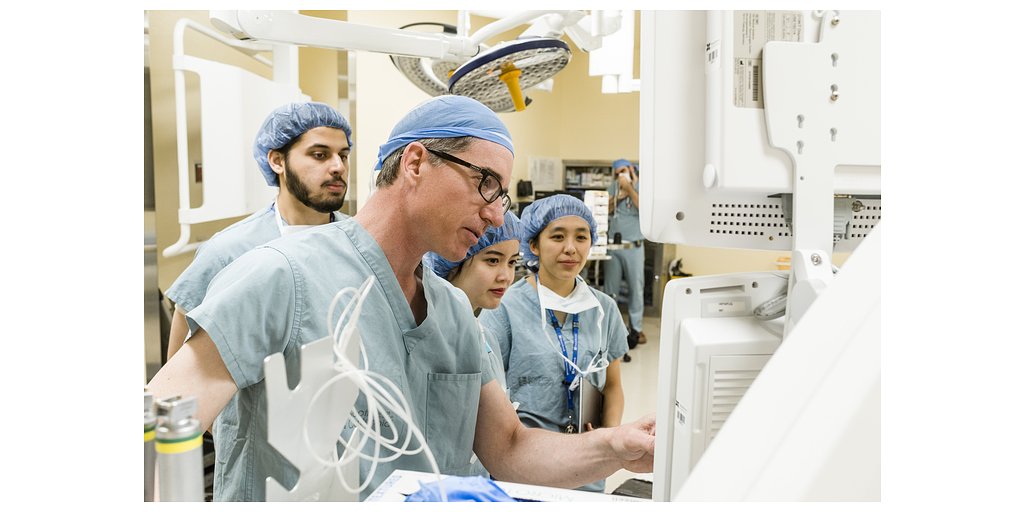
The core of the Medventions method is its emphasis on direct clinical immersion. Unlike traditional research, where problems can be abstract, the fellowship embeds interdisciplinary teams of engineers, clinicians, and life sciences graduates directly into hospital settings for a rigorous four-month program. The newly announced Umbrella agreement will support 39 of these intensive internships over the next two years.
The fellowship unfolds in three distinct phases. First is Clinical Immersion & Needs Identification, where fellows observe procedures, shadow clinicians, and analyze workflows to pinpoint genuine, unmet needs. They aren't just looking for problems; they are tasked with understanding the clinical, economic, and human context that makes a problem worth solving. One former fellow, a research engineer, described the experience as transformative, noting it allowed him to “understand unmet medical needs from the source” and sharpened his critical thinking for real-world applications.
Next comes Ideation & Concept Generation, where the teams brainstorm solutions, refine concepts, and assess technical feasibility. This is followed by Prototyping & Early Validation, where they begin building a tangible solution while simultaneously evaluating regulatory pathways, intellectual property considerations, and the commercial landscape. The program culminates in a showcase where teams present a business case for their innovation. Past projects have ranged from developing workflow solutions for critical cardiac events to addressing technological gaps in psychiatry and surgical oncology.
Cultivating a National Medtech Workforce
While the program was born at Sunnybrook in Toronto, its vision has always been national. The partnership with Mitacs accelerates this expansion, solidifying a growing network of innovation hubs. The model has already been replicated with Medventions Atlantic, launched in Halifax in 2023 in partnership with the Nova Scotia Health Innovation Hub. Earlier this year, the network expanded again with Medventions Atlantic–NL, a pilot program in Newfoundland and Labrador focused on anesthesiology.
This deliberate geographic expansion is key to the strategy. By establishing programs in different provinces, the initiative aims to cultivate and retain local talent, allowing innovators to solve problems relevant to their own regional healthcare systems. It fosters a national community of practice while strengthening local medtech ecosystems, creating jobs, and driving economic growth. Since its inception in 2016, Medventions has already mentored over 150 innovators, seeding the industry with professionals uniquely equipped to navigate the complexities of healthcare innovation.
This talent infusion is critical for a Canadian medtech sector valued at over $13 billion and home to more than 1,500 companies. To compete globally and serve domestic needs, the industry requires a workforce that is not only technically proficient but also fluent in the language and realities of clinical practice. This partnership is a direct investment in that specialized human capital.
The Strategic Investment in 'Made-in-Canada' Innovation
The Medventions-Mitacs agreement is more than a simple partnership; it's a component of a larger national strategy to bolster Canada's life sciences sector. The involvement of INOVAIT, which itself is backed by the federal Strategic Response Fund, highlights this alignment. INOVAIT's mission is to develop and commercialize groundbreaking AI-enhanced image-guided therapy technologies, and it has already injected over $128 million into the sector through its Pilot Fund.
By supporting Medventions, INOVAIT and the federal government are investing in the foundational layer of the innovation ecosystem: skilled people who can translate advanced research in fields like AI into viable medical products. This creates a virtuous cycle where government investment supports collaborative R&D, which in turn fuels training programs that produce a workforce capable of driving further innovation. This integrated approach aims to ensure that the next wave of Canadian medical breakthroughs not only originate in the lab but also successfully reach the patients who need them.