
- 54,000 metric tons of CO₂e per year: The facility is projected to reduce greenhouse gas emissions, equivalent to removing the annual energy-related emissions of 7,200 U.S. homes.
- 350 MMBtu per day: The facility's expected daily RNG injection capacity at full operation.
- 8 RNG interconnections by 2027: PG&E's plan to expand its renewable gas integration, including the Couco Creek project.
Experts view this project as a scalable model for turning agricultural waste into clean energy, supporting California's climate goals while providing economic benefits to dairy farmers.
California's 'Virtual Pipeline' Turns Dairy Waste Into Clean Energy
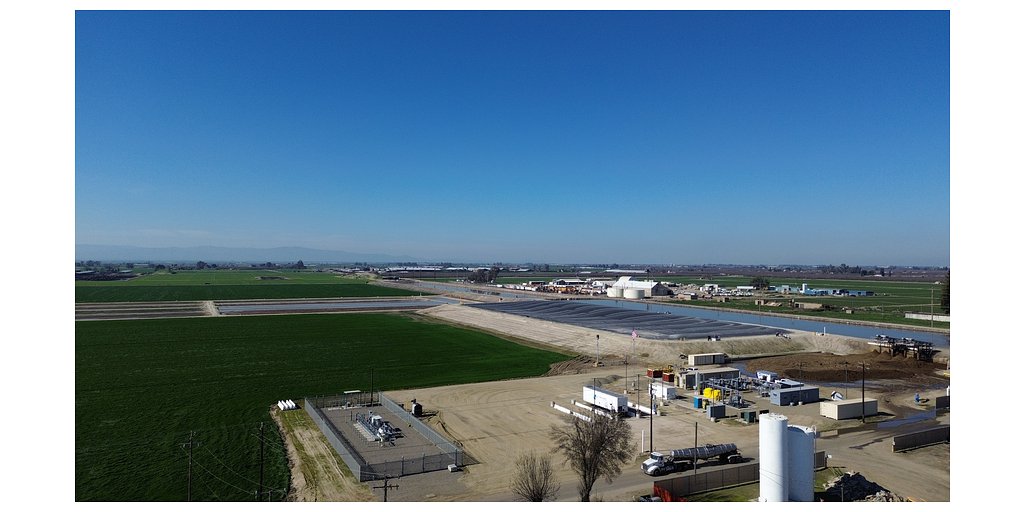
TURLOCK, CA – February 09, 2026 – In the heart of California's agricultural landscape, a quiet revolution is taking place. A new, state-of-the-art facility at Couco Creek Dairy has officially begun injecting renewable natural gas (RNG) into Pacific Gas and Electric Company’s (PG&E) pipeline, marking a significant milestone for the state's clean energy ambitions. Developed by renewable energy leader Maas Energy Works, the project introduces an innovative “hub-style” model that could reshape how rural America produces and distributes clean fuel.
This facility uniquely gathers RNG in two ways: it converts livestock waste into biomethane on-site and, in a crucial advancement, receives trucked-in RNG from neighboring farms. This combination creates a powerful synergy, turning agricultural byproducts into a valuable, pipeline-grade energy source while providing a blueprint for scaling renewable energy infrastructure in geographically diverse regions.
The 'Virtual Pipeline' Revolution
The most groundbreaking aspect of the Couco Creek project is its use of a “virtual pipeline.” This system allows dairies that are not located directly adjacent to a major natural gas pipeline to participate in the clean energy economy. At nearby Blue Sky Dairy, for example, raw biogas from manure digesters is collected, compressed, and loaded into specialized tube trailers. These trucks then transport the gas to the central hub at Couco Creek.
At the hub, a dedicated offloading and decompression facility receives the trucked-in gas. This supply is then blended with the RNG produced on-site at Couco Creek, and the combined stream undergoes rigorous gas-quality verification and safety checks by PG&E before being injected into the utility's extensive distribution network. This hub-and-spoke model dramatically increases the project's efficiency and supply potential.
Maas Energy Works is no stranger to this concept, having pioneered the state's first dairy biogas virtual pipeline at its Stillwater Ranch project. The success of that model has paved the way for this larger-scale implementation.
“This hub represents the next phase of innovation in California’s dairy RNG sector — flexible infrastructure that helps family farms participate in the clean‑energy economy,” said Daryl Maas, Founder and CEO of Maas Energy Works. “Couco Creek shows that if we design systems that work for both onsite production and trucked delivery, we unlock more opportunities for dairies and more progress toward the state’s clean-fuel priorities.”
From Manure to Mainstream: A New Lifeline for Agriculture
For California's dairy farmers, this technology offers more than just a way to manage waste; it provides a vital new revenue stream and a path toward greater economic stability. By converting manure—a significant operational challenge and source of methane emissions—into a saleable commodity, anaerobic digester projects create a circular economy on the farm.
Participating dairies can benefit financially through direct payments for their biogas, lease agreements for the use of their land, or even profit-sharing models. This economic infusion is bolstered by state-level support, such as grants from the California Department of Food and Agriculture’s Dairy Digester Research and Development Program, which can cover a significant portion of the initial capital investment.
This model is critical for supporting local agricultural economies. By turning a liability into an asset, dairy farms become key players in the state's climate solution, securing their own financial future while contributing to a cleaner environment. The process also helps farms reduce traditional manure management costs and mitigates local air and water quality issues.
Powering California's Net-Zero Ambitions
The Couco Creek facility is a key component of PG&E's broader strategy to achieve a net-zero energy system by 2040. The project is the eighth RNG interconnection for the utility, which has an additional seven scheduled to come online by the end of 2027. This rapid expansion is part of PG&E's effort to integrate renewable gases from over 50 dairies, a landfill, and a food waste facility into its system.
The environmental impact is substantial. By capturing methane that would otherwise escape into the atmosphere, the Couco Creek facility is projected to reduce greenhouse gas emissions by an estimated 54,000 metric tons of carbon dioxide equivalent (CO₂e) per year. According to the EPA's Greenhouse Gas Equivalencies Calculator, this is comparable to removing the annual energy-related emissions of 7,200 U.S. homes. Because it prevents the release of methane—a greenhouse gas over 80 times more potent than carbon dioxide in the short term—and displaces fossil fuels, dairy-based RNG is often considered a “carbon-negative” fuel.
“Our collaboration with Maas Energy Works on this innovative interconnection point is an exciting step forward in expanding renewable gas options for our customers and our state,” stated Austin Hastings, Vice President of Gas Engineering at PG&E. “Projects like this help us accelerate RNG production, strengthen reliability and move confidently toward PG&E’s 2040 Net‑Zero climate goals.”
At full operation, the facility is expected to inject approximately 350 MMBtu of RNG per day, with room to expand as more dairies join the virtual pipeline network. This project directly supports California's ambitious climate targets, including the SB 1383 mandate to reduce methane emissions from the dairy and livestock sectors by 40% from 2013 levels by 2030.
A Growing Force in Renewable Energy
Behind this innovative project is Maas Energy Works, a family-owned company from Redding, California, that has established itself as a dominant force in the U.S. dairy biogas sector. The company operates what is widely considered the nation's largest fleet of dairy digesters, with over 80 operational facilities across nine states. Specializing in cost-effective lagoon cover digesters, Maas Energy Works manages the entire project lifecycle, from design and permitting to construction and long-term operation.
This comprehensive approach, combined with strategic partnerships with major industry players like Clean Energy Fuels Corp., has enabled the company's rapid growth. The Couco Creek facility is a testament to its expertise, demonstrating how innovative engineering and strategic collaboration can unlock the immense clean energy potential hidden within the nation's agricultural heartland.