
- 35 years: The David Suzuki Foundation marks its 35th anniversary, reflecting a shift from awareness to action.
- $200 billion: Canada has invested an estimated $200 billion in clean technology since 2016.
- 2035 target: The Foundation's modeling shows Canada could achieve 100% clean, renewable electricity by 2035.
Experts agree that while Canada has set ambitious climate targets, progress is lagging, and the business community must play a pivotal role in bridging the gap between policy and action to achieve sustainability goals.
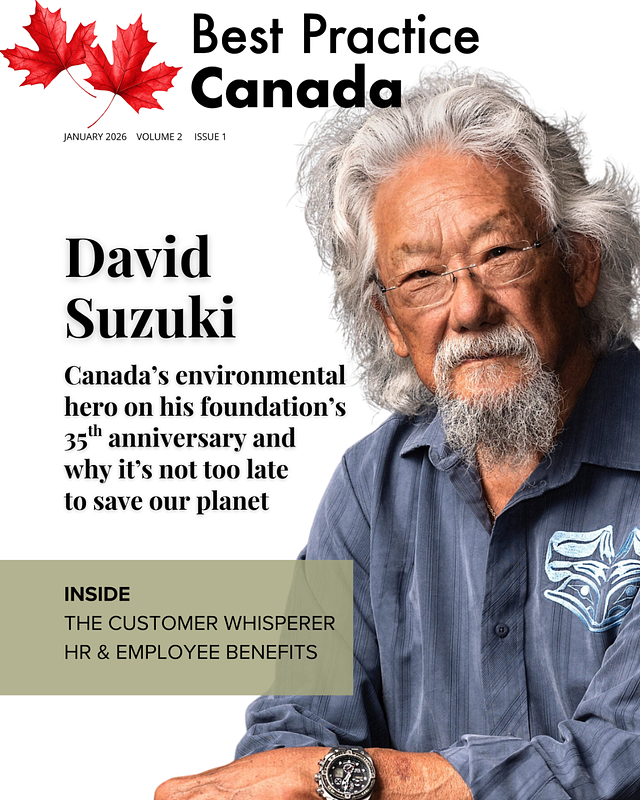
David Suzuki's Urgent Call to Canadian Business in a New Era
TORONTO, ON – February 20, 2026 – In a powerful new interview, celebrated environmentalist David Suzuki is bringing his urgent message on climate change directly to the Canadian business community, challenging leaders to embrace action as a source of hope and redefine the metrics of success. The exclusive discussion, published in Best Practice Canada magazine, marks over 35 years of the David Suzuki Foundation and frames a critical juncture for the nation's corporate sector.
The interview highlights Suzuki's long-standing call for Canadians to participate in the climate discussion and integrate the preservation of nature into their daily lives. However, its placement in a publication focused on the "intersection of profitability, sustainability, and social impact" signals a significant shift, aiming to bridge the gap between environmental advocacy and corporate strategy. Suzuki's message, as conveyed by the magazine, emphasizes that meaningful action is not just a moral imperative but a necessary catalyst for elevating hope in the face of daunting environmental challenges.
A Legacy of Advocacy Meets a New Audience
For decades, David Suzuki has been a leading voice in Canada's environmental consciousness, often taking a critical stance against systems he sees as fundamentally flawed. His recent commentary has taken on an even starker tone, suggesting a shift in focus from preventing climate change to preparing for its inevitable consequences. This perspective challenges the conventional wisdom of perpetual economic expansion, an idea he has famously likened to "the creed of cancer" in a finite world.
By engaging with the readership of Best Practice Canada, Suzuki's message is now aimed squarely at the architects of that very economic system. The interview pushes business leaders to look beyond quarterly profits and consider their role in either perpetuating a destructive cycle or fostering a new paradigm. This isn't just a call for corporate social responsibility initiatives; it's a fundamental challenge to the core principles of modern business. The dialogue moves beyond simple greenwashing to question how companies can truly integrate the health of the planet into their operational DNA. The emphasis on "action to elevate hope" suggests a pragmatic path forward: even if the broader fight is fraught with difficulty, tangible, localized, and corporate-led actions can create positive momentum and build resilience.
Best Practice Canada: A Platform for Purpose-Driven Profit
The choice of Best Practice Canada as the venue for this conversation is as significant as the message itself. The publication has carved out a unique niche in the Canadian media landscape as a "people-first business magazine" dedicated to amplifying leaders who champion environmental stewardship, inclusive workplaces, and long-term value creation. Its editorial strategy deliberately connects the dots between financial success, ecological responsibility, and social equity.
Unlike more specialized environmental outlets or traditional business journals, the magazine presents these three pillars as interconnected and mutually reinforcing. Its recent issues, featuring discussions with the Canadian Council for Indigenous Business and the Canadian Queer Chamber of Commerce alongside contributions from the Canadian Climate Institute, demonstrate a commitment to a holistic definition of "best practice." By featuring David Suzuki, the magazine not only lends its platform to a towering figure in Canadian environmentalism but also validates the idea that his message is no longer on the fringes of business discourse. Instead, it is presented as essential reading for any forward-thinking leader, positioning sustainability and social impact as central components of a competitive and resilient business model in the 21st century.
35 Years of the David Suzuki Foundation: From Awareness to Action
The interview's timing coincides with the 35th anniversary of the David Suzuki Foundation, an organization that has evolved from raising awareness to empowering tangible action. Established in 1991, the foundation has been instrumental in shaping Canadian environmental policy through evidence-based research, education, and citizen-led campaigns. Its current work reflects a sophisticated, multi-pronged approach to the country's most pressing ecological issues.
The Foundation's recent initiatives offer a blueprint for the kind of action Suzuki advocates. Their ambitious modeling demonstrates how Canada could achieve 100% clean, renewable electricity by 2035, while their "Thriving Nature" programs aim to protect and restore critical ecosystems. Crucially, the organization has become a strong advocate for Indigenous-led conservation, recognizing the vital role and inherent rights of First Peoples as stewards of the land and water. This aligns with a growing understanding in both environmental and business circles that Indigenous knowledge is key to sustainable practices. On a more granular level, community-based projects like the Butterflyway Project and LawnShare empower individuals to make the very "changes in day-to-day life" that Suzuki champions, proving that collective impact begins with individual commitment.
Canada at a Climate Crossroads
Suzuki's call for action lands at a moment of profound contradiction for Canada. The nation has set ambitious climate targets, including a 40-45% reduction in greenhouse gas emissions by 2030 and a goal of net-zero by 2050. Federal policies like carbon pricing and massive investments in clean technology, totaling an estimated $200 billion since 2016, signal a serious commitment. Private markets are also responding, with billions flowing into green projects and clean-tech ventures.
Yet, progress remains perilously slow. A recent report from the Canadian Climate Institute soberly concluded that the country is "no longer on track" to meet its emissions targets, citing a need for stronger industrial policies. Political friction, with some provinces opposing federal climate initiatives, further complicates the path forward. This complex reality—of high ambition clashing with lagging implementation—forms the urgent backdrop for Suzuki's interview. His message transcends the political debate, appealing directly to the business community as a powerful, non-governmental force for change. The interview in Best Practice Canada serves as a powerful reminder that while policy is critical, the innovation, resources, and influence of the private sector will be indispensable in navigating the difficult path toward a truly sustainable future for Canada.