
- 30% of California voters are registered as 'No Party Preference' (NPP), yet are excluded from major debates.
- 60 candidates are running in the primary, but debates rely on polling thresholds (e.g., 5% support) to narrow the field.
- Independent candidate Lewis Herms claims top poll rankings when included, but is excluded from major debates.
Experts argue that debate selection criteria based on polling and fundraising create a systemic bias against independent candidates, disenfranchising a significant portion of the electorate.
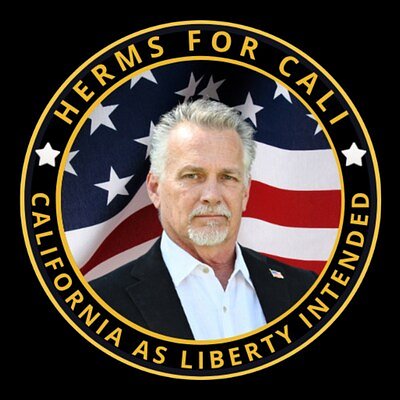
California's Silenced Voters: Debates Exclude 30% of the Electorate
LOS ANGELES, CA – May 07, 2026 – As California’s crowded gubernatorial primary unfolds, the state’s most prominent televised debates have featured a familiar cast of Democratic and Republican hopefuls. Yet, a growing chorus of critics argues that these events systematically ignore a crucial segment of the electorate: the nearly one-third of California voters registered with 'No Party Preference' (NPP).
Recent high-profile debates, including the April 22 event hosted by KTLA and an April 28 broadcast by CBS, have become flashpoints in this controversy. While offering voters a look at candidates from the two major parties, they provided no airtime for any of the state's independent candidates. This exclusion has ignited a fierce debate about fairness, media responsibility, and whether a significant portion of California's voting population is being disenfranchised before a single ballot is cast.
For campaigns like that of independent gubernatorial candidate Lewis Herms, the issue is not just about one candidate's access, but about the health of the democratic process itself. His campaign, Herms for CALI, recently issued a statement condemning the practice as a systemic failure to represent the will of a massive, and growing, voter bloc.
The Voiceless Thirty Percent
The numbers paint a stark picture of the political landscape. While Republican candidates are competing for the loyalty of roughly 25% of the electorate, the bloc of NPP voters now hovers around 30%. These are citizens who have deliberately chosen to stand outside the traditional two-party structure, yet their ideological diversity is not reflected on the debate stage.
"This is an affront to voters," said Lewis Herms, who has positioned himself as an "Anti-politician" focused on fixing broken systems. "Thirty percent of California voters have chosen independence, yet they're treated as if they don't exist. If California is going to change, it starts by giving that 30% a voice."
This sentiment is echoed by other independents on the ticket. Sean Collinson, a 2026 candidate for Lieutenant Governor, believes the exclusion is a disservice to voters trying to make an informed choice in a field of 60 primary candidates.
"There should be at least one No Party Preference Independent Candidate on every debate stage," Collinson stated. "Lewis Herms should have been on that debate stage hosted by CBS."
The Mechanics of Exclusion
Debate organizers and media partners defend their selection process, pointing to the logistical impossibility of including all 60 candidates. To narrow the field, they rely on what they call objective metrics: polling numbers and fundraising totals. For the April 22 debate, host KTLA and its parent company Nexstar required candidates to clear a 5% support threshold in a statewide poll. Similarly, the CBS debate invited candidates based on their performance in "polling and fundraising from both political parties."
However, critics argue this creates a 'catch-22' for independent and lesser-known candidates. They are excluded from debates because they don't meet polling thresholds, but they struggle to raise their poll numbers without the name recognition and visibility that major televised debates provide.
"Polls are shaping the race by excluding candidates rather than measuring them," Herms argued, describing a self-reinforcing loop where media outlets and polling firms become de facto gatekeepers of political viability. This system, critics say, ensures that only candidates with pre-existing fame or the backing of a major party machine can gain traction.
The controversy surrounding a now-canceled debate co-hosted by USC and ABC7 further illustrates the pitfalls of this approach. The event was scrapped after its methodology, which also relied on polling and fundraising, was criticized for excluding all major candidates of color, sparking a backlash and highlighting how such criteria can lead to unrepresentative outcomes.
A System Under Scrutiny
The frustration extends beyond the candidates themselves. Mark Abrahams, a former network news engineer with decades of experience at ABC NEWS, frames the issue as a form of media-driven "brainwashing" that perpetuates a two-party duopoly.
"After decades of campaign, debate, and election coverage the voting public has been brainwashed into believing that there are only 2 parties [and that] voting Independent only draws votes away from viable candidates," Abrahams stated. He argues that independent voters have been conditioned to accept their marginalization.
Abrahams has called for voters to file complaints with the Federal Communications Commission (FCC), citing the 'equal time' rule. However, the legal reality is complex. The FCC's rule, formally Section 315 of the Communications Act, requires broadcasters who give time to one candidate to provide equal opportunities to others. But a critical exemption exists for "on-the-spot coverage of bona fide news events," which is how networks typically classify their debates. As long as the broadcaster, not the campaign, controls the event and frames it as newsworthy, they are generally not obligated to include every candidate.
This legal gray area puts the onus on the media outlets, whose editorial judgments effectively decide who is a "viable" candidate worthy of the public's attention.
An Uphill Battle Against the Establishment
For Lewis Herms, this fight is central to his campaign's identity. A self-described problem-solver rather than a career politician, his platform is built on promises of transparency, accountability, and rooting out corruption. His campaign claims that in the rare instances he has been included in polls, he has performed very well, suggesting the barrier is not a lack of potential support but a lack of access.
"Lewis Herms has ranked at the top every time he's been included in the polls, but he has been excluded from the big polls and thus the debates," Abrahams claimed. "The real barrier isn't support for the candidates; it's access and inclusion."
As the primary election draws closer, the exclusion of independent voices raises a fundamental question for the Golden State. In a state that prides itself on innovation and forward-thinking, can an election be considered truly fair and representative when the candidates speaking to nearly a third of its voters are left unheard?