
- 66% of U.S. professionals experienced burnout in 2025
- 55% of the U.S. workforce felt burned out, rising to 66% for Gen Z
- MasterClass raised over $475 million in funding
Experts agree that Cal Newport's 'slow productivity' philosophy offers a viable solution to combat workplace burnout by prioritizing quality over quantity and promoting sustainable work practices.
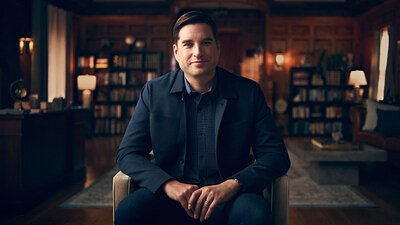
Cal Newport's MasterClass Tackles Burnout With 'Slow Productivity'
SAN FRANCISCO, CA – February 05, 2026 – As a crisis of professional burnout continues to plague the American workforce, streaming platform MasterClass has launched a new course aiming to provide a radical antidote: working less to achieve more. "Rebuild Your Focus & Reclaim Your Time," taught by Georgetown professor and bestselling author Cal Newport, debuted today, offering a structured philosophy to escape the cycle of busyness and produce more impactful work.
The course arrives at a critical juncture. Research from 2025 indicated that a staggering 66% of U.S. professionals experienced burnout, a trend corroborated by multiple studies highlighting rising stress levels and declining engagement. Newport, a prominent critic of the modern "hyperactive hive mind" work culture, argues that the solution isn't better time management hacks, but a fundamental rethinking of our relationship with work itself. His course is built on the principles of his "slow productivity" philosophy: do fewer things, work at a natural pace, and obsess over quality.
The Gospel of 'Slow Productivity' in an Age of Overload
The concept of slowing down to combat burnout is gaining significant traction as its costs become undeniable. A 2025 survey from Eagle Hill Consulting found that 55% of the U.S. workforce felt burned out, a figure that jumps to 66% for Gen Z. This epidemic of exhaustion directly impacts the bottom line, with studies showing it diminishes efficiency, weakens customer service, and stifles innovation. Globally, the productivity losses linked to employee disengagement are estimated to cost the economy hundreds of billions of dollars annually.
Into this environment steps Cal Newport, whose ideas have long challenged the cult of constant connectivity. His influential books, Deep Work and Digital Minimalism, laid the groundwork for his current philosophy. "Deep work" champions the value of sustained, distraction-free concentration, while "digital minimalism" advocates for an intentional, stripped-down relationship with technology. The new MasterClass synthesizes these concepts into a practical framework for the modern knowledge worker.
Across four lessons, Newport promises to equip members with tools to push back against the deluge of low-value tasks and administrative overhead that defines many corporate roles. He advocates for concrete strategies like time-blocking—a method of meticulously planning every minute of the workday—to create protected space for the deep, focused thinking that produces breakthrough results. By setting firm boundaries and even using AI to offload shallow work, Newport's approach aims to shift the measure of success from the volume of activity to the quality of the output.
MasterClass's Strategic Bet on the Future of Work
The launch is more than just a new addition to the MasterClass catalog; it's a calculated strategic move. The company, which raised over $475 million in funding but reportedly faced challenges maintaining its pandemic-era growth, is making a significant push into the professional development and corporate wellness space. In a crowded online education market dominated by giants like Coursera and LinkedIn Learning, MasterClass is leveraging its unique "expert-led" model to tackle one of the most pressing issues in the contemporary workplace.
By enlisting a high-profile intellectual like Newport, the platform reinforces its premium brand identity while offering a solution with clear appeal to both individual subscribers and corporate clients. As organizations grapple with high turnover rates and the hidden costs of burnout, courses that promise to enhance both productivity and well-being are becoming an essential part of corporate learning and development packages. This course positions MasterClass not just as a source of aspirational learning—like cooking with Gordon Ramsay or writing with Shonda Rhimes—but as a provider of essential, in-demand skills for navigating the future of work.
"If you're feeling overwhelmed, unfocused or stuck in a cycle of doing too much and achieving too little, this class is for you," Newport stated in the announcement. "My goal is to help members reclaim their time, refocus their efforts and produce work that gets noticed—and that they can be proud of."
Redefining Achievement, from Ben Franklin to Your Calendar
To make his philosophy tangible, Newport draws on a diverse range of historical and contemporary examples. He illustrates how figures like Benjamin Franklin strategically distanced themselves from daily operational tasks to focus on their most significant contributions, and how modern creators like Lin-Manuel Miranda have used deliberate periods of rest and reflection to fuel creative breakthroughs. These narratives serve to destigmatize the idea of stepping back and reinforce the notion that relentless, uninterrupted work is often the enemy of true progress.
The course's emphasis on practical application is central to its value proposition. The lesson on calendar design and time-blocking, for instance, provides a direct method for individuals to regain control over their schedules. Rather than allowing the day to be dictated by incoming emails and meeting requests, Newport teaches a proactive approach where deep work, shallow tasks, and personal time are all intentionally scheduled. This method not only protects focused time but also creates firm boundaries around the workday, combating the "always-on" culture that contributes heavily to burnout.
As the nature of work continues to evolve, the demand for skills that foster resilience, focus, and sustainable performance is soaring. The "expert economy," powered by platforms like MasterClass, is responding by democratizing access to the thinkers and practitioners at the forefront of these shifts. By packaging Newport's academic and philosophical insights into an accessible streaming format, MasterClass is betting that the path to a more productive and fulfilling career lies not in working harder, but in learning how to work smarter and, perhaps, a little bit slower.
Topics & Related
Revenue
Software & SaaS
AI & Machine Learning
Management Consulting
Digital Transformation
Artificial Intelligence
Related Company Pulse