
- 96% of 10-year-olds in Burundi cannot read and understand a simple text
- Only 33.8% of girls complete lower secondary education
- $30 million total budget for the Multi-Year Resilience Programme (MYRP)
Experts would likely conclude that the Komezawige Programme's community-driven mentorship model, combined with holistic support like dignity pads and classroom rehabilitation, is a critical intervention to improve girls' education in Burundi, particularly in the face of systemic challenges like poverty and gender inequality.
Burundi's School 'Aunties': A Lifeline for Girls' Education
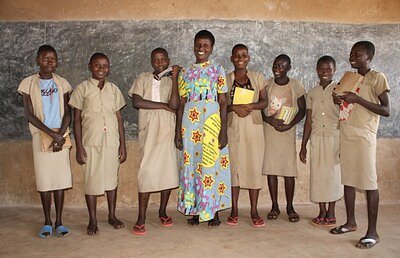
CIBITOKE, Burundi – December 29, 2025 – In the Rugombo commune of Cibitoke province, a quiet revolution is unfolding, led by community mentors like Josephine. Known as a “school auntie,” she has become a pivotal figure for adolescent girls navigating the turbulent waters of their teenage years, embodying a Burundian tradition of guidance that acts as a crucial second safety net.
Her mission is part of the “Komezawige Programme,” which translates from Kirundi to “Keep Studying.” Funded by Education Cannot Wait (ECW) and implemented by a consortium of partners led by World Vision Burundi, the initiative directly confronts the complex web of crises that push thousands of children out of the classroom. At its heart is an innovative mentorship model utilizing school 'Aunties' and 'Uncles'—trusted volunteers who provide the emotional, academic, and psychosocial support that is often missing at home.
For many girls, the onset of menstruation marks a turning point, often leading to the end of their education. “In the past, when young girls got their period while they were at school, they did not have a school adult to whom they would turn for advice or support,” explains Josephine. Embarrassment, teasing from boys, and a lack of hygiene products created a cycle of distress and high absenteeism, with some girls dropping out permanently due to the cultural stigma. Josephine is changing that narrative, one conversation at a time.
The Ripple Effect of Mentorship
Josephine’s role extends far beyond simply being a friendly face. She facilitates frank discussions about menstruation, helping to dismantle long-standing taboos. By creating a safe space, she empowers girls to seek help without shame. “Discussions have brought a positive impact; girls support each other through advice or come to me for support,” she says. “Sometimes I can ask permission to go home from the school principal on their behalf once they do not feel well.”
Crucially, the program doesn’t just focus on girls. Josephine has initiated open dialogues that include boys, teaching them empathy and respect. “In some discussions organized, boys are invited and we let them know it's not okay to make fun of girls when they realize that they are in their menstrual period,” she notes. The result is a palpable shift in the school's culture, fostering an environment of inclusivity and mutual understanding.
The impact is deeply personal for students like 14-year-old Jeanine. “Whenever I have an uncertainty, I turn to Josephine, and I feel supported through her advice,” she shares. This support system is vital in a country where the path to education is fraught with obstacles, particularly for adolescent girls who face disproportionate burdens from poverty and societal expectations.
Confronting a Cascade of Crises
The Komezawige Programme operates against a backdrop of immense national challenges. Burundi, a nation where half the population is composed of youth, is grappling with a multidimensional poverty rate of over 53%. For children, this reality is even starker, with nearly two-thirds experiencing multiple deprivations in essential services like food, water, and education. The country's learning poverty rate is staggering, with an estimated 96% of 10-year-olds unable to read and understand a simple text.
These economic hardships are compounded by recurrent crises, including political instability and the escalating effects of climate change. Between September 2023 and April 2024 alone, natural disasters displaced thousands, bringing the country's total number of internally displaced persons to 96,000. For families living on the edge, education becomes a luxury they cannot afford. Traditional gender roles often mean girls are pulled from school for household chores or married off early, while boys face pressure to enter the workforce to support their families.
These factors contribute to alarmingly low school completion rates. While primary enrollment is rising, only 57% of girls and 49% of boys complete it. The numbers plummet for lower secondary education, with completion rates of just 33.8% for girls and 26.1% for boys. It is this educational hemorrhaging that the Komezawige Programme and its partners aim to stop.
A Blueprint for Resilience Beyond the Classroom
Recognizing that mentorship alone cannot solve such deep-seated issues, the ECW-funded initiative is a multi-faceted, holistic strategy. The Multi-Year Resilience Programme (MYRP), with a total budget of $30 million and $12 million in initial seed funding from ECW, targets over 136,000 children with a comprehensive suite of interventions. The program’s goal, if fully funded, is to reach over 300,000 crisis-affected children and adolescents.
Support extends far beyond psychosocial counseling. Partners are rehabilitating and constructing classrooms and sanitation facilities, training and supporting the recruitment of teachers, and providing essential learning materials. In one effort, the program delivered books covering all subjects to 182 schools, dramatically improving the learning environment. Furthermore, school feeding programs run in partnership with the World Food Programme have provided meals to 150,000 children, addressing the critical link between nutrition and learning.
A cornerstone of the program's practical support is the distribution of dignity pads. For Jeanine, whose parents cannot afford hygiene products, this was a game-changer. She recalls regularly missing school during her period. Now, equipped with reusable pads, that barrier is gone. “I was given 5 reusable dignity pads,” she says. “I feel supported and this encourages me to go far with learning.” These pads are not just hygiene items; they are tools of educational equity, allowing girls to reclaim their focus and their futures.
Investing in a Sustainable Future
The strength of the 'Aunties and Uncles' model lies in its community-driven foundation, which fosters local ownership and long-term sustainability. Across the program's operational areas, nearly 500 psychosocial assistant volunteers are active. While the 'Aunties' focus on girls' well-being, the 'Uncles' provide critical guidance to boys, including reproductive health education designed to help both genders make informed decisions and prevent early pregnancies—a major driver of school dropouts.
This holistic approach, implemented by a coalition including UNICEF, World Vision, and other NGOs in coordination with Burundi’s Ministry of National Education, aims to fortify the entire educational ecosystem. By training teachers in child-friendly methods, building safer school infrastructure, and empowering community members as mentors, the program is creating a durable support structure that can withstand future shocks.
For children affected by poverty, displacement, and social stigma, school is more than a place of learning; it is a sanctuary. Initiatives like the Komezawige Programme ensure that this sanctuary remains open. For girls like Jeanine, it represents a chance to continue their education in a safe, supportive environment, offering them a tangible path toward a brighter and more empowered future.