
- 40,000 infants born annually in the U.S. with congenital heart defects (CHDs).
- First staged cardiac septation performed in Florida on a one-year-old baby.
- 90% survival rate for children with CHDs into adulthood.
Experts would likely conclude that staged cardiac septation represents a significant advancement in pediatric cardiac care, offering a safer, more adaptable alternative to traditional single-stage surgeries for complex heart defects.
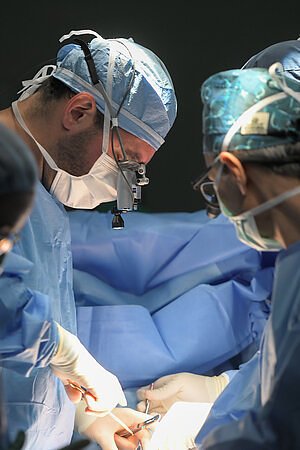
Building a Better Heart: How Staged Surgery Redefines Pediatric Repair
MIAMI, FL – June 17, 2026 – In a quiet operating room at Nicklaus Children's Hospital, a surgical team has just accomplished a feat of biological architecture. They successfully performed Florida's first staged cardiac septation on a one-year-old baby, effectively building a two-ventricle heart where nature had only provided one. While the procedure itself is a milestone, the story here is bigger than a single operation. It’s a case study in how a focused strategy, institutional collaboration, and a relentless drive for execution can turn a high-risk medical frontier into a repeatable, life-altering process.
The Architectural Challenge of a Single Ventricle
For most of us, the heart is a reliable, four-chambered engine. But for the nearly 40,000 infants born with congenital heart defects (CHDs) in the U.S. each year, the blueprint is dangerously flawed. Among the most complex of these are single ventricle defects, where the heart has only one functional pumping chamber instead of two. This structural failure forces oxygen-rich and oxygen-poor blood to mix, putting immense strain on the heart and lungs and compromising oxygen delivery to the entire body.
For decades, the standard of care has been a series of palliative surgeries culminating in the Fontan procedure, which re-routes blood flow to bypass the ineffective ventricle. While a lifesaver, the Fontan circulation is not a cure. It's an imperfect workaround that can lead to long-term complications, including liver disease, heart failure, and a diminished quality of life. The holy grail has always been to achieve a “biventricular repair”—to build a fully functional, two-ventricle heart. But for many complex cases, the risk of a single, all-in-one reconstructive surgery on a fragile newborn is simply too high.
A Staged Approach to Building a Heart
This is where the work of Dr. David Kalfa and his team at the Nicklaus Children's Heart Institute marks a significant shift. The staged cardiac septation technique moves away from the high-stakes, single-event surgery model. Instead, it treats the heart's reconstruction as a multi-phase project, allowing the patient's own body to adapt and grow at each step. In this initial operation, surgeons divided the single ventricular cavity and anchored a new septum, creating the foundational structure for two distinct ventricles. Future procedures will build upon this work as the child grows.
This methodical approach is less a radical invention and more a masterful execution of advanced surgical principles. It significantly reduces the immediate stress on the infant’s heart and lungs compared to a traditional one-and-done repair. The world-class team, one of only a handful globally performing this procedure, gains invaluable flexibility to adapt the treatment plan over time.
"The staged cardiac septation represents an important advancement in the treatment of children born with a single pumping chamber because it allows us to rebuild and adapt the heart in a more gradual and individualized way," says Dr. Kalfa, Chief of Cardiovascular Surgery at Nicklaus Children's. "This approach can reduce the strain of traditional single-stage surgeries while creating new opportunities for improved heart function, recovery and long-term quality of life."
From Pilot to Production: A Strategy of Innovation
This achievement is not an isolated incident. It is the latest and most visible result of a deliberate, multi-year strategy to position Nicklaus Children's at the forefront of pediatric cardiac care. Looking beyond the single press release, a clear pattern of systematic innovation emerges. This procedure follows a string of other Florida and South Florida “firsts” by the Heart Institute in the last year alone, including the first partial heart transplant to implant a “living valve,” the first pediatric pulmonary Ozaki procedures using a patient’s own tissue, and the first use of an FDA-approved stent that expands as a child grows.
This consistent output is no accident. It’s fueled by a powerful academic and research engine. The hospital's strategic affiliation with the FIU Herbert Wertheim College of Medicine, which made Nicklaus Children's its exclusive pediatric teaching hospital, was a critical enabler. Dr. Kalfa himself was the first joint hire under this partnership, bringing not only his surgical expertise but also a research portfolio backed by the National Institutes of Health (NIH). This fusion of clinical practice, academic rigor, and funded research creates a powerful flywheel for innovation, moving promising techniques from the lab to the operating room.
In the competitive landscape of elite pediatric cardiac care, where centers like Boston Children's Hospital and Children's Hospital of Philadelphia (CHOP) have long-established programs for complex biventricular repair, this successful septation signals that Nicklaus Children's is not just participating, but leading. It demonstrates a capacity for execution on par with the world's best.
The Human Blueprint for Success
Behind the clinical data and strategic analysis is the profound human impact. For the family of the one-year-old patient, this procedure represents the tangible delivery of hope. According to hospital staff, the family's journey has been one of uncertainty and fear, a common experience for parents navigating the complexities of a critical CHD diagnosis. The staged approach offered them a pathway that felt more manageable and less perilous, a step-by-step plan to give their child a chance at a healthier life.
The ultimate goal of these innovations extends far beyond the hospital walls. Thanks to advancements like these, over 90% of children with CHDs now survive into adulthood. This success has created a new and growing patient population, a reality reflected in the latest AHA/ACC guidelines that call for specialized, lifelong care for these individuals. The work being done today in operating rooms like the one at Nicklaus Children’s is not just about helping infants survive; it's about engineering a future where they can thrive for decades to come.