
- Global DAS market: Projected to grow from over $10 billion in 2026 to nearly $20 billion within a decade
- 5G small cell market: Forecasted to exceed a 60% compound annual growth rate through 2033
- N3 Plus DAS: Supports 12 channels across spectrum bands from 600 MHz to 4200 MHz
Experts view BTI Wireless's hybrid solutions as a strategic response to the 5G densification challenge, offering cost-efficient, flexible infrastructure that bridges legacy and next-generation networks.
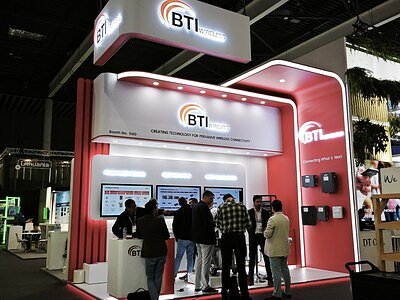
BTI Wireless Charts a Flexible Path for 5G with New Hybrid Solutions
BARCELONA, Spain – March 05, 2026 – As the global telecommunications industry grapples with the relentless demand for 5G connectivity, BTI Wireless has stepped forward at Mobile World Congress 2026 with a new suite of solutions designed to offer network operators and enterprises a more adaptable and cost-efficient path forward. The company unveiled an enhanced portfolio of Distributed Antenna Systems (DAS) and 5G small cells, emphasizing open architectures and hybrid deployment models to tackle the growing complexity of network expansion.
The announcement comes at a critical juncture for the industry. With mobile data traffic surging and enterprises seeking dedicated, high-performance private networks, operators face the dual pressures of expanding coverage into every corner of the built environment while managing spiraling deployment costs and intricate spectrum licensing. BTI's latest offerings aim to directly address these pain points by providing the tools for a more flexible, future-ready network infrastructure.
Navigating the 5G Densification Challenge
The promise of 5G—ultra-fast speeds, low latency, and massive connectivity—relies heavily on network densification. This means deploying more cell sites closer to users, a challenge particularly acute within the steel and concrete confines of modern buildings. The market for indoor wireless solutions is expanding rapidly to meet this need. The global DAS market is projected to grow from over $10 billion in 2026 to nearly $20 billion within a decade, while the 5G small cell market is experiencing even more explosive growth, with some forecasts predicting a compound annual growth rate exceeding 60% through 2033.
BTI Wireless is targeting this burgeoning market with its new Nano Power Digital DAS N3 Plus. Engineered for high-density indoor environments like shopping malls, office towers, and transportation hubs, the platform is a versatile workhorse. It supports an exceptionally wide range of public and private spectrum bands, from 600 MHz up to 4200 MHz, across 12 channels. This allows for complex configurations, such as simultaneously supporting four 4G bands and a high-capacity 4T4R 5G band on a single system.
Crucially, the N3 Plus addresses practical installation hurdles. Its compact 5-liter footprint minimizes the need for precious real estate in crowded equipment rooms, and a plug-and-play Fiber-to-the-Antenna (FTTA) architecture is designed to simplify deployment and reduce installation costs. For larger venues with even greater power requirements, such as stadiums, airports, and tunnels, BTI also showcased its H3 high-power DAS solution, capable of delivering up to 46 dBm of output power to ensure robust coverage across vast areas.
The Power of Advanced Silicon and Open Architectures
Beyond its DAS enhancements, BTI expanded its small cell lineup with the nCELL-M4371, an all-in-one 5G small cell that highlights the trend of integrating advanced silicon to boost performance and efficiency. At the heart of this device is Qualcomm's 4nm FSM200 platform, a key factor in its capabilities. Built on an advanced 4-nanometer process, the chipset provides superior power efficiency, which enables the small cell to be powered over a standard Ethernet connection (PoE), dramatically simplifying installation.
The FSM200 platform is compliant with 3GPP Release 16, bringing advanced 5G features like enhanced Ultra-Reliable Low-Latency Communications (eURLLC) that are critical for demanding Industry 4.0 applications. This integration allows the nCELL-M4371 to deliver multi-gigabit speeds and the low latency required for factory automation and mission-critical private networks. The small cell's built-in 5G gateway and 4T4R operation further position it as a rapid and cost-effective solution for enterprise and industrial deployments.
A central theme of BTI's MWC announcement is its commitment to open standards. Both the Nano Power Digital DAS N3 Plus and the nCELL-M4371 are built with flexibility in mind. The DAS hardware is O-RAN upgrade-ready, providing a clear path for operators to transition toward the open, disaggregated network architectures championed by the O-RAN Alliance. This approach contrasts with traditional, proprietary systems and aligns with a broader industry movement toward vendor diversity and software-defined control. While the conversation at MWC 2026 has begun to evolve toward AI-native RAN, the foundational principles of Open RAN—disaggregation and open interfaces—remain essential for the flexibility that next-generation network intelligence will require.
A Hybrid Strategy for a Hybrid World
Perhaps the most strategic element of BTI's new portfolio is its focus on hybrid models. The company is actively promoting deployment architectures that allow a single, unified infrastructure to support both public carrier networks and private enterprise networks simultaneously. This model offers significant efficiencies, allowing a venue owner or enterprise to build one system that serves both its internal operational needs and provides seamless cellular coverage for employees and visitors.
Furthermore, BTI's systems are designed to support a hybrid of Open RAN and traditional RF signals. This pragmatism acknowledges that network operators will not replace their entire legacy infrastructure overnight. By enabling a graceful migration, where new O-RAN components can coexist and interoperate with existing systems, BTI offers a lower-risk, economically viable path to network modernization. This flexibility is complemented by the new BBU T5100, a next-generation baseband unit designed for distributed 5G deployments. It supports Carrier Aggregation and multiple cells, with a development roadmap that includes dual-mode 4G LTE and 5G NR capabilities to ensure a smooth transition for operators upgrading their networks.
In a competitive landscape populated by industry giants like Corning, Ericsson, and Nokia—all of whom offer sophisticated DAS and small cell solutions—BTI Wireless is carving out its niche by championing this ultimate flexibility. While competitors also tout modularity and cost-efficiency, BTI's explicit and foundational support for hybrid public-private and hybrid O-RAN/traditional architectures presents a compelling differentiator for customers navigating the complex, multi-layered reality of modern wireless networks. Building on its years of experience, the company is positioning its portfolio not just as a set of products, but as an adaptable toolkit for accelerating 5G adoption while preparing for the next wave of wireless innovation.